Methodist Healthcare Ministries awarded notable honorable mention

Communications PR Award

Methodist Healthcare Ministries of South Texas, Inc. joins a prestigious list of nonprofit public relations professionals who have been recognized for their creativity and inspiration by world-renowned industry leader, Lawrence Ragan Communications, Inc.  Methodist Healthcare Ministries' website, www.mhm.org, was selected as the only honorable mention in the Best Website category of Ragan Communications' PR Daily's 2015 Nonprofit PR Awards. The recognition acknowledged the re-design and re-launch of the website which took place October 2014.

The Nonprofit PR Awards honor the hard work, success, and creativity of nonprofit organizations, of the agencies that represent them, and of hard-working individual public relations specialists in various industries. Awards were categorized in over 20 topics such as campaigns, partnerships, publication, social media, and events.

nonprofit15 logoMore than 100 applications came in from around the globe and were judged by the editorial staff of Ragan.com, PR Daily.com, HR Communicator and Health Care Communications News. The competition was open to academic institutions, government entities/departments/agencies, nongovernmental organizations, nonprofit healthcare organizations, philanthropic or charitable groups, professional associations, public/civic groups, and any other not-for-profit organization. Submissions had to include work executed between January 1, 2014 and February 2, 2015.

"It's such an honor to be recognized by a leader in the public relations and communications industry," said Jessica Muñoz, director of communications at Methodist Healthcare Ministries. "Our Communications department worked closely with a cross-section of the organization to identify ways to fully and accurately communicate the many stories and faces of Methodist Healthcare Ministries. The new website allows viewers to have a window into the organization and the community it serves."

To view the full list of 2015 Nonprofit PR Award winners, click here.

UTRGV School of Medicine receives $1M grant for high-risk children and youth

By: Danya Perez- Hernandez 

EDINBURG, Texas — The University of Texas Rio Grande Valley is celebrating a $1 million contribution to the first clinic opened by the School of Medicine in the region.

The Methodist Healthcare Ministries of South Texas made their second contribution to the university's Integrated Care Collaborative Unit at the John Austin Peña Memorial Center in Edinburg.

After an initial $500,000 grant to establish the clinic in January 2015, which aims to provide mental and rehabilitation services for high-risk youth, the new $1,065,510 grant will be used to fully kick off the services in 2016.

"Our mission is to improve the health of those least-served in mind body and spirit," said Anne Connor, director of community grants for Methodist Healthcare Ministries. "When we saw this project, which is about integrated care — integrating mental health and primary care — we thought it was a perfect fit for us."

To read full article by The Monitor, click here.

Third annual christmas tree donation helps to make the season bright for families in need

homepageimagetrees

Methodist Healthcare spreads holiday cheer through tree-decorating competition

San Antonio — Methodist Healthcare Ministries of South Texas, Inc., the largest private, faith-based funding source for health care services in South Texas, once again partnered with Methodist Hospital and Methodist Children's Hospital — facilities of the Methodist Healthcare System, the largest healthcare system in South Texas — to donate nearly 60 decorated, artificial Christmas trees to several underserved families in San Antonio.

As part of their holiday celebrations, several departments of Methodist Hospital and Methodist Children's Hospital participated in an annual Christmas tree decorating contest. Trees adorned with ornaments hand-crafted by employees, many following themes intended to celebrate the patients cared for at the hospital, were put on display at both hospitals, transforming the facilities into winter wonderlands. The Christmas trees were judged by hospital administration for first, second and third place in the categories of best theme, Spurs theme, most traditional, most creative, and most jolly. The winners made their debut at Methodist Hospital's "Pictures with Santa" event which took place on Dec. 19. Now, the trees will make their way to families served by Methodist Healthcare Ministries' programs and services.

treewithfamily"We are delighted to be able to provide our clients with some holiday cheer this season. Christmas is a time of compassion and giving, and that's what these trees symbolize. We are grateful for the generosity of Methodist Hospital and Methodist Children's Hospital, and the joy this donation will bring many families," expressed Oanh Maroney-Omitade, vice president of clinical operations at Methodist Healthcare Ministries.

A handful of trees were offered to Methodist Hospital and Methodist Children's Hospital employees who were also in need this season, and the rest were donated to families served by Methodist Healthcare Ministries' programs and services. Select trees also contained presents for an extra holiday surprise.

"The employees of Methodist Hospital and Methodist Children's Hospital look forward to partnering with Methodist Healthcare Ministries to help brighten the holidays for so many families in our area by decorating these Christmas trees," said Michelle Rozen, human resources vice president for Methodist Hospital and Methodist Children's Hospital, "this tradition of helping our community is the cornerstone of everything we believe in and of everything we do throughout Methodist Healthcare System."

The trees were picked up from Methodist Hospital and delivered to Wesley Health & Wellness Center (1406 Fitch Street) where they were distributed to approximately 50 families.

"I'm happy to see this tradition continue. Getting a Christmas tree meant a lot to me, and to my children," said a recipient from a previous donation event. "There wasn't going to be a Christmas tree at our home, but thanks to Methodist Healthcare Ministries, we had a happier Christmas. We were very surprised and grateful. It was truly a blessing."

For more information about Methodist Healthcare Ministries, please visit www.mhm.org.

###

About Methodist Healthcare Ministries of South Texas, Inc.
Methodist Healthcare Ministries of South Texas, Inc. is a private, faith-based not-for-profit organization dedicated to providing medical, dental and health-related human services to low-income families and the uninsured in South Texas. The mission of the organization is "Serving Humanity to Honor God" by improving the physical, mental and spiritual health of those least served in the Rio Texas Conference area of The United Methodist Church. The mission also includes Methodist Healthcare Ministries' one-half ownership of the Methodist Healthcare System, the largest healthcare system in South Texas, which creates a unique avenue to ensure that it continues to be a benefit to the community by providing quality care to all and charitable care when needed. For more information, visit www.mhm.org.

About Methodist Hospital
Chartered in 1955, Methodist Hospital is the pioneer facility of the now world‑renowned South Texas Medical Center. Opened in 1963, Methodist Hospital has grown to be the flagship facility of the Methodist Healthcare System, San Antonio's largest and most preferred health care provider. Methodist Hospital maintains this excellent reputation with a commitment to the hospital's value statement that defines quality as meeting the customer's needs by exceeding their expectations. Methodist Hospital offers a broad range of specialties including cardiology, oncology, emergency medicine, neurosciences, maternity care, gynecology and orthopedics.

Del Rio First United Methodist Church welcomes new Wesley Nurse

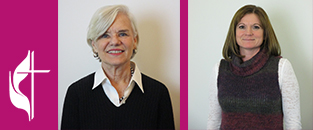
Dorothy VogtDel Rio, Texas – Methodist Healthcare Ministries of South Texas, Inc. has been proud to partner with Del Rio First United Methodist Church to host the Wesley Nurse Program where Dorothy “Dotty” Vogt, RN has faithfully served as a Wesley Nurse for 10 years. Dotty’s devotion to the community, especially the families who often seek much needed assistance through the ministries offered by First United Methodist Church, is paralleled only to her commitment to the mission, vision and values of Methodist Healthcare Ministries. We thank Dotty for her service, and wish her a fond farewell as she takes on life’s next adventure.

Methodist Healthcare Ministries is pleased to welcome Martha “Marti” Faulkner, RN, who will continue serving the community as the new Wesley Nurse at First United Methodist Church. Marti has been a nurse for 16 years and has experience in hospital administration, emergency room nursing, labor and delivery nursing, community nursing, and hospice care – where she discovered an appreciation for holistic care. Marti exudes an outgoing, giving nature and has a passion for working with the underserved. Previously, she founded a homeless ministry with her daughter in her home state of New Mexico.

Marti Faulkner

Marti stated, “It was a God thing, the way this job came about,” after Wesley Nurse District Manager Beverlee Williams came in contact with Marti’s daughter who made the connection for she and Marti. She felt it was a perfect fit.

What Marti is looking forward to the most as a Wesley Nurse is teamwork – working closely with the church and health committee. “I’m excited to have a spiritual team by my side to do such important work in the community,” she said.

We welcome Marti to the Methodist Healthcare Ministries family.

Marti's office is located at the First United Methodist Church (100 Spring Street). Normal office hours are Monday through Thursday from 8:00 a.m. to 5:00 p.m. (closed daily between 12:00 p.m. and 1:00 p.m. for lunch). Hours are subject to change due to Wesley Nurse program responsibilities and community outreach. For additional information, call (830) 775-1541 or visit www.MHM.org.  

Methodist Healthcare Ministries’ Wesley Nurse program is a faith-based, holistic health and wellness program committed to serving the least served through education, health promotion and collaboration with individual and community in achieving improved wellness through self-empowerment. Learn more at www.mhm.org.


Methodist Healthcare Ministries awarded 2015 J.C. Montgomery Child Safety award


mont award2

Methodist Healthcare Ministries recognized for keeping Texas children safe

San Antonio — Methodist Healthcare Ministries of South Texas, Inc., the largest private, faith-based funding source for health care services in South Texas, was recently awarded the 2015 J.C. Montgomery Child Safety Award from the Texas Office for Prevention of Developmental Disabilities (TOPPD). The award acknowledged Methodist Healthcare Ministries' Wesley Nurse Program for its active role and strong advocacy for child safety.

The recognition praised the Wesley Nurse Program's innovative and creative community activities, particularly special initiatives which improve the welfare of underserved youth in rural neighborhoods, throughout 80 different South Texas counties. In addition, Wesley Nurses were commended for the challenging nature of their work, and for influencing others to carry out the same mission.

IMG 0349

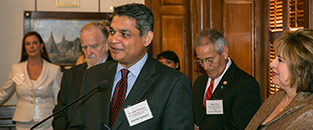
The event was hosted by TOPDD quest speakers Ashley Givens of Texas Scottish Rite Hospital for Children, the Honorable Leticia Van De Putte, and State Representative Gilbert Pena. Methodist Healthcare Ministries' Chief Operating Officer, George Thomas, accepted the prestigious award on Nov. 20 at the fifth annual J.C. Montgomery Child Safety Awards ceremony in the Lieutenant Governor's reception room at the Texas State Capitol. Thomas was joined by Methodist Healthcare Ministries' Director of Government Relations, Christine Yanas.

"It is an honor to be recognized by the State of Texas," conveyed George Thomas, chief operating officer at Methodist Healthcare Ministries. "Our Wesley Nurses strive to provide quality care, particularly to children in their communities, by offering health education, health promotion and the facilitation of resources for improved health and wellness. These children will one day lead our communities. They are the next generation in this country."

The award, named for former TOPDD Executive Committee Chair and Scottish Rite Hospital leader J.C. Montgomery, recognizes leaders throughout Texas who personify a wide variety of approaches to child safety. The ceremony also acts as a bridge to connect people and organizations to build upon one another's strengths and create a comprehensive knowledge around best-practices to improve child safety in the state.

Other award recipients included:

  • State Rep. Sarah Davis of Houston for her leadership in improving healthy pregnancies and mental health services for children.
  • State Sen. Judith Zaffirini of Laredo, one of the founders of TOPDD and an advocate for children in the welfare system and children with special needs.
  • George Block a founder of San Antonio Sports and developer of Viva Swim for Life who has demonstrated a life-long commitment to water safety and ensuring all children have the chance to learn how to swim.
  • Alisa De Luna, executive director of CASA of Williamson County, an advocate and respected resource for policy makers dedicated to improving the lives of children in state care.
  • Sarah Duzinski, a research scientist for Dell Children's Medical Center of Central Texas in Austin who is a state leader in promoting evidence-based prevention initiatives across the state, including the highly respected Period of Purple Crying program.
  • Dr. Elaine Parker of Houston, a psychologist, author and parent of a child with a traumatic brain injury who spearheaded the development and distribution of a brain injury survivor card to be used when brain injury survivors interact with police and first responders. She has been active in developing state and national educational programs.
  • Cherie Stanley, of Fred, who is an instructional technologist for a school system, a parent of a child affected by fetal alcohol spectrum disorders, actively raising awareness in her community and a recognized educator, policy advocate and leader on FASDs locally and statewide.
  • Dolores G. Zarate, president and co-founder of Down on the Border, Inc. (serving San Antonio, Brownsville and Mission.) Zarate organizes a festival for children and is active in public policy work.
  • Will Mina, an 11-year-old sixth-grader from Dallas, who received the first special youth advocate award for engaging the Dallas City Council to improve safety around his school.
  • Peaks and Ladders, Inc., a multidisciplinary coalition providing equipment and education to prevent childhood injury and deaths.

For more information about Methodist Healthcare Ministries, please visit www.mhm.org. For more on the J.C. Montgomery Child Safety Award, visit http://topdd.texas.gov/.

Christmas Tree Donation: Methodist Healthcare provides holiday cheer to underserved families

MEDIA ADVISORY

Christmas Tree Donation: Methodist Healthcare provides holiday cheer to underserved families

San Antonio – Methodist Healthcare Ministries of South Texas, Inc., the largest private, faith-based funding source for health care services in South Texas, will partner with Methodist Hospital and Methodist Children's Hospital for the third consecutive year to donate nearly 60 decorated Christmas trees to several underserved families in San Antonio. As part of their holiday celebrations, several departments of Methodist Hospital and Methodist Children's Hospital participate in a tree decorating contest. Following the competition, the trees are donated to Methodist Healthcare Ministries to give to a family in need.

"We are delighted to be able to provide our clients with some holiday cheer this season. Christmas is a time of compassion and giving, and that's what these trees symbolize. We are grateful for the generosity of Methodist Hospital and Methodist Children's Hospital, and the joy this donation will bring many families," expressed Oanh Maroney-Omitade, vice president of clinical operations at Methodist Healthcare Ministries.

WHO: Methodist Healthcare Ministries; Methodist Hospital and Methodist Children's Hospital

WHAT: Christmas tree donation for nearly 60 underserved families

WHERE: Wesley Health & Wellness Center (1406 Fitch Street)

WHEN: Monday, December 21, 2015 at 11:30 a.m.

WHY: Spreading Christmas cheer through the donation of Christmas trees to the needy

PHOTO OPS / INTERVIEW OPPORTUNITIES:

  • Families receiving a decorated, artificial Christmas tree
  • Interview with Oanh Maroney-Omitade, vice president of community health programs at Methodist Healthcare Ministries or delegate
  • Interview(s) with family receiving tree

MEDIA CONTACT: Jessica C. Muñoz, Director of Communications, 210-776-4525 or jmunoz1@mhm.org

###

About Methodist Healthcare Ministries of South Texas, Inc.

Methodist Healthcare Ministries of South Texas, Inc. is a private, faith-based not-for-profit organization dedicated to providing medical, dental and health-related human services to low-income families and the uninsured in South Texas. The mission of the organization is "Serving Humanity to Honor God" by improving the physical, mental and spiritual health of those least served in the Rio Texas Conference area of The United Methodist Church. The mission also includes Methodist Healthcare Ministries' one-half ownership of the Methodist Healthcare System, the largest healthcare system in South Texas, which creates a unique avenue to ensure that it continues to be a benefit to the community by providing quality care to all and charitable care when needed. For more information, visit www.mhm.org

View footage from the first tree donation event:

Keeping your cheer this holiday season

by Rhonda Hunnicutt, RN, Wesley NurseSue

…. A time to weep and a time to laugh… Ecclesiastes 3:4

It's hard to believe that December is already here! For many, it's a season of joy, of love, and celebration of Christ's birth. For others, the holiday season, not just Christmas, is a dark time spent alone reflecting on the loss of loved ones, a time of loneliness, and despair. A condition known appropriately as S.A.D., can exacerbate those feelings in some people. S.A.D. , or Seasonal Affective Disorder, is a mood disorder prevalent in winter months, due to shortened days and decreased sunlight. Though more common in northern climates, it is no less serious among those who suffer from S.A.D. in the south. Most people are somewhat familiar with symptoms of depression- symptoms of S.A.D. are much the same. To name just a few: decreased energy and interest in favorite activities; difficulty concentrating or remembering things; irritability; sadness; feelings of guilt or hopelessness; sleeping too much or too little; thoughts of death.

The good news is, that as days lengthen and sunlight increases again, S.A.D. symptoms usually abate on their own. And there is treatment. However, no one should have to suffer through a season with this depressive mood disorder needlessly. For some people, relief comes as simply as first recognizing the feelings and symptoms at the onset, opening the shades to let in more natural sunlight, or even better, getting outdoors to combine sunlight and activity/exercise. Exercise doubles the benefit because as activity or exercise decreases stress, it also releases endorphins that boost mood and coping ability. Other ways of coping with symptoms are deep breathing, prayer, and laughter…difficult to think of doing at this time, but so important to remember to do.

Of course, this article is not meant to diagnose or treat any mood disorders, rather, to raise awareness. If you are experiencing these symptoms more severely, and are not able to alleviate with simple measures, you should seek help from your health care provider who can properly diagnose and treat your symptoms.

The take away message that I want to leave you with is that you are not alone! Visit with your pastor or other trusted members of the church, your health care provider… surround yourself with positive people who don't encourage negative self-talk or feelings. Have lunch with a friend. Take walks with a buddy. Focus on the blessings you have in your life. Volunteer your services to others as a means of bringing clarity and purpose to your life. Anyone of us has the potential to fall victim to S.A.D. or other depressive disorders- recognition, action, and treatment are key to overcoming. And as quickly as December came, the longer, darker days of winter will be gone again. Until next time, be well, and be blessed.

Rhonda Hunnicutt, RN, is a Wesley Nurse with Methodist Healthcare Ministries of South Texas, Inc. Methodist Healthcare Ministres' Wesley Nurse program is a faith-based, holistic health and wellness program committed to serving the least served through education, health promotion and collaboration with individual and community in achieving improved wellness through self-empowerment.

Valuable tips shared at diabetes class

by Lisa Luna, Lifestyles Editor, Pleasanton Express26p3.preview

As a way of bringing attention to the ever-growing disease of diabetes, November is recognized nationwide as Diabetes Awareness Month.

On Monday, Nov. 23, one of the weekly installments in the "Do Well, Be Well with Diabetes" series was held at the Atascosa Health Center. The program focused on "Beyond the Diet: Improving Your Blood Glucose Control with Medication."

Linda Harper, a Methodist Healthcare Ministries' Wesley Nurse who serves at First United Methodist Church in Pleasanton and Dru Benavides, Family & Consumer Science County Agent with Texas A&M AgriLife Extension, presented the informative session.

Understanding diabetes medication

Harper shared that whether it is to start pills, or to start insulin, you should not wait longer than 3 months if your glucose is out of the recommended range. Allowing high blood glucose while trying harder with diet and physical activity or pills when you need insulin raises the risk for complications.

She also emphasized that not being diagnosed as having diabetes does not protect you from accumulating damage and complications. Also, having high blood glucose and not feeling badly does not protect your from complications.

"High blood glucose takes a long time to produce symptoms that make you feel badly," said Harper. "The damage is due to a higher blood glucose that keeps adding up."

Harper also said that people's blood sugar levels affect them differently. In other words, some people can tell when their blood sugar is low. Then there are others with low levels who feel fine. This can be dangerous for situations in which the diabetic may be driving or say, walking alone in the park.

Some argue that they cannot take medication because it is too expensive. However, said Harper and Benavides, so are complications. There are prescription assistance programs and coupons available. Patients should let their doctor know if cost is a concern.

Insulin is added when the A1c level is over 7 percent or when blood glucose is consistently not within the recommended ranges.

"Don't want too long to start insulin. Too many wait," said Harper.

It was also recommended that diabetics, whether you are on insulin or not, wear an ID bracelet or necklace.

Meals away from home

Enjoying foods and meals away from home requires preparation and having a plan. When meals are delayed for more than one hour, have a carbohydrate choice snack, like a piece of fruit, at your regular mealtime. Later, eat the remaining carb choice at your delayed meal.

What if you are eating a meal earlier than usual? For early meals greater than one hour before your normal mealtime, eat few carbohydrate choices. Save either 1 to 2 carbohydrate choices for your regular mealtime.

Restaurant tips include making reservations at your usual mealtime, not being afraid to ask for substitutions and splitting a meal with a family member or friend or ask for a to-go container.

Benavides and Harper also presented visual guidelines on measurements. The palm of your hand is about the size of 3 ounces of meat. A woman's fist is about the size of a cup. A woman's cupped hand is about 1/4 cup and the tip of the thumb is almost 1 teaspoon.

There were also suggestions made on the topic of diabetes and alcohol. Do not consume alcohol on an empty stomach. Keep in mind that symptoms of low blood glucose are very similar to someone who has been drinking. Symptoms of low blood glucose may include hunger, headache, sudden moodiness, lack of coordination and blurred vision.

Alcohol can also impair your judgment and could cause you to miss meals or medications, which could possibly lead to more low blood glucose.

Diabetics are advised to keep a food log and record the blood glucose levels before eating breakfast and two hours after all meals.

The key is to remember that your doctor can provide expert advice and prescriptions, but you have to follow the advice.

Said Harper, "Keep your goal in mind and maintain your blood glucose in the recommended ranges."

On Monday, Nov. 30, the final class in this diabetes series was held at the Atascosa Health Center.

TYPES OF DIABETES

Diabetes is a problem with your body that causes blood glucose levels to rise higher than normal. This is also called hyperglycemia. Type 2 diabetes is the most common form of diabetes.

TYPE 2: If you have type 2 diabetes your body does not use insulin properly. This is called insulin resistance. At first, your pancreas makes extra insulin to make up for it. But, over time it isn't able to keep up and can't make enough insulin to keep your blood glucose at normal levels.

TYPE 1: Type 1 diabetes is usually diagnosed in children and young adults, and was previously known as juvenile diabetes. Only 5 percent of people with diabetes have this form of the disease. In type 1 diabetes, the body does not produce insulin. The body breaks down the sugars and starches you eat into a simple sugar called glucose, which it uses for energy. Insulin is a hormone that the body needs to get glucose from the bloodstream into the cells of the body. With the help of insulin therapy and other treatments, even young children can learn to manage their condition and live long, healthy lives.

GESTATIONAL DIABETES: During pregnancy – usually around the 24th week – many women develop gestational diabetes. A diagnosis of gestational diabetes doesn't mean that you had diabetes before you conceived, or that you will have diabetes after giving birth. But it's important to follow your doctor's advice regarding blood glucose (blood sugar) levels while you're planning your pregnancy, so you and your baby both remain healthy.

This article originally appeared in the Pleasanton Express. To view the orginal article, click here.

New partnership between Methodist Healthcare Ministries and Dispensary of Hope is the right medicine for local uninsured patients

Print

SAN ANTONIO, TEXAS – Methodist Healthcare Ministries of South Texas, Inc., a private, not-for-profit organization dedicated to creating access to health care for the uninsured through direct services, community partnerships and strategic grant-making, has joined efforts with the Dispensary of Hope, a national, charitable medication distributor, to offer uninsured patients in San Antonio access to prescription medication at no cost. The new partnership is expected to benefit approximately 1,500 patients served through Methodist Healthcare Ministries' medical practices.

Methodist Healthcare Ministries owns and operates two primary care clinics at two locations in San Antonio. The clinics address the medical, behavioral health and dental needs of patients who cannot afford health insurance; services are provided on a sliding-scale fee based upon ability to pay, household income and family size.

The Dispensary of Hope will provide Methodist Healthcare Ministries with generic and brand medication. The Dispensary of Hope distributes this product as a part of its mission to bridge the generosity of drug manufacturers and health systems and the community spirit of charitable dispensing sites with the healthcare needs of the uninsured.

Over 1,000 practices across the United States donate surplus brand medication to the Dispensary of Hope through the campaign and have donated over $150 million (Average Wholesale Price) in medication. The Dispensary of Hope distributes the medication it receives domestically across its network of partners which include federally qualified health centers, free clinics, charitable community and outpatient pharmacies, and state central access programs, all licensed to dispense medication.

"The partnership with the Dispensary of Hope is going to fill a tremendous need for the unfunded patients served at our medical practices. It's a wonderful opportunity for our patients and we feel especially blessed to share this good news at a time when we all come together to celebrate all we are thankful for," says Methodist Healthcare Ministries' Chief Operating Officer, George Thomas. "The need for a program like this is tremendous—not just in Bexar County but across South Texas as we have some of the poorest cities in the United States just south of San Antonio. My hope is that more programs like the Dispensary of Hope would be available in those communities to help low-income families and the uninsured take care of their health needs."

Methodist Healthcare Ministries' Wesley Health & Wellness Center, which serves San Antonio's South Side community, is now part of a network of health centers in Texas serving as Dispensary of Hope access sites.

The partnership with the Dispensary of Hope will help approximately 1,500 patients served at Methodist Healthcare Ministries' medical practices in Bexar County.

Christopher Palombo, CEO of the Dispensary of Hope states "Access to surplus medication has the amazing impact of reducing healthcare costs, increasing access to medication, and improving patient health outcomes. We at the Dispensary of Hope appreciate the generosity of the drug manufacturing community, and the stewardship ethic among our donating physician practices who work to assist the patients of charitable clinics and pharmacies such as Wesley Health & Wellness Center."

To qualify for medical services at Methodist Healthcare Ministries' Wesley Health & Wellness Center, patients must meet certain eligibility criterion. To learn more, call the Wesley Health & Wellness Center at (210) 922-6922.

About Dispensary of Hope

The Dispensary of Hope, established in 2003 by Dr. Bruce Wolf, currently serves over 80 communities and 40,000 patients nationwide. Formed as a national collaborative effort which includes remarkable participation from donor drug manufacturers, health systems, clinics, pharmacies, supporting foundations, and many other engaged leaders, its role is to transform medication access through collaborative leadership. The Dispensary of Hope's programs serve drug manufacturers and health systems with an efficient and compliant way to donate medication, avoiding costly destruction while serving those in need. The Dispensary of Hope collaborative effort is hosted by Saint Thomas Health in Nashville, Tennessee, a member of St. Louis-based Ascension Health, the nation's largest nonprofit health system and lead funder for the Dispensary of Hope project. For more information, visit: www.dispensaryofhope.org.

About Methodist Healthcare Ministries of South Texas, Inc.

Methodist Healthcare Ministries of South Texas, Inc. is a private, faith-based not-for-profit organization dedicated to providing medical, dental and health-related human services to low-income families and the uninsured in South Texas. The mission of the organization is "Serving Humanity to Honor God" by improving the physical, mental and spiritual health of those least served in the Rio Texas Conference area of The United Methodist Church. The mission also includes Methodist Healthcare Ministries' one-half ownership of the Methodist Healthcare System, the largest healthcare system in South Texas, which creates a unique avenue to ensure that it continues to be a benefit to the community by providing quality care to all and charitable care when needed. For more information, visit www.mhm.org.

Community partnerships fill the Adult Immunization void in San Antonio

By Enomie Rosenthal, Wesley Nurse

I was invited by the executive director of Agape Ministry to attend their volunteer appreciation luncheon in May. Dr. A. Mangla, assistant director of the Metropolitan Health Department was a guest speaker at the luncheon. He spoke about various statistics in Bexar County. At the end of his presentation, he opened the floor for questions. Prior to the luncheon, I had been looking for free adult immunizations for the underserved in my community and was not able to find any resources. There were no shortages for free children immunizations, but none for adults. While researching information on adult immunizations, I found adult immunizations rates in the United States remain significantly low, falling well below national targets according to a new report from the Centers for Disease Control and Prevention. In Bexar County I was not able to pull up accurate numbers. I relayed my dilemma to Dr. A. Mangla after the presentation, and he graciously agreed to a follow up meeting to discuss adult immunizations in-depth.

We soon discovered there was a strong need in Bexar County. We strengthened our efforts by involving several local agencies in a conversation on how to address the issue. Collaboratively, we decided to host an Adult Immunization Clinic in San Antonio. I was able to secure a location at the Bethany United Methodist Church (4102 Eisenhauer) where I am stationed as a Methodist Healthcare Ministries' Wesley Nurse. We contacted vendors to participate. Food was donated for volunteers, vendors and attendees. We got the word out tapping into the channels and networks of all community agencies involved. As the word got out, there was a real buzz stirring.

AIC BUMC-1a

When the day finally came, I have to admit a nervous anxiousness overcame me. To compound this, I heard rain was in the forecast for the day. I prayed, "Please God let there be a good turnout." I kept thinking, "I just don't want to fail."

When the doors opened, the anxiousness melted away and I was overcome with joy as I saw a full line of smiling faces.
I hustled about the day, visiting with vendors, checking on the rooms that were assigned for the immunizations and making sure everything was running smoothly. An event volunteer heard one the of the attendees say, "this is good for the community." I count that as a success! If we only touch one life, then we are successful. I also learned that God has my back and I need to trust Him no matter what the situation.

Beyond touching the life of participants, I am confident I've built a strong network of community agencies and leaders to bring about positive change in the health care landscape in San Antonio and beyond. I am hopeful to repeat this success next year.

If you want to go far, go together

Anne N. Connor, Director of Community Grants, Methodist Healthcare Ministries of South Texas, Inc.Anne-Connor-2013

"If you want to go fast, go alone; if you want to go far, go together." In this African proverb, the concept of "going together," and the investment of time it requires, applies to an asset-based approach to collective impact in creating community health. The Communities Creating Health feature in SSIR poses the question: "What would happen if the design, implementation, and evaluation of health interventions became something we do with communities rather than to them?"

When Methodist Healthcare Ministries of South Texas, Inc. set out to launch a collective impact initiative to improve community health in the Rio Grande Valley of Texas, we added a new element to this proven framework. We knew that too many funders had entered a high-need service area with the message, "We know what's wrong with this community, and we're here to help you fix it." Instead, we preceded the collective impact project with a year of Asset Based Community Development (ABCD), a process of building relationships and identifying existing assets within the community. This changed the message to, "Your community has a lot of strengths, and we're here to help you leverage those." That's a very different conversation.

The ABCD project was conducted by Methodist Healthcare Ministries' Wesley Nurses, a group of 80 church-based Registered Nurses throughout our 74-county service area who provide community health and wellness services. The nurses met with hundreds of community agencies and individual community members to identify assets and build relationships.

Building on this approach, Methodist Healthcare Ministries was able to convene a core group of health care providers and cross-sector community leaders ("grass tops") to identify a common agenda for community health improvement (with a focus on diabetes). Methodist Healthcare Ministries' commitment to the collective impact framework included a one-year consulting contract with FSG, a well-known expert on collective impact implementation. The core group was expanded to a steering committee representing more than 40 organizations for a deeper dive into the shared agenda.

A major milestone in the steering committee's work was a written agenda called Unidos Contra Diabetes. The steering committee found that, while most providers in the community were focusing their resources on diabetes disease management, the community would prefer to be focusing on diabetes prevention. This is a huge shift, especially in terms of payment models, but the community committed to this agenda. The motivation is strong, as most households near the Texas border have had at least one family member with diabetes and have experienced the tragic complications.

The collective impact project has expanded the community voice even further, and now includes several working groups and one planned task force. Community members and leaders are participating in determining how their existing assets can be coordinated to help prevent diabetes. The measurement task force is identifying metrics that can be used to track project success.

The work of the measurement task force is informed by a related effort, the Sí Texas Project, which is funded by Methodist Healthcare Ministries, the Social Innovation Fund, and local funders. Sí Texas is short for "Social Innovation for a Healthy South Texas," and is focused on integrated behavioral health models which address diabetes disease management (rather than prevention) as part of a holistic mind-body-spirit approach. While Unidos Contra Diabetes covers four counties in the Rio Grande Valley, Sí Texas covers 12 counties ranging from the Coastal Bend to Laredo, and includes the Unidos Contra Diabetes service area.

In keeping with Methodist Healthcare Ministries' commitment to evaluating projects with communities, Sí Texas engaged in a consensus-building process led by its contracted evaluator, Health Resources in Action (HRiA), to select the shared metrics all the subgrantees and their partners will use. (Shared metrics are of course another element of the collective impact framework, along with a shared agenda). As much as possible, the Unidos Contra Diabetes task force will align any diabetes management metrics that it tracks with those used by Sí Texas.

In addition, Methodist Healthcare Ministries has committed to engaging in a series of focus groups and community meetings, with a focus on the patient voice, to help identify how best to share and distribute findings of both the Sí Texas Project and the Unidos Contra Diabetes project. The series will convene patients and key stakeholders across a 17-county area to develop a coordinated regional approach to inform patient-centered research and evaluation among university systems, academic institutions, managed care organizations (MCOs), and public health systems. Methodist Healthcare Ministries will inventory how research findings/evaluation results are, or are not, shared with patients. The series will develop an actionable engagement strategy between MCOs and stakeholders to share and disseminate research findings/evaluation. This will help develop a framework guiding patient participation producing increased levels of trust between patients and academic/public health systems.

The ultimate outcome is that the patient voice is heard across systems, throughout all phases of research, resulting in dissemination practices and strategies that are highly responsive, culturally and linguistically appropriate for patients in South Texas. Across all the efforts described above, Methodist Healthcare Ministries is walking together with the communities it serves, toward the goal not only of improved community health, but of greater local ownership of healthy communities.

First United Methodist Church welcomes new Wesley Nurse

Wesley Nurse to offer Brownsville community health care servicesMarvella Garcia

Brownsville, Texas — Methodist Healthcare Ministries of South Texas, Inc. is excited to offer the Wesley Nurse program in Brownsville at the First United Methodist Church. The signature program is Methodist Healthcare Ministries' largest program geographically with more than 80 sites accross South Texas. The health and wellness program is committed to serving the least served through education, health promotion and collaboration with the individual and community in achieving improved wellness through self-empowerment.

Since 1997, First United Methodist Church in Brownsville has partnered with Methodist Healthcare Ministries to offer area residents direct access to the Wesley Nurse program in their neighborhood. This unique model of faith community nursing is committed to education, health promotion and collaboration. Anyone looking to improve their physical, mental or spiritual health can find support and assistance through this local program.

Marvella Garcia, RN, is a seasoned health care professional with more than 10 years of experience serving as a home health nurse, school nurse, emergency care and nursing administration prior to joining Methodist Healthcare Ministries. She looks forward to impacting the community by providing educational opportunities and facilitating services to help empower the lives of her clients and their loved ones.

Marvella's programming as a Wesley Nurse will include blood pressure and glucose screenings, group and individual health education programs, nutritional support, referral services and community outreach programs. Her goal is to provide holistic health (body, mind and spirit) services and resources to those those in need.

"I want to empower community residents through access to health care programs and services," explains Garcia.

Ms. Garcia's office is located at the First United Methodist Church (1225 Boca Chica Blvd.). Normal office hours are Monday through Friday from 8:00 a.m. to 5:00 p.m. Hours are subject to change due to Wesley Nurse program responsibilities and community outreach. For additional information, call (956) 546-5365 or visit MHM.org.

White close icon

Jaime Wesoloski

President & Chief Executive Officer

Jaime Wesolowski is the President and Chief Executive Officer at Methodist Healthcare Ministries. A healthcare executive with three decades of leadership experience, Jaime is responsible for the overall governance and direction of Methodist Healthcare Ministries. Jaime earned his Master’s Degree in Healthcare Administration from Xavier University, and his Bachelor’s of Science from Indiana University in Healthcare Administration. As a cancer survivor, Jaime is a staunch supporter of the American Cancer Society. He serves as Chair of the American Cancer Society’s South Texas Area board of directors and he was appointed as Chair to the recently created South Region Advisory Cabinet, covering eight states from Arizona through Alabama. Jaime believes his personal experience as a cancer survivor has given him more defined insight and compassion to the physical, emotional, and spiritual needs of patients and their families.