Methodist Healthcare Ministries supports the American Heart Association

Heart disease is our nation's #1 killer, causing 40.6 percent of all deaths. Each year, nearly 50,000 Texans die from cardiovascular disease and stroke, and nearly 2 million Texans suffer from cardiovascular disease. In an effort to prevent heart disease and increase awareness of its effects, Methodist Healthcare Ministries of South Texas, Inc. is proudly sponsoring several American Heart Association events in 2016, including the celebration of American Heart Month in February.

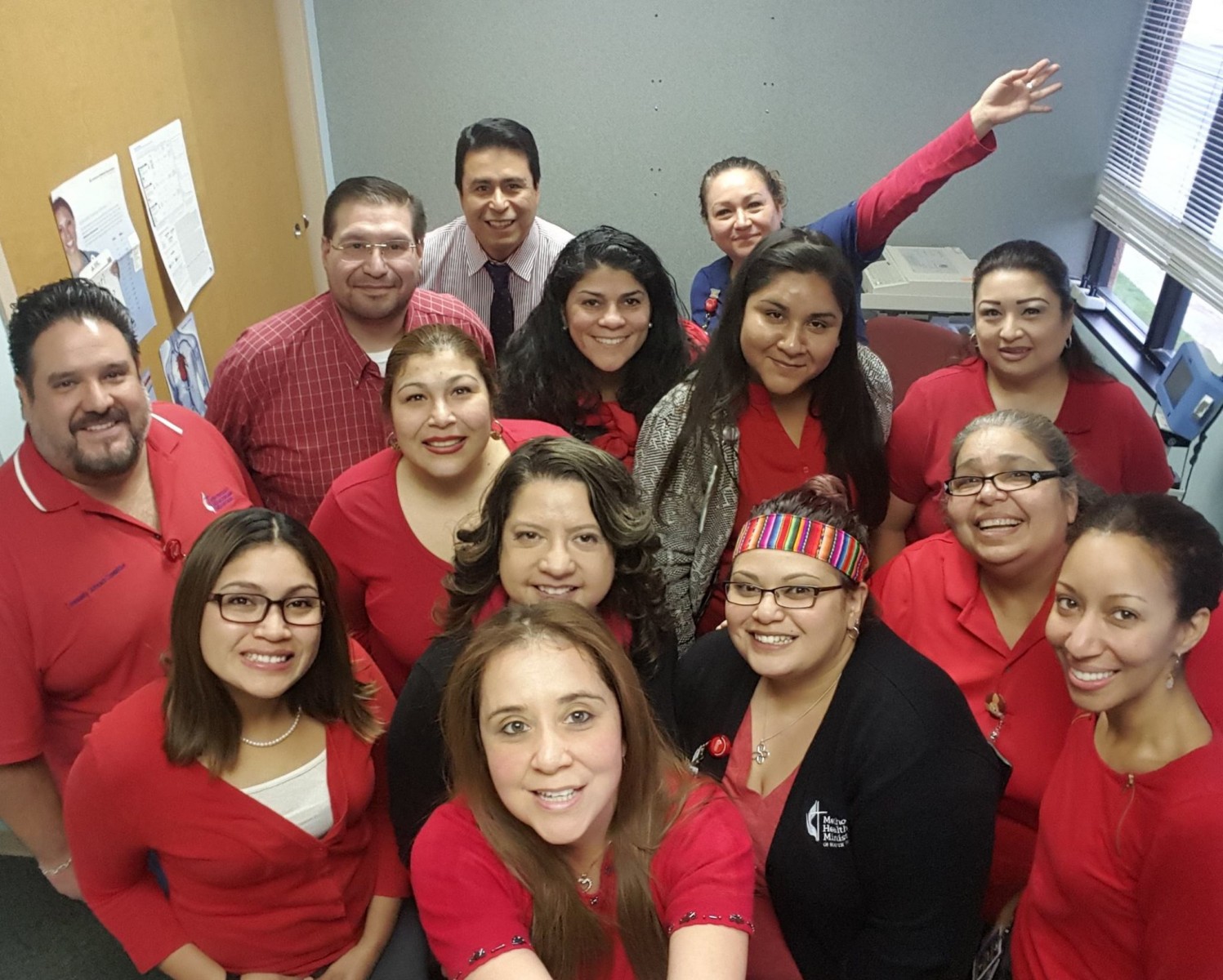
On Feb. 5, Methodist Healthcare Ministries participated in National Wear Red Day®, the American Heart Association's national movement to increase awareness of heart disease in women. Heart disease and stroke cause 1 in 3 deaths among women each year, killing approximately one woman every 80 seconds. Fortunately, 80 percent of cardiac and stroke events may be prevented with education and action. Every year, National Wear Red Day® aims to inspire women to take charge of their heart health. To learn more, visit GoRedForWomen.org.

On Feb. 25, Methodist Healthcare Ministries will contribute $2,500 to be a Learn Red Sponsor at the Go Red for Women Luncheon in San Antonio. More women die from heart disease than from all forms of cancer combined. Because mothers, daughters, sisters, and friends are all at risk of heart disease and stroke, the purpose of the luncheon will be to inform attendees to catch the red flags, and encourage women to know their heart health story. Go Red For Women inspires women to make lifestyle changes, mobilize communities, and shape policies to save lives. United, we are all working to improve the health of women in our community. For more information on the luncheon, click here.

On Feb. 27, Methodist Healthcare Ministries will contribute $10,000 to be a Presenting Level Sponsor at the Vestido Rojo Conference, an initiative to address the needs of Hispanic women in San Antonio. Heart disease is the number one cause of death for Hispanic women. The Vestido Rojo conference is being held in conjunction with Go Red Por Tu Corazon, the American Heart Association's nationwide movement that celebrates the energy, passion and power of Hispanic women to band together and wipe out heart disease. The movement is activated by a combination of special community events, presentations, and media to elevate awareness and give Hispanic women tips and information. The conference will empower women with knowledge and tools so they can take positive action to protect their health. For more information on this free event, which will include health screenings, nutrition workshops, presentations and more, click here.

On May 7, Methodist Healthcare Ministries will contribute $5,000 to be a Creating Hope Table Sponsor at the San Antonio Heart Ball. For one night each year, the American Heart Association brings together an audience of decision makers from across San Antonio, in an opportunity to not only raise critical dollars to support the American Heart Association's mission but also create life-saving awareness. This year's event is focused on creating awareness and how to recognize the signs of stroke. Funds raised through the San Antonio Heart Ball supports many local efforts in our community. To learn more about this elite black tie event that is expected to bring in prominent members of the health, philanthropic and local business communities, click here.

On May 13, Methodist Healthcare Ministries will be a top level sponsor at the Go Red for Women Luncheon in Corpus Christi, Texas by contributing $35,000. The luncheon will provide women of all generations with tips and information on healthy eating, exercise, and risk factor reduction, such as smoking cessation, weight maintenance, blood pressure control and blood cholesterol management. For more information on the luncheon, visit corpuschristigored.heart.org.

The American Heart Association movement continues to reach women, men, health care professionals, policy makers, and even celebrities to embrace and elevate the cause of heart disease. Thanks to the participation of millions of people across the country people are living stronger, longer lives. For more information on the American Heart Association, and for helpful resources, visit www.heart.org.

A look at a Sí Texas Project Integrated Behavioral Health model: Juntos for Better Health

By Anne Connor, director of community grants

In 2014, Methodist Healthcare Ministries of South Texas, Inc. launched the Sí Texas Project: Social Innovation for a Healthy South Texas (Sí Texas Project) with support from an unprecedented federal investment of $10 million by the Social Innovation Fund, a program of the Corporation for National and Community Service. Through the Sí Texas Project, Methodist Healthcare Ministries is evaluating nine evidence-based models of Integrated Behavioral Health (IBH) care, with some innovative aspects targeted at 12 counties within Methodist Healthcare Ministries' service area.

This week I'd like to take a closer look at the Juntos for Better Health IBH model. Texas A&M International University (TAMIU) and its partners will implement this model in the Laredo area. This model combines prevention and IBH care.

Juntos for Better Health is a partnership of several community service providers, forming the first fully-coordinated health care delivery system among multiple partners in Laredo. It is based on the Dartmouth Prevention Care Management Unit (PCMU) model, which places empowerment of clients and communities at the core. The goal of this project is to develop a coordinated and integrated health care delivery network to improve the health of the community.

TAMIU and its partners will focus on the health care system in Webb, Zapata and Jim Hogg counties. This model provides a continuum of care for those with obesity, diabetes, and depression, using a prevention focus to increase compliance, traveling teams, and additional personnel to increase health care capacity, a shared system of resources, and improving knowledge of illnesses. Juntos for Better Health is comprised of three different, but interacting intervention prongs.

1. Prong 1 involves a health education activity and a treatment compliance component. The Juntos model will offer health education on obesity, diabetes, and depression to participants in various community settings in an effort to increase prevention of these illnesses by improving knowledge. TAMIU College of Nursing faculty and students will follow a modified version of the Dartmouth Prevention Care Management Model, which involves a PCMU. Patients with diabetes and/or depression at Border Region Behavioral Health Center and the Laredo Health Department, as well as partnering organizations, who miss appointments, will receive phone calls and home visits in an effort to increase treatment plan compliance.

2. Prong 2 involves traveling health care teams. These teams will engage clients of partner organizations and refer them to appropriate services. Clients who are referred for services but are noncompliant will be placed in the PCMU group for follow-up (Prong 1).

3. Prong 3 involves building capacity and sharing resources among and within partner organizations through the addition of staff, development of referral protocols, and developing a shared health information system to improve plans of care and facilitate referrals.

TAMIU and its partners will implement an intervention that combines the Dartmouth PCMU model and the innovative Juntos model, both of which are client/community empowerment models.

To view previous blogs in this series of Sí Texas blog posts, subscribe at www.mhm.org/blog.

Methodist Healthcare Ministries Sponsors 2016 Alpha Home Doorways of Hope Luncheon

Methodist Healthcare Ministries of South Texas, Inc. is proud to support Alpha Home, a leading provider of residential and outpatient substance abuse treatment services to low-income individuals in Bexar County, by sponsoring the 2016 Doorways of Hope Luncheon on Thursday, February 25.

Doorways of Hope Luncheon
Thursday, February 25, 2016 from 11:30 a.m. – 1:30 p.m.
Omni San Antonio Hotel (9821 Colonnade Blvd., San Antonio, Texas 78215)

"Alpha Home provides an invaluable service, and we look to them for our patients' needs for specialized care," said Methodist Healthcare Ministries' Director of Behavioral Health Services Kathryn Jones, LCSW. "Because Alpha Home focuses not just on treating addiction, but on a much more holistic approach of healing mind, body, and spirit, I am pleased that Methodist Healthcare Ministries has committed to a $2,500 "Bridge to Recovery" sponsorship to support their work. These values of spirituality, integrity and compassion are values we at Methodist Healthcare Ministries strongly align with, to truly make a difference for the least served."

The 10th annual fundraising luncheon celebrates Alpha Home's 50-year-history of offering spiritually-based substance abuse treatment programs. This year's featured speaker is Rena Pederson, an award-winning writer who has interviewed personalities from the Dalai Lama to Julia Child. Pederson is the author of "What's Next: Women Redefining Their Dreams in the Prime of Life," and has been dubbed "one of the most powerful women in Texas" by Texas Monthly.

Alpha Home has the only gender-specific residential rehab program in San Antonio, dedicated exclusively to treating women. It serves almost 800 women annually, with an average success rate of 86 percent of women who stop using drugs and alcohol each year. Clients receive confidential, highly-individualized treatment, medical and mental health assessments, as well as counseling, addiction and recovery education, trauma counseling, anger management, GED instruction, relapse prevention education, life skills, and extensive case management services.

Alpha Home is a non-profit with the highest level of accreditation from CARF International (Commission on Accreditation of Rehabilitation Facilities) for three of its programs: Outpatient Treatment, Prevention/Diversion and Residential Treatment for adults with alcohol and other drug addictions. Alpha Home is licensed by the Texas Department of State Health Services and is a United Way of San Antonio and Bexar County agency.

The Doorways of Hope Luncheon is open to the public; individual tickets are $150 each and may be purchased by calling Alpha Home at 210-735-3822 or visiting www.alphahome.org.

For more information about Alpha Home, visit www.alphahome.org.

A look at Sí Texas Project’s Integrated Behavioral Health models: NuCare and Salud y Vida 2.0

By Anne Connor, director of community grants

In 2014, Methodist Healthcare Ministries of South Texas, Inc. launched the Sí Texas Project: Social Innovation for a Healthy South Texas (Sí Texas Project) with support from an unprecedented federal investment of $10 million by the Social Innovation Fund, a program of the Corporation for National and Community Service. Through the Sí Texas Project, Methodist Healthcare Ministries is evaluating nine evidence-based models of Integrated Behavioral Health (IBH) care, with some innovative aspects targeted at 12 counties within Methodist Healthcare Ministries' service area.

This week I'd like to take a closer look at two IBH models as part of the Sí Texas Project:

1. NuCare: Nuestra Clinica del Valle (NCDV) is implementing NuCare based on the collaborative care model at four of their primary care clinics in the Rio Grande Valley. A hallmark of the model is that patients are not referred to services, but the services come to them. NuCare includes a warm hand-off from the primary care provider to a mental health provider for an immediate, brief mental health intervention and warm hand-offs for health education and nutrition services. One of the innovative features of this model is the use of "promotores," or community health workers. In this project, the community health workers will meet patients in the reception area and accompany them through the visit, assist with depression screening, and meet the patient after the physical examination for an invitation to a wellness program. It is quite innovative to give promotores behavioral health responsibilities since they have been traditionally utilized for community outreach and health education. The focus in selecting promotores will be on hiring those who are controlled diabetics (true peers of the diabetic patients), Hispanic, suited to positions of leadership and program facilitation, and eager to accept training. Their involvement in administering the depression-screening tool (PHQ-9) is key because the clinic population is likely to need assistance because of challenges in reading and fear of behavioral healthcare. The physician and care team in further behavioral health assessments will use this information. The NuCare theory of change is that IBH, combined with health education, nutrition, and community-based support services, can improve diabetes control and reduce depressive symptoms. Improvement in physical and mental health will be achieved over several years in measurable impact for depressive symptoms and HbA1c levels among program participants. The warm hand-off from the primary care provider to the mental health provider, plus the presence of the promotor, breaks through the cultural barrier of stigma against behavioral health services and allows the counselor to develop rapport, encouraging patient confidence in the services offered.

2. Salud y Vida 2.0: The UT School of Public Health–Brownsville Campus will implement the Salud y Vida 2.0 model. The model incorporates enhanced primary and behavioral care, medication therapy management, community-based lifestyle programs, and teams of promotores or community health workers to conduct home follow-up visits. Medication Therapy Management will be provided for participants with low levels of medication adherence, and behavioral health services will be provided for participants who do not qualify for services with the local mental health authority, but who need behavioral health support. Community-based lifestyle programs will be provided across the Rio Grande Valley for the participants and their loved ones through peer-led support groups, cooking classes to build hands-on skills for patients wishing to prepare healthier foods, a healthy food choice customized smartphone application, and an obesity treatment program. The key to integration is on-going, systematic communication between hospital, clinic, mental health case managers, and the team of promotores who are following up with participants in their homes and at community-based educational sessions. Semimonthly case review meetings and a shared, secured web-based system called Chronicle Diabetes allow for coordination of participant services, advocacy, education and care. This model builds upon their existing Salud y Vida 1.0 program, a comprehensive chronic care management program that includes diabetes self-management education, integrated care planning and case review and outreach by community health workers.

To view all blogs in this series of Sí Texas blog posts, subscribe at www.mhm.org/blog.

A look at Sí Texas Project’s Integrated Behavioral Health models: CHISPA, TRIP for Salud y Vida, and Sí Texas Hope

By Anne Connor, director of community grants

In 2014, Methodist Healthcare Ministries of South Texas, Inc. launched the Sí Texas Project: Social Innovation for a Healthy South Texas (Sí Texas Project) with support from an unprecedented federal investment of $10 million by the Social Innovation Fund, a program of the Corporation for National and Community Service. Through the Sí Texas Project, Methodist Healthcare Ministries is evaluating nine evidence-based models of Integrated Behavioral Health (IBH) care, with some innovative aspects targeted at 12 counties within Methodist Healthcare Ministries' service area.

This week I'd like to take a closer look at three IBH models as part of the Sí Texas Project:

1. Community Healthcare InveSted in keeping Patients Active (CHISPA): El Milagro Clinic is implementing the Community Healthcare InveSted in keeping Patients Active (CHISPA) model in McAllen, Texas. This model is heavy on community-based chronic disease services, including the use of promotores in both the community and the clinic. The model utilizes monthly group-mediated cognitive behavioral meetings, and community-based services through the Healthy Living Partnerships to Prevent Diabetes (HELP PD). CHISPA will adapt the HELP PD model to account for the unique cultural and geographic needs of the Rio Grande Valley. An integral and innovative component of the CHISPA program, is the use of promotores, or community health workers. This community health worker-led health promotion intervention emphasizes integration and coordination of primary care with behavioral health care services, with community health workers integrated into the clinic team through depression screening and other patient services. A key component is the use of an occupational therapist to work with patients to identify needs early on, set goals and monitor progress. The intervention will include an initial meeting with an occupational therapist and follow-up as needed to coordinate and manage community-based services that meet the individual needs of patients, including referral to behavioral health services. The occupational therapist and the community health workers will also lead the group-mediated cognitive behavioral meetings.

2. Transportation for Rural Integrated health Partnership (TRIP) for Salud y Vida: The Rural Economic Assistance League, Inc. (REAL) is implementing the Transportation for Rural Integrated health Partnership (TRIP) model for Salud y Vida model, based in Alice, Texas, and covering a rural five-county service area. Like the Tropical Texas Behavioral Health model profiled in the previous blog, it focuses on the needs of Severe & Persistent Mental Illness (SPMI) consumers. This model was developed by REAL, in partnership with Coastal Plains Community Center, a local mental health authority serving SPMI patients; Kleberg County Human Services – Paisano Transit; and the South Coastal Area Health Education Center. The model responds to a specific need to expand the reach of current IBH services within the rural community, specifically to address the 22 percent (more than 1 in 5) consumer no-show rate for follow-up care. If patients aren't showing up for their follow-up appointments, there is little hope of advancing their health care outcomes. The key element of the TRIP for Salud y Vida model is the systematic and seamless offering of transportation services and programs to build self-empowerment to SPMI patients in the five-county service area. All TRIP for Salud y Vida consumers have a behavioral health diagnosis including severe depression, bipolar or schizophrenia.

3. Sí Texas Hope: Hope Family Health Center is implementing this collaborative care model at its clinic in McAllen, Texas. Hope Family Health Center has already begun integration of services, and the Sí Texas Project will enable them to move further along the integration continuum. The intervention involves moving from Hope Family Health Center's current model, where medical and behavioral providers work with each other episodically, to a more fully integrated model with care coordination, shared treatment plans, shared service provision, and shared record keeping. To achieve this enhanced level of integration, Hope Family Health Center will change its current primary care workflow to include a behavioral health specialist who will conduct assessments, provide initial counseling (individual or group), and coordinate referrals to care management and/or community-based health services. They will also include a care coordinator to manage referrals and follow-up and a transitional nurse to provide health and nutrition coaching and medication management. The new model of care will emphasize more collaboration between primary care and behavioral health care providers, including enhanced communication.

A series of blog articles will be added to the Methodist Healthcare Ministries Blog over the next few weeks to introduce additional models. To stay in the loop, please subscribe to the Blog at www.mhm.org/blog.

Partnerships make for progress in the area of mental health

If there's one thing I've learned from my more than two decades of treating and addressing mental health issues, it's this: there is no greater power than the power of a strong partnership. This partnership I speak of takes shape in a multitude of ways. Partnering with our patients to be allies in health; partnering with a multidisciplinary team of providers to strengthen treatment plans; and partnering with the community to augment the health care landscape within in our area.

It is with this notion that I am so proud of one of Methodist Healthcare Ministries' latest partnerships. For those who do not know, Methodist Healthcare Ministries offers behavioral health services at our clinic locations in the San Antonio area (Wesley Health & Wellness Center; Bishop Ernest T. Dixon, Jr. Clinic; and School Based Health Centers), and through community and church sites throughout our 74-counties in South Texas as part of our Community Counseling program.

And, although, I know from our clients we are addressing a need, I also recognize there are demands we are not equipped to address. That's where that powerful word, "partnership," comes into play.

To fill a void our behavioral health services team recognized, Methodist Healthcare Ministries recently partnered with Family Service Association – a non-profit agency in San Antonio dedicated to helping children, seniors, and families in need – to house a full-time Financial and Vocational Counselor at the Wesley Health & Wellness Center and Bishop Ernest T. Dixon, Jr. Clinic to serve as an in-house point of referral for Methodist Healthcare Ministries' patients and clients.

The partnership model takes the patient's/client's social determinants of health into consideration as part of the treatment available through Methodist Healthcare Ministries' two San Antonio-based clinics. As poverty is one of the strongest risk factors for poor health, this partnership is designed to help low-income individuals improve their financial health and provide them with skills and education to prevent them from being in subsequent financial emergencies.

A counselor will work on an individual's budget and teach them how to pay off debt. The partnership will also allow for one-stop access to job training programs.

As this partnership continues, I hope to see a positive effect on our emergency assistance program. If we can find ways to empower people to take control of their health – both physical and financial – perhaps we will ease the burden or stress financial crisis creates for our patients and clients.

Ultimately, by pairing financial and vocational counseling with other social services, we are better able to overcome barriers that may affect one's mental and physical health like minimal educational attainment, insufficient job skills, ineffective support systems; lack of individual employability; and intergenerational cycles of poverty.

A look at the Sí Texas Project Integrated Behavioral Health models: Sí Three, PCBH, and Reverse Co-location and Wagner

By Anne Connor, director of community grants

In 2014, Methodist Healthcare Ministries of South Texas, Inc. launched the Sí Texas Project: Social Innovation for a Healthy South Texas (Sí Texas Project) with support from an unprecedented federal investment of $10 million by the Social Innovation Fund, a program of the Corporation for National and Community Service. Through the Sí Texas Project, Methodist Healthcare Ministries is evaluating nine evidence-based models of Integrated Behavioral Health (IBH) care, with some innovative aspects targeted at 12 counties within Methodist Healthcare Ministries' service area.

This week I'd like to take a closer look at three IBH models as part of the Sí Texas Project:

1. Sí Three: Mercy Ministries of Laredo, a relatively small, faith-based clinic located in Laredo is implementing a model called, Sí Three: Integration of 3-D Health Services. The model's name comes from its three aspects of wellness: mind, body, and spirit. The model moves the clinic from its existing co-located model, in which behavioral and physical health services were offered in the same building, to an integrated model, in which these services are fully coordinated. Core components include:

  • Navigators: Nurse practitioners who provide primary care services and develop patients' care plans;
  • Referrals to internal and external resources, including telepsychiatry and faith-based counseling;
  • Care coordinators to follow up on patient referrals; and
  • Warm handoffs to behavioral health coordinators (licensed professional counselors) who patients see at every visit.

Mercy Ministries aims for its staff and providers to have a greater understanding of the roles and culture associated with IBH care. Patients' physical health is addressed through Mercy Ministries' primary care clinic. Mental health is addressed through internal and external referrals for counseling and through the use of telepsychiatry since psychiatrists are scarce in Webb County. Spiritual health is addressed through faith-based counseling. This is the only model in the Sí Texas Project that is evaluating a spiritual component, using a validated instrument that assesses spiritual well-being, and correlating the use of spiritual services with other key health outcomes related to diabetes, blood pressure, and depression.

2. Primary Care Behavioral Health (PCBH): The University of Texas, Rio Grande Valley (UTRGV) is implementing the Mountainview Primary Care Behavioral Health (PCBH) model in McAllen and Edinburg. This model integrates care through a consultant model, in which behavioral health professionals function as consultants to primary care providers and to their patients. At UTRGV, this model is implemented at family practice clinics where UTRGV medical students are placed for their residencies. In addition to the innovative use of medical residents, a key feature of this model is the use of a behavioral health consultant. Trained to function as a generalist consultant for the primary care physician, the behavioral health consultant addresses lifestyle-based somatic complaints, subthreshold syndromes, preventive care, and chronic disease. The behavioral health consultant also develops a clear patient care plan for both the patient and the primary care physician to follow.

3. Reverse Co-location and Wagner: Tropical Texas Behavioral Health is implementing Reverse Co-location in Brownsville, and aims to accomplish the key elements of the Wagner model for effective chronic illness care. Tropical Texas Behavioral Health is a Local Mental Health Authority, an agency that serves patients with Severe & Persistent Mental Illness (SPMI). The approach is called "reverse" co-location, because it is more common to integrate mental health providers into a primary care setting than to integrate primary care providers into a mental health setting. Following the reverse co-location model, Tropical Texas Behavioral Health will embed primary care and preventive services within their behavioral health setting. The Wagner model features an organized delivery system linked with complementary community resources, sustained by productive interactions between multidisciplinary care teams and educated patients and families.

An important aspect of this model is the use of a collaborative, interdisciplinary provider team, which functions with the help of a care coordinator. The clinical team will deliver coordinated, preventive primary care to Tropical Texas Behavioral Health clients with SPMI and chronic disease (i.e., obesity, diabetes, hypertension, or hypercholesterolemia). At its core, the proposed intervention features a team of medical professionals consisting of a primary care physician, physician assistant or nurse practitioner; a licensed vocational nurse; a registered dietician; a care coordinator; and other medical support staff. Together, this team will deliver coordinated, preventive primary care to Tropical Texas Behavioral Health clients with co-morbid SPMI and chronic disease (specifically obesity, diabetes, hypertension, or asthma) within a community-based outpatient behavioral health setting. SPMI includes individuals with major depressive disorder, bipolar disorder, schizophrenia, and other related disorders. Additionally, this model will actively link patients with various community resources beyond the clinic setting. Because of barriers created by SPMI, it is difficult for this target population to seek (on their own) services they need to help their lives be more stable and healthy.

A series of blog articles will be added to the Methodist Healthcare Ministries Blog over the next few weeks to introduce additional Sí Texas Project IBH models. To stay in the loop, please subscribe to the Blog at www.mhm.org/blog.

Methodist Healthcare Ministries Awarded 2015 Grant Professionals Association Pioneer Award

San Antonio — Methodist Healthcare Ministries of South Texas, Inc. was recently awarded the 2015 Pioneer Award by the Grant Professionals Association, an organization focused solely on the advancement of grantsmanship as a profession and the support of its practitioners. The distinguished award acknowledged Methodist Healthcare Ministries' impact in grant-making and was presented to Collaborative Grants Specialist Edlín Maldonado-Fuller at the Grant Professionals Association's Annual Conference on Nov. 13 in St. Louis, Mo.

The annual Pioneer Award recognizes the field of grantsmanship and the visionary contributions in grant-making by those grant-makers that have impacted their communities. Specifically, it recognizes grant-makers that have impacted and improved the way grant professionals do their work.

Two awards were presented — the local award, restricted to a grant-maker headquartered within reach of the local chapter hosting the Grant Professionals Association's Annual Conference, was given to the Missouri Foundation for Health for working with communities and nonprofits to generate positive changes in health; the international award, open to any grant-maker outside the reach of the local chapter, commended Methodist Healthcare Ministries for being the largest private, faith-based funding source for health care services in South Texas.

Along with investing more than $600 million for the past 20 years, Methodist Healthcare Ministries operates health and wellness clinics, school-based health centers, and an array of counseling, health and parenting programs. Methodist Healthcare Ministries has invested in initiatives to increase and strengthen collaborations among grantees, non-grantee nonprofit organizations and local funders. Methodist Healthcare Ministries supports a regional referral exchange, iNexx, which engages existing Methodist Healthcare Ministries programs, funded partners, and other local nonprofit resources to augment services. From a grant professional's perspective, this allows nonprofits to proudly speak of their collaborations and partnerships with other funders. Recently, Methodist Healthcare Ministries led local funders in developing a Common Grant Application for the San Antonio area, which allows nonprofits to tackle one application versus several versions. Methodist Healthcare Ministries also provides grant-writing related technical assistance and organizational capacity building services to ensure nonprofits are able to successfully engage other funders.

For more on the Grant Professionals Association and the Pioneer Award, visit www.grantprofessionals.org.

Q&A: Integrated Behavioral Health models and the Sí Texas Project

By Anne N. Connor, director of community grants

In 2014, Methodist Healthcare Ministries of South Texas, Inc. launched the Sí Texas Project: Social Innovation for a Healthy South Texas (Sí Texas Project) with support from an unprecedented federal investment of $10 million by the Social Innovation Fund, a program of the Corporation for National and Community Service. Through the Sí Texas Project, Methodist Healthcare Ministries is evaluating nine evidence-based models of Integrated Behavioral Health (IBH) care, with some innovative aspects targeted at 12 counties within Methodist Healthcare Ministries' service area.

Q: Why Integrated Behavioral Health?
A:
Methodist Healthcare Ministries' mission is to improve the health of those least served, in mind, body, and spirit. This holistic approach is reflected in IBH models, which bring collaborative teams of providers together to care for the whole person, addressing behavioral health and primary care not just under the same roof, but in a coordinated manner. Research has shown that an integrated approach leads to better health outcomes for patients, and there is a large incidence of comorbidities (co-occurring health issues that cross between mental and physical) in South Texas, so the need is there. Methodist Healthcare Ministries is also developing its own IBH team at its owned and operated clinics, a reflection of our commitment to this approach.

Q: How do you balance "evidence-based" with "innovative"?
A:
Sí Texas Project subgrantees started with models that had been proven effective, and modified them to be more appropriate for their local needs (such as for Hispanic border populations or rural populations). We are interested to see if these modifications help the models to be more effective here. It is part of the Social Innovation Fund's purpose to "support innovations that have advanced beyond the beginning stages, are showing signs of effectiveness, and have the potential for greater scale."

Q: How are you evaluating the models?
A: Methodist Healthcare Ministries has engaged Health Resources in Action (HRiA) to evaluate each model. Each model is being evaluated using either a Quasi-Experimental Design (with control groups) or a Randomized Controlled Trial (with random assignment), with robust research methodology and statistical analysis to back it up. Methodist Healthcare Ministries also built its own capacity by forming an internal evaluation team to interface between Methodist Healthcare Ministries and the subgrantees.

Q: What will you do when you find out which models work best?
A: The first phase of the Sí Texas Project is building evidence for the models. In the second phase, scaling what works, we will fund expansion of the most effective models, whether through the agencies already employing them, or by offering other subgrantees the chance to apply them.

Q: What are the nine models?
A: The nine IBH models will be showcased individually through a series of articles to be added to the Methodist Healthcare Ministries Blog over the next few weeks to introduce each model. To stay in the loop, please subscribe to the Blog at www.mhm.org/blog.

Parents Helping Parents expands to San Antonio

Methodist Healthcare Ministries of South Texas, Inc. provides practical support through parenting programs to help parents and guardians learn parenting skills so they will be more confident and competent leaders within their families. As part of this initiative, Methodist Healthcare Ministries is proud to announce a new Parents Helping Parents site located at Trinity United Methodist Church in San Antonio (6800 Wurzbach Rd.).

Launched in 1999, Parents Helping Parents is a parent support group designed to build stronger, healthier communities by strengthening and encouraging family life. As one of four distinct Methodist Healthcare Ministries' Parenting Programs (Meld; Parents Helping Parents; Parents as Teachers™ and the Nurturing Parenting Programs®), Parents Helping Parents is volunteer-based and built upon the belief that parents are the first teachers and best advocates for their children. Parents Helping Parents focuses on areas of health and safety, child development and guidance, family management, personal growth and other topics that promote positive parenting skills. Sites are established after a group recognizes a need in the community. Trinity United Methodist Church was identified as a Parents Helping Parents site at the request of Pastor Margret Decker who received assistance by Mickey McCandless, director of church connections for Methodist Healthcare Ministries. Groups meet once a week for a two-hour session for a period of 10-12 weeks. Groups also select at least two volunteers, willing to be trained by Methodist Healthcare Ministries' Parenting Program Coordinators, to serve as facilitators.

Trinity United Methodist Church will become an active Parents Helping Parents site following facilitator training in January 2016. Groups are provided with ongoing technical assistance and a full program curriculum written by professionals in child development and family resources. Three courses are available both in English and Spanish: Teen Parents; Parents of Children 3 & Up; and Parents Raising Teens.

As the only Parents Helping Parents group in San Antonio, Trinity United Methodist Church aims to provide parenting support not only to moms, dads, grandparents and guardians of children in their surrounding community, but to anyone who is interested in wanting to learn more and share their experiences.

Currently, eight out of 14 Parents Helping Parents sites are active. The coming year looks to produce even more growth with new sites in Boerne, New Braunfels, Helotes, Eagle Pass and Pleasanton. With the collaboration of Wesley Nurses, program needs and volunteers will be identified, allowing Parents Helping Parents coordinators to build key relationships with community partners all over South Texas.

Parents Helping Parents is always looking to implement new groups in different service areas. If you'd like to learn more about Parents Helping Parents or would like to start a group in your area, please contact Methodist Healthcare Ministries at info@mhm.org or (210) 692-0234.

Smoke Free in Port Lavaca

Signy SizerEditor's Note: Methodist Healthcare Ministries' Wesley Nurses are known to provide health education and coordination of care in the communities where they serve across South Texas. What many folks may not know, is that they are also advocates for local health initiatives that impact communities far beyond the walls of the church where they serve.

Signy Sizer, a Wesley Nurse in Port Lavaca, recently had an opportunity to support the passage of a 'Smoke Free' ban in her community, and her experience is a testament to the diverse, and indispensable, part Wesley Nurses play in influencing population health.

We caught up with Signy to learn about the Smoke Free ban in Port Lavaca and the part she played in its passage.

Question: What was the initiative and how did you get involved?
In April, 2015, Port Lavaca City Council instituted a city ordinance to ban smoking in public places. This ban was lifted in August when registered voters petitioned to either have the ordinance repealed, or to call a special referendum. This is when my husband and I became involved, calling city council members, and encouraged friends to do the same, to let council know we supported the ordinance and did not want the issue dropped.

smoke freeQuestion: How does this type of local policy issue fit into the work you do in the Wesley Nurse Program?
"Smoke Free Port Lavaca" is important to me personally as well as professionally. Secondhand smoke is serious concern for employees of businesses where smoking is allowed. Third-hand smoke extends exposure to families and can cause long term health risks. There are few employment opportunities in small towns, and, as we are well aware, employers of restaurants and bars do not typically offer health insurance. People most affected by second/third-hand smoke are MHM's target audience, those most vulnerable within our communities.

"Smoke Free" campaigns align perfectly with the Wesley Nurse role of assisting individuals and communities achieve improved health and wellness, as well as MHM's value of "Making a Difference."

Question: Who were some of the other players in this effort, and were there any challenges you faced?
I give my husband credit for spearheading this challenge. He enlisted friends who worked the "Smoke Free Victoria" campaign. With their help he connected with Blake Windham, Texas Grassroots Management of the American Cancer Society (ACS); Jay Arnold, Senior Director of Local Policy, American Heart Association; and Jim Arnold, Arnold Public Affairs. This group met with our small grassroots team weekly and they directed the campaign. Vicki Krcha, Wesley Nurse district manager, encouraged me to contact Chris Yanas, MHM's director of governmental affairs too. On behalf of MHM, Chris contacted local city officials. She followed our campaign progress, lending support and practical advice.

It was so interesting to work with the policy staff and to be a part of their strategy sessions. Their advice included: don't engage in 'Smoke Free' arguments—keep your focus on health, and keep the initiative low key; talk to people you know and encourage those who are in agreement to vote! So that's what we did.

We retrieved voting lists, posted signs and talked to individuals. The ACS provided funding for telephone polls and reminders to vote for those who were voiced agreement with "Smoke Free," as well as signage and mail-outs. Local physicians served as media spokespersons. ACS also posted a "Smoke Free Port Lavaca" Facebook page. Comments on the Facebook page were negative and the ACS staff warned us that they were very concerned about the election outcome.

Question: What was the outcome of the campaign and all your efforts?
The good news is Port Lavaca voters endorsed "Smoke Free Port Lavaca," 696 to 213 in the November 3rd election! This change can only improve the quality of life for citizens of Calhoun County.

I learned to: get help from people who have experience; talk to your friends, neighbors and acquaintances—you never know who will be your strongest ally. Be resourceful and stay positive!

MHM employees have a passion for total wellness for all. You just never know where this journey may lead you.

Grateful for $1M for UTRGV medical school

THE MONITOR EDITORIAL BOARD

We congratulate the University of Texas Rio Grande Valley Medical School for recently receiving $1 million from Methodist Healthcare Ministries of South Texas to be used by the school of medicine's first clinic in the region to help high-risk youth.

The $1,065,510 grant will go to the Integrated Care Collaborative Unit at the John Austin Peña Memorial Center in Edinburg. After an initial $500,000 grant to establish the clinic in January 2015, which aims to provide mental and rehabilitation services for high-risk youth, these additional funds will be used to fully kick off the services in 2016, university officials said last week.

To read full article by The Monitor, click here.

White close icon

Jaime Wesoloski

President & Chief Executive Officer

Jaime Wesolowski is the President and Chief Executive Officer at Methodist Healthcare Ministries. A healthcare executive with three decades of leadership experience, Jaime is responsible for the overall governance and direction of Methodist Healthcare Ministries. Jaime earned his Master’s Degree in Healthcare Administration from Xavier University, and his Bachelor’s of Science from Indiana University in Healthcare Administration. As a cancer survivor, Jaime is a staunch supporter of the American Cancer Society. He serves as Chair of the American Cancer Society’s South Texas Area board of directors and he was appointed as Chair to the recently created South Region Advisory Cabinet, covering eight states from Arizona through Alabama. Jaime believes his personal experience as a cancer survivor has given him more defined insight and compassion to the physical, emotional, and spiritual needs of patients and their families.