Thomas Talks: Focus on quality shines national spotlight on Methodist Healthcare Ministries

By George Thomas, chief operating officer

As Chief Operating Officer at Methodist Healthcare Ministries, preparing for the new year means looking at the closing year to evaluate the degree to which the organization's operations achieved the objectives set by our board of directors and what processes are needed to achieve our goals or build upon them moving forward. As they say, "Hindsight is 20/20." There is always more we can do to improve—especially when I think about the lives this organization touches. We must constantly challenge ourselves to ask: "What can we do better, more efficiently, or in a way that more people can be served?" and "How can we be sure we are making a measurable, positive impact in our patients' health outcomes?" I know every team member at Methodist Healthcare Ministries is driven by the desire to do more for our patients; to make our communities healthier. It's why we invest so heavily in our performance management systems and utilize evidence-based models of care to ensure we offer the highest degree of quality in our programs and services. That investment and focus on quality is why Methodist Healthcare Ministries recently captured the attention of the Agency for Healthcare Research and Quality (AHRQ) – the lead federal agency charged with improving the safety and quality of America's health care system. AHRQ recently featured Methodist Healthcare Ministries' Wesley Health & Wellness Center in San Antonio as part of their New Models of Primary Care Workforce and Financing study which examines the workforce that is needed to deliver fully comprehensive, high-quality primary care across the United States.

They visited with us in April to get a full view of our model of care, including our staffing structure and how it influences patient care. We spoke on how motivational interviewing training for our teams helps us to facilitate personal growth and behavior change in our patients/clients. And, we talked about how de-escalation education helps to provide our clinicians and front line staff with techniques to prevent the intensification of risky or potentially harmful situations. Their focus and interest centered on how we create and maintain an integrated care model, with consideration to the social determinants of health and how our holistic programming influences our patients' outcomes.

We also explored how morning huddles keep our interdisciplinary team on the same page, how rounding gives us consistent and steady feedback, and spoke to the importance of co-location – all being under the same roof.

Beyond in-person and inter-care collaboration, we highlighted how internal electronic health records, and our involvement in a citywide health information exchange network, help to keep clinicians well informed of patient history and better manage care. We explained how warm handoffs between our medical, dental and behavioral health team help us to build trust with our patients while providing comprehensive care, and how to meet the cultural needs of our patient population. And, of course, we stressed the high value we place on training and professional development as part of continuous quality improvement.

Hindsight is indeed 20/20. Looking back at these last few years, and seeing the culmination of all the organization's hard work being reflected in the AHRQ study, gives me great pride and motivates me to do more for our patients and clients. From the provision of services to those we fund through partnerships, this organization has made great strides in creating access to quality care for our patients, but also helping them to achieve better health outcomes. Above all, I am proud of the dedication and hard work our team puts into bringing life to our mission of "Serving Humanity to Honor God."

The Santa Suit

By Matthew Martinez, recreation & enrichment specialist

Proverbs 16:9 – In his heart, a man plans his course, but the LORD determines his steps.

Doing my job requires that I give a lot of myself – physically, mentally and spiritually. I've been working at Methodist Healthcare Ministries as a recreation & enrichment specialist for two years now, but not a single day has been as rewarding as the day that I put on, 'the Santa suit.'

It was a typical Friday in December, filled with a lot to do and little time to do it. The one difference was that today, Dustin, our multimedia production coordinator, was going to record our department for the MHM Christmas video. I along with all of my team members, gathered in the gym to shoot our clip. That's when I was handed a Santa coat and hat. For some reason, joy filled my heart in a way that it hadn't in a while at work. After we finished shooting the scene, I was told that the rest of the suit was in the storage closet. I don't know why, but for some reason, I felt God calling me to the suit. One of my co-workers tested me and said, "You won't wear that all day," and so I accepted that challenge and did.

It started as just a silly way of walking around the building, but then, after putting on the wig, beard, pants, boots, jacket, and hat, something changed. I found myself smiling under that beard and wanting to make everyone else smile as well. So I made my way around Wesley Health & Wellness Center, the clinic owned and operated by Methodist Healthcare Ministries. I went to the dental, medical, and parenting areas, the kitchen and even the pharmacy. All along the way, I was stopped by employees and clients alike, smiling and wanting to take a picture with Santa Clause. In all my time at Methodist Healthcare Ministries, I've been a part of many smiles and even some tears, but no memory will ever stick to my mind as well as this one. I made employees who were weary from another hard year of work smile and laugh. I made clients from as young as a few months to the seniors in our classes smile when things outside of this building are often too hard to allow for smiling.

I will always remember the day I put on that suit. For that one day, I was more than just a recreation & enrichment specialist; I was a glimmer of hope for many, a reminder that through God's love and compassion nothing is ever too hard to overcome. My original plans for that suit led me to put it on, but God led me to bring a little bit of Christmas joy to those at Wesley Health & Wellness Center.

It’s the simple gifts that matter

by Rhonda S. Hunnicutt, RN, Wesley Nurse

At our previous Wesley Nurse forum, we had a wonderful group of presenters from Living Compass, a Christian-based program that integrates faith and wellness. Their message was about simplicity. Simplicity is a concept I am trying to embrace; it's a challenge, but I continuously try to work at it. With Christmas approaching, my family and I have been focusing more on the reason for the season, Christ's birthday. Also, instead of traditional gifts, we're giving each other the gift of time, as everyone is busy these days. I'm equally reminded of how precious our time is with loved ones and dear friends. A friend of mine recently lost her battle with cancer, she was only in her early 60s. I was able to spend a few final minutes with her, sometimes just filling the time with silence, but it was understood just how much that time meant.

When I was at the Luling Area Ministerial Alliance Food Bank recently, the thoughts flooded over me again about how much we have that we sometimes take for granted. I had packed some items to donate to the food bank's clients, and at the last minute thought to add some jump ropes to my bag. While I was there, a mom with a little girl around four years old came in. Even though I thought she may be a little young for it, I asked the girl if she'd like a jump rope. Her eyes lit up, and she ever so politely said, "Thank you, I've always wanted a jump rope." It was evident that this simple gift meant so much to her. I had to fight back tears. As the little girl left, she wished me a Merry Christmas. I think it was the most special Christmas wish I will ever remember!

This simple gift required such little effort on my part, but meant the world to one little girl. As we go through the rest of the Christmas season and into the next year, I hope this story resonates with you as it touched me, so that not just at Christmas but all year long, we can look past a person's surface and see that there is more than meets the eye to everyone we see. Everyone has a story. When you see a downtrodden person walking down the street, what are your thoughts or actions? The grumpy man in the grocery store – do we stop to find out that his wife passed away last year, and that this is a hard time of year for him? Or the quiet person on the sidewalk – do we stop to find out if this person is perhaps a veteran who is now battling mental health issues due to post-traumatic stress disorder? Is he or she suffering in silence, longing for just a moment of eye contact and a simple "hello?"

We can give such simple gifts that mean so much to someone else without it costing anything but our time. Until next time, be well and be blessed.

Rhonda Hunnicutt, RN, is a Wesley Nurse with Methodist Healthcare Ministries of South Texas, Inc. Methodist Healthcare Ministries' Wesley Nurse program is a faith-based, holistic health and wellness program committed to serving the least served through education, health promotion and collaboration with individual and community in achieving improved wellness through self-empowerment. Learn more at www.mhm.org

Co-locating Family Service Association’s Financial Empowerment Center at Wesley Health & Wellness Center

By Edlín Maldonado-Fuller, collaborative grants specialist

"Financial empowerment services help our patients see the bigger picture, to help them plan for the long term." – Monica Lucero, Behavioral Health and Social Work Supervisor

While access to care plays an essential role in helping to improve the overall health of our communities, even greater are the non-clinical factors, such as income and employment. Earlier this year, Methodist Healthcare Ministries of South Texas, Inc. partnered with the Family Service Association of San Antonio's Financial Empowerment Center to offer one-on-one financial counseling to Wesley Health & Wellness Center patients as part of our holistic approach to care.

Many times, when patients meet with a Methodist Healthcare Ministries social worker, financial issues and concerns arise. The social work case manager works with the financial empowerment counselor to help patients engage in support services, such as individual financial counseling. With an on-site financial empowerment counselor, patients benefit by having access to services and not needing to travel. In addition, there are educational workshops for small groups.

As the program is in its pilot year, Methodist Healthcare Ministries is monitoring levels of depression and anxiety to determine whether these concerns, associated with financial stress, can be lowered over time – thus improving a patient's overall health. Methodist Healthcare Ministries and the Financial Empowerment Center hope to take this information and work to improve services to achieve better health and financial outcomes of individuals. Clinical care contributes about 20 percent to someone's health, while social and economic factors contribute about 40 percent. By bringing two different sectors together– a social worker and financial empowerment counselor – to address a patient's needs, the partnership has the potential to achieve greater, significant impact in an individual's life.

The Financial Empowerment Center is a national initiative that launched in 2013 with support from Bloomberg Philanthropies. San Antonio was blessed to be one of five initial cities selected. Since opening its doors on the city's West Side, the Financial Empowerment Center has helped families reduce over $5 million in debt, accumulated over $400,000 in savings, and helped 20 families buy a home. This is extremely remarkable given the average annual income for Methodist Healthcare Ministries' patients is about $23,000. For many families, this figure is below the federal poverty level. Fortunately, these services do not have income restriction or eligibility requirements and anyone in the community can access the service for free. In addition to being co-located at Wesley Health & Wellness Center, Financial Empowerment Services has several sites throughout the city. A true community partner, they have connected with local organizations such as Haven for Hope and the Westside Education & Training Center.

In November, Family Service Association's Financial Empowerment Center received an honorable mention for Mutual of America's 2016 Community Partnership Award. It is truly exciting patients are receiving services from a national, award-winning program. Join us in congratulating an outstanding organization of our community!

Edlín Maldonado-Fuller is the Collaborative Grants Specialist for Methodist Healthcare Ministries. She provides technical assistance to community partners in Methodist Healthcare Ministries' service regions, ranging from grant-writing, vetting grant opportunities, supporting collaborative funding initiatives and sharing information about development resources.

Managing your Diabetes during the holiday season

By Janet Crain, RN, Wesley Nurse

November is American Diabetes Month® and the beginning of the holiday season! As hard as you've worked to stay on course with managing your diabetes throughout the year, the holiday season has the potential to throw you off. Travel, parties, big meals, snack foods at the office and drinking all create a challenging environment for eating healthy. Add to that the days of travel with little scheduled exercise, and it becomes a real effort to stay on track. "How can I eat healthy during the holidays?" It's one of the most common questions asked by people with diabetes—or anyone who's made a commitment to eating with their health in mind.

If you follow these strategies, you can maintain your blood sugar levels and enjoy the parties and gatherings along with everyone else. However, just like everything else with diabetes, you have to take a few extra steps:

  • Eat breakfast or snacks earlier in the day and avoid the idea of sav­ing carbs for the big feast later on. Eat a small, balanced meal before you leave home to avoid overindulging. If you skip meals, it may be harder to manage your blood sugar.
  • Limit the number of serv­ings of starchy foods on your plate. It might be tempting to have some mashed potatoes, sweet potato casserole and rolls; however, try to choose just one of these items. If you have a sweet treat, cut back on other carbohydrates (like potatoes and bread) during the meal.
  • Choose vegetables first and choose fruits and vegetables served raw, grilled or steamed. Avoid vegetables in creams, gravies and butter.
  • Stick to calorie-free drinks such as water, tea, selt­zer or diet sodas instead of punch or mixed drinks. Sip a large glass of water or mineral water to keep you hydrated and provide you with a better option than alcohol.
  • If you choose to drink alcohol, limit the amount and have it with food. Talk with your health care team about whether alcohol is safe for you. Women should drink no more than one alcoholic beverage a day and men should drink no more than two.
  • Enjoy your favorite holi­day treats, but take small portions, eat slowly and savor the taste and texture. Offer to bring a healthy dish along to the party so that you will have more healthy food choices.
  • Try not to hang out near the food to avoid grazing. Find a comfortable spot across the room and focus on socializing instead of eating.
  • After your meal, take a walk with family and friends. Exercise will also get you moving, keep you focused on your goals, and give you a welcome break from being surrounded by treats. Exercise is also a great way to lower blood sugar levels.
  • If you overindulge, don't beat yourself up. If you eat more carbs or food than you planned for, don't think you have failed, just make a plan to get back on track.
  • If you go out more often and stay out later during the holidays, you're likely to get less sleep. Sleep loss can make it harder to control your blood sugar. Also, when you're sleep deprived you'll tend to eat more and prefer high-fat, high-sugar food. Aim for 7 to 8 hours per night to guard against mindless eating.

Most of all, remember what the season is about—celebrating and connecting with the people you care about. When you focus more on the fun, you won't focus as much on the food!

Learn more by visiting the following websites:
https://www.diabeteseducator.org/docs/default-source/legacy-docs/_resources/pdf/general/AADE_Holiday_toolkit.pdf 
http://www.cdc.gov/features/diabetesmanagement/ 

Janet Crain, RN, is a Wesley Nurse with Methodist Healthcare Ministries of South Texas, Inc. Methodist Healthcare Ministries' Wesley Nurse program is a faith-based, holistic health and wellness program committed to serving the least served through education, health promotion and collaboration with individual and community in achieving improved wellness through self-empowerment. Learn more at www.mhm.org

Listening to patients to make a difference

By Carol Chavez, regionalization & partnership specialist

On my first day as a regionalization & partnership specialist for Methodist Healthcare Ministries, I hit the ground running and traveled to Brownsville, Texas, on a Sunday afternoon to attend our Sí Texas Project Convening and Evaluation Learning Collaborative sessions. Throughout the four-hour drive, I kept mentally going over potential topics of conversation. I was excited to meet our funded partners and start developing a rapport. I took that first opportunity to network with key individuals and began building relationships with sub-grantees, executive directors and other associates from partner nonprofits. Nearly a year later that continues to be the foundation of my role: forming long-lasting, valuable and trustworthy relationships with our funded partners and with community members in our 74-county service area in South Texas.

Part of my job is to also assist in managing Methodist Healthcare Ministries' Eugene Washington Patient-Centered Outcomes Research Institute (PCORI) award. The community engagement five-part series titled, Advancing Health in South Texas, aims to gather patients and key stakeholders across a 20-county area to develop a coordinated regional approach for patient-centered research and evaluation among university systems, academic institutions, managed care organizations and public health systems. The objective is to learn about patients' perspectives and important health issues in their communities to better frame conversations with stakeholders.

A month into my position, in early February 2016, I coordinated the first PCORI Engagement Series Session: What Matters to You? Methodist Healthcare Ministries, along with our partner Health Resources in Action (HRiA), hosted six, two-hour focus groups in Cameron, Hidalgo, Jim Wells, Nueces, Webb and Zavala counties. I called this trip the "South Texas county tour." Our ambitious goal was to complete all six focus groups in three days.

Hearing firsthand from community members was a great learning opportunity. I learned that wait times to see a doctor ranged from one month to six months. Some patients shared that after hours of waiting for a doctor they'd be called in only to be left confused and frustrated because the doctor didn't speak the same language. Patients expressed that they did not have a trusting relationship with their providers. It was heartbreaking to also learn that critical prenatal care was not easily accessible.

Many communities both in the Rio Grande Valley and Coastal Bend areas have a great need for Methodist Healthcare Ministries' services – to facilitate health care access, to convene key stakeholders, and to connect communities with local not-for-profits and health care providers. Being part of Methodist Healthcare Ministries' community engagement work allows me to be an advocate and bring community voices to the forefront. It enables me to be part of the conversation of health inequalities so I can work on solutions for better health services in rural areas. I believe Methodist Healthcare Ministries is creating a significant platform by bringing down communication barriers between patients and system level stakeholders so that together they can discuss opportunities to increase access and improve health.

In my new role I have a new lens and I can see our organization is on the path to implementing groundbreaking initiatives between health care systems and regional communities to impact many lives. By continuing to connect with communities, we truly bring our organizational mission into action: Serving Humanity to Honor God by improving the physical, mental and spiritual health of those least served.

Funded partner spotlight: Community Health Centers of South Central Texas, Inc.

Methodist Healthcare Ministries of South Texas, Inc. invests in organizations that demonstrate a commitment to meeting an unmet health care need in the community. When we award grants, we look for organizations with a history of providing community-based health care, patient-centered models and that are effectively addressing the social determinants of health. We are committed to having a measurable, systemic impact at the community and regional level, and holding ourselves accountable for these results.

We lovingly refer to grantees as funded partners as this partnership serves as an extension to Methodist Healthcare Ministries' programs and services and reach into the community.

This month we're profiling Community Health Centers of South Central Texas, Inc. (CHCSCT), a nonprofit health care provider. Methodist Healthcare Ministries has partnered with CHCSCT since 1994.

CHCSCT has been providing health services to the people of Gonzales County since 1966. In the time since, it has grown to seven clinic locations in Bastrop, Elgin, Gonzales, Lockhart, Luling, Seguin and Victoria counties. CHCSCT's service area has been designated as a Medically Underserved Area meaning there is a health professional shortage and medically underserved population present. CHCSCT offers unconventional hours at each clinic to meet the needs of their population.

CHCSCT operates with a patient-centered philosophy; primary care is comprehensive, team-based, coordinated, and accessible and focused on quality and safety. The Center has received accreditation through Joint Commission and as a Patient Centered Medical Home.

To date, Methodist Healthcare Ministries has awarded CHCSCT $2,155,183. Grants have supported:

  • Dental provider to continue serving people in the rural community who otherwise would not be able to afford oral health care. The dental provider in rural Gonzales recently earned recognition as the "Best Dentist" in Gonzales. This program has been funded since 2004.
  • Integrated behavioral health navigators serve as the link to integrated care. An important link to integrating behavioral health services with primary care is the Behavioral Health Consultant (BHC). CHCSCT and Bluebonnet Trails Community Services (BTCS), the local mental health authority, in 2009 realized that they were two organizations with a similar mission. Together, they began working as one to serve the communities they shared. The behavioral health consultant is one of the outcomes of a relationship positively affecting access to high quality integrated services. The BHC links patients referred by the local mental health authority to CHCSCT – a federally qualified health center – or when there is a need CHCSCT to BTCS. The BHC is an integral part of the integrated treatment team who assists the patient in navigating through both systems and connecting staff of both organizations. The patient receives primary medical, dental or behavioral health services during the visit without delay versus being referred for services. This program has been funded since 2015.
  • Women's health in rural communities. Studies have shown female residents in rural areas do not routinely seek or receive well woman care; thus, are less likely to obtain screenings for cervical cancer. This health issue particularly affects the Hispanic population. Many report fear as the cause, as a diagnosis could implicate many hardships including surgery, stripping them of their female identity. The program goal is to improve the screening rate through the use of patient navigators at each clinic site to educate female residents and connect them to well-women resources with a licensed vocational nurse educating participants on proactive prevention strategies. This program has been funded since 2015.

"The funding from Methodist Healthcare Ministries has been a blessing allowing CHCSCT to be creative in moving from a treatment model of services to a preventive model of services. We have been able to keep a valuable provider, increase access to care and focus on increasing screenings to women of the communities we serve," explains Henry Salas the CEO of Community Health Centers of South Central Texas.

To learn more about CHCSCT, visit www.chcsct.com. To learn more about grant-making at Methodist Healthcare Ministries, visit www.mhm.org/about/grantmaking

A small change can make a big difference

By Deborah Laurents, Wesley Nurse in Elgin, Texas

A gentleman I know, Greg Silkenson, has a ministry called "Church on the Street." Greg goes to Veteran's Park almost every Friday and provides breakfast tacos, coffee and juice to anyone who shows up. The ministry usually serves the men who wait there for someone to give them a job. Greg is very faithful, caring and compassionate and has built strong relationships.

A few weeks ago, I visited with Greg and the men there. Greg introduced me to Mr. J, a gentleman who receives life-saving health care treatments three days a week in Austin.

Mr. J told me his treatments were Tuesdays, Thursdays and Saturdays. Mr. J. said he rides the bus for $7.00 round trip on Tuesdays and Thursdays, but on Saturdays, the bus does not provide transportation. In order to make it to his appointments, he has to pay someone $50.00 to take him.

With Mr. J's permission, I called his case manager and asked if Mr. J's treatment days could be changed to Mondays, Wednesdays and Fridays. I pointed out the financial hardship it was causing. I was told it was unlikely his schedule could be changed.

As a Wesley Nurse, I help community members obtain access to resources. I felt I couldn't give up. I had to help. God and persistence won. The third time I called, the regular case manager was not there and another case manager returned my call. When I explained to him the hardship Mr. J. was having, the case manager immediately said, "Traveling from Elgin gives him priority in getting his schedule changed. I will see what we can do."

Shortly afterwards, I stopped by to let Mr. J. know about the conversation. I was very happy to learn his schedule had been changed. With a big smile, Mr. J. said "thank you."

Deborah Laurents, RN, is a Wesley Nurse with Methodist Healthcare Ministries of South Texas, Inc. Methodist Healthcare Ministries' Wesley Nurse program is a faith-based, holistic health and wellness program committed to serving the least served through education, health promotion and collaboration with individual and community in achieving improved wellness through self-empowerment. Learn more at http://www.mhm.org/programs/health-ministries

Moving Upstream: Health starts outside of the doctor’s office

By Edlín Maldonado-Fuller, collaborative grants specialist

The United States leads the world in medical research and medical care. This would make you believe we are the healthiest people on Earth. Surprisingly, however, the U.S. isn’t even in the top 25 countries on some of the most important health indicators, like how long we live. We’re behind Bosnia and Jordan! We have the most expensive health care system in the world, yet rate 33rd in quality of care (read more). The majority of our health care costs go to direct care to manage the “downstream” consequences. Not much is invested in the “upstream” factors like housing, education and employment. Yet, years of research tell us good health depends on many things beyond health care.

Our ZIP code is a strong predictor of how long we live and of our quality of life. Health care (clinical care) is not the only aspect that determines our health and is not the sole answer to better health. Nonmedical factors play a substantially larger role (read more). Even if every individual in Methodist Healthcare Ministries’ 74-county service area in South Texas could afford to see a doctor when they were sick, it would not necessarily result in healthier communities. If we look closer, we learn that various factors within our communities truly influence both our health and our ability to make healthier choices.

Health starts outside of the doctor’s office – in our homes, workplaces, schools and places of worship. We need to enable people to choose the best path to health and ensure that everyone has the tools and resources to make healthy decisions. As a health care system, I believe we should seek upstream solutions to drive vast improvements in health. We should consider promoting health as a community, and unite health and other sectors and disciplines. We need to focus on the nonmedical determinants of health present in our communities, such as social, environmental and behavioral factors.

As an organization, we acknowledge achieving healthy communities takes different, localized approaches. The needs and resources of urban areas vary from rural areas. And not all rural areas face the same challenges. How we work together with communities is changing and is moving toward intentional partnerships to address the Social Determinants of Health (read more). Thankfully, various interventions exist to help our health care system address the nonmedical factors, both within the system and externally.

Still, how do we best address the other factors beyond clinical care that greatly impact our health? Methodist Healthcare Ministries is hard at work meeting with partners across the Rio Grande Valley and greater Coastal Bend regions to understand the needs and resources of communities. We ask questions and listen attentively to identify opportunities for collaboration, alignment, and new ways to leverage resources. Guided by our community partners, we seek to build cross-sector partnerships and promote health. We are also committed to identifying different ways to collect and use determinants of health data to inform and create transformational change.

God intertwines our talents with the needs of others to allow us the privilege of touching, serving, and inspiring others as they journey to become healthier communities. Imagine what could happen if we focused our efforts on preventive measures and upstream factors to keep people healthy!

Edlín Maldonado-Fuller is the Collaborative Grants Specialist for Methodist Healthcare Ministries. She provides technical assistance to community partners in Methodist Healthcare Ministries' service regions, ranging from grant-writing, vetting grant opportunities, supporting collaborative funding initiatives and sharing information about development resources.

Learning about the body in a Bible study

By Donnelle Storrs, Wesley Nurse

As a faith community nurse, I strive to provide compassionate care and consider the spiritual needs of patients while addressing their physical health. I attend Bible studies to meditate on the scriptures, and listen and learn about the Lord without really thinking about the physical body. How amazing is it then to go to a Bible study and have the Lord open my eyes to things I had not seen before?

John 9 tells, in my mind, a beautiful story to read. In summary, Jesus and his disciples happen upon a man blind from birth – for ease of reading, we'll call the blind man Bubba. After a short discussion, Jesus spits into the dirt to create mud. He places the mud over Bubba's eyes and instructs him to go wash in the pool of Siloam. Bubba follows Jesus' instructions and is healed.

Bubba tells his experience to the Pharisees who are incredulous. They ask for Bubba's parents to give testimony, not believing that he was truly blind before meeting Jesus. The parents confirm his identity and that he had been born blind, however, they deny any knowledge of Bubba being healed. The parents remind the Pharisees that Bubba is of age to answer the questions so the Pharisees ask again how he was healed. At this point, Bubba has questions of his own. "I already told you, and you didn't listen. Why do you want to hear it again?" (CEB Jn 9:27a) Bubba is then expelled from the group.

Jesus returns, and as he reveals himself to be the son of God, Bubba believes and worships him. "Jesus said, 'I have come into the world to exercise judgment so that those who don't see can see and those who see will become blind.'" (CEB Jn 9:39)

The chapter before Bubba's story, in the Temple, "Jesus spoke to the people again, saying, 'I am the light of the world. Whoever follows me won't walk in darkness but will have the light of life.'" (CEB Jn 8:12)

When preparing a health education program on eyes and vision, I was captivated by a simple truth: in order to see, there must be light. Of course, it makes perfect sense—we are unable to see in pitch black darkness. There must be light in order for our eyes to be able to work. But take a moment to reflect on John 8:12 along with what is physically required for vision—Jesus is the light of the world; there must be light in order to see. I paused. It seemed so simple. We may live in these physical bodies, but do we truly see if we have not encountered Jesus?

There is a saying from Matthew 6:22 (CEB) that says, "The eye is the lamp of the body. Therefore, if your eye is healthy, your whole body will be full of light." Did you know that an eye exam could tell you how you're doing with your blood pressure? This same exam can tell you if your diabetes is under control? It's true. The eye is the only place where a doctor can view a vein, artery and nerve without any incision. The eyes are great indicators of health, which is why regular eye exams (yearly) are so important. It's not just your eyes being checked, but also how your heart is working and your blood is flowing.

I had studied eyes and vision in nursing school and read articles since then on the topic. I had seen these verses from John 8 and 9; I had just never really thought of them together. We are beautifully and wonderfully made. In seeing these concepts together, I realized that the Lord could teach me about my body in a Bible study as well as in a nursing class.

Stay tuned! I hope to share with you more about how health and Bible classes work cohesively.

Donnelle Storrs, RN is a Wesley Nurse at Methodist Healthcare Ministries of South Texas, Inc. Methodist Healthcare Ministries' Wesley Nurse program is a faith-based, holistic health and wellness program committed to serving the least-served through education, health promotion and collaboration with individuals and communities to achieve improved wellness through self-empowerment. Learn more at www.mhm.org/programs/health-ministries

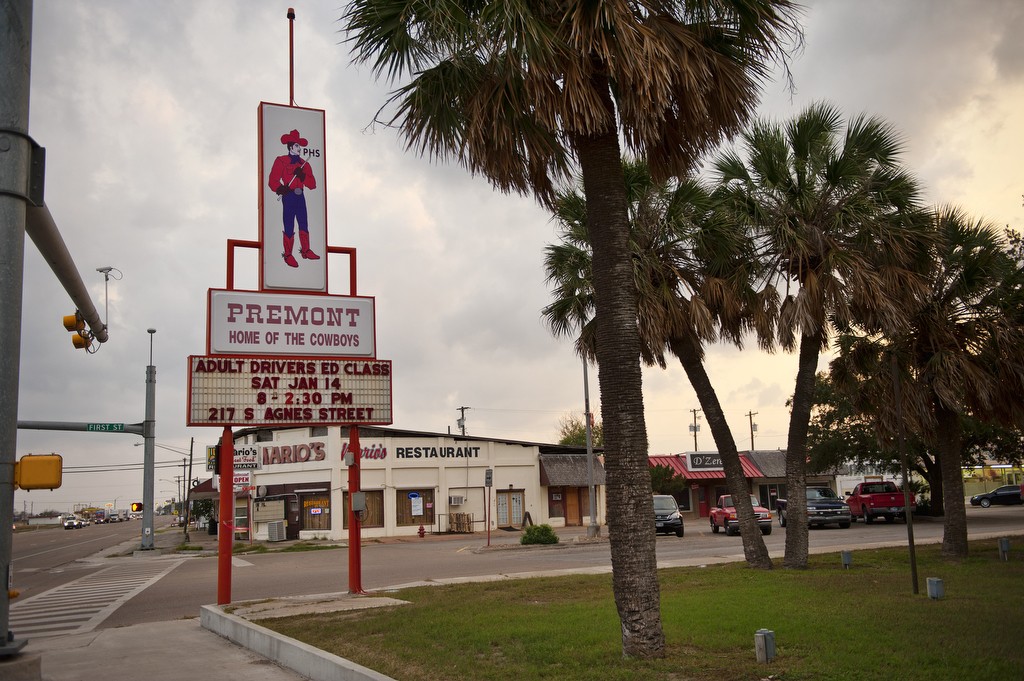
Banding together for the greater good: Premont’s successful community effort

By Abel Garcia, research & community impact analyst

I grew up in the Coastal Bend region of Texas in a small town called Premont, about 30 miles south of Alice. Not long after graduating high school, I left town for college and I haven't lived there since. Although I've been gone for over 20 years, I still consider Premont my home. I still have a lot of family there including my father, sister, nieces and a whole bunch of primos, tías and tíos. A handful of friends I went to school with still reside there as well. The city of Premont has a great deal of needs, and since graduating with a Masters in Social Work, I've often been conflicted about living so far away and not directly giving back to my community. Growing up in Premont shaped me as a person; it influenced why I became a social worker. Working at Methodist Healthcare Ministries has helped ease that inner conflict. The work I've been doing to support regionalization efforts in the Coastal Bend will ultimately impact my hometown in a positive way.

Premont, like many rural communities in the Coastal Bend, faces many challenges associated with the Social Determinants of Health — factors beyond clinical care that impact health such as education, diet and exercise, access to care, community safety, and family and social support to name a few. If improved, these factors can help make communities healthier places to live, learn, work and play. Some of Premont's challenges include a high rate of poverty, low education attainment, limited access to health care, limited access to healthy food, and high numbers of obesity and diabetes. A good portion of what I do with Methodist Healthcare Ministries is gathering this type of public health information to help inform others of the work that we conduct in the area.

A few months ago I attended the 2016 Summer in the Park Festival hosted by the Premont P.R.I.D.E. (Premont Residents Involved in Dynamic Education) Foundation. The P.R.I.D.E. Foundation started in 2012 after the Texas Education Agency (TEA) had taken a rare action to revoke the local school district's accreditation. Premont ISD had been ordered to close down the summer of 2012. TEA decided to take this action after years of unacceptable academic ratings, complaints about rat and mold infested facilities, allegations of dysfunctional school leadership and constant budget deficits. The TEA has only shut down five schools since 1999, and in each case the decision was final, but Premont ISD leadership took advantage of an option to appeal. Knowing that losing the school district would be devastating to the community, the community worked together by raising funds and volunteering their time to repair and rebuild some of the rundown facilities. The community worked with school district leaders and developed strategies to improve attendance and test scores. The school district even cut their football program; which if you're familiar with small Texas towns is a big sacrifice. The community worked to form a partnership between Premont ISD and Texas A&M University-Kingsville to improve academics. All this work resulted in the school district receiving a reprieve from the TEA. The P.R.I.D.E. Foundation was formed as a result of the community's struggle to organize and garner support to save the school district, and in turn became an ongoing advocate for dynamic and quality education for the children of Premont.

Summer in the Park is the P.R.I.D.E. Foundation's big annual fundraiser. This year, Methodist Healthcare Ministries proudly sponsored the event in part. Initially, it started out as a call out to all Premont ISD alumni to come support the community during the TEA crisis. Now it's grown into a full-fledged community festival with food, music, games, a 5K run/walk, and a 3-on-3 basketball tournament. Proceeds go toward the school district. Organizers of the festival pride themselves in saying that the event serves as a symbol of community. They feel it serves as a way for Premont's children to form strong associations with what it is like to live in a small town with limited resources, and that sometimes in order to make a difference, you have to sacrifice your personal needs for what is best for everyone else.

I attended this year's Summer in the Park event with my father and had a great time. It was unseasonably cool for late June so the turnout was excellent. While reconnecting with friends and family, I was asked numerous times about where I live and where I work. When I told folks I worked for a not-for-profit in the health care industry, the conversation naturally steered toward health. Nearly everyone I spoke to recounted their struggles with diabetes, obesity, high blood pressure, the cost of medicine, and not being able to see a doctor because there isn't one nearby (which is one of my 76-year-old father's primary complaints, along with being too old to sit and wait all day to see a doctor). "Why go?" he often says jokingly, but I know it is a source of frustration for him and many others in the community. In order for my dad to see a primary care doctor, he has to travel more than 30 miles to Alice or Kingsville. Often times he gets to his appointment on time, but still ends up sitting in a packed waiting room for hours and is sometimes asked to come back another day. His only other options are to use one of the local emergency rooms or travel another 40 miles or so to Corpus Christi to see a primary care doctor. Even though my dad is fully insured with Medicare and has transportation, seeing a doctor is hard work.

Unfortunately, I think there's a misconception that small towns are filled with people who don't care about their own health, and that the community is the reason the county ranks so poorly when it comes to health outcomes. I think this interpretation is flawed and ultimately detrimental to the health of communities like Premont. While visiting Premont I witnessed a community that is vibrant, strong, and prideful in their ties with one another. I saw individuals eager to learn better ways to manage their health but overburdened by the huge hurdles they need to cross just to see a primary care physician or get their medicine.

There is evidence that small communities like Premont indicate a strong awareness about health. Evidence like the 5K run/walk that was added to Summer in the Park after its second year. The event was proposed by a few community members who had made personal commitments to live healthier lifestyles. This year, more than 50 people participated in the 5K, with an 11-year-old as the youngest participant and an 82-year-old as the oldest. Evidence like the 3-on-3 basketball tournament that has taken place since the first festival. Participants practiced for weeks at their homes and at the local community gymnasium. Children and adults for generations have packed the "old gym," a 1950s era gymnasium owned by the city, to be active and play. My mother taught my brother and me how to shoot free throws at that gym.

A community that bands together to save their school district from what the TEA even thought was a lost cause, is a community that is resilient and cares about its overall well-being. If we look closely, outside of the numbers and metrics, I think we can find a great deal of passion and community commitment for health care in rural communities. As Methodist Healthcare Ministries moves forward with regionalization efforts, I believe rural communities like Premont can be impacted in a profoundly positive way. When communities are given the opportunity and resources to build on their strengths, change can happen for the better. As Methodist Healthcare Ministries connects with local leaders and listens to community needs, not only will health be impacted, but people's perceptions of what is possible will too.

Mobile dental clinic travels to Brady to deliver much needed care

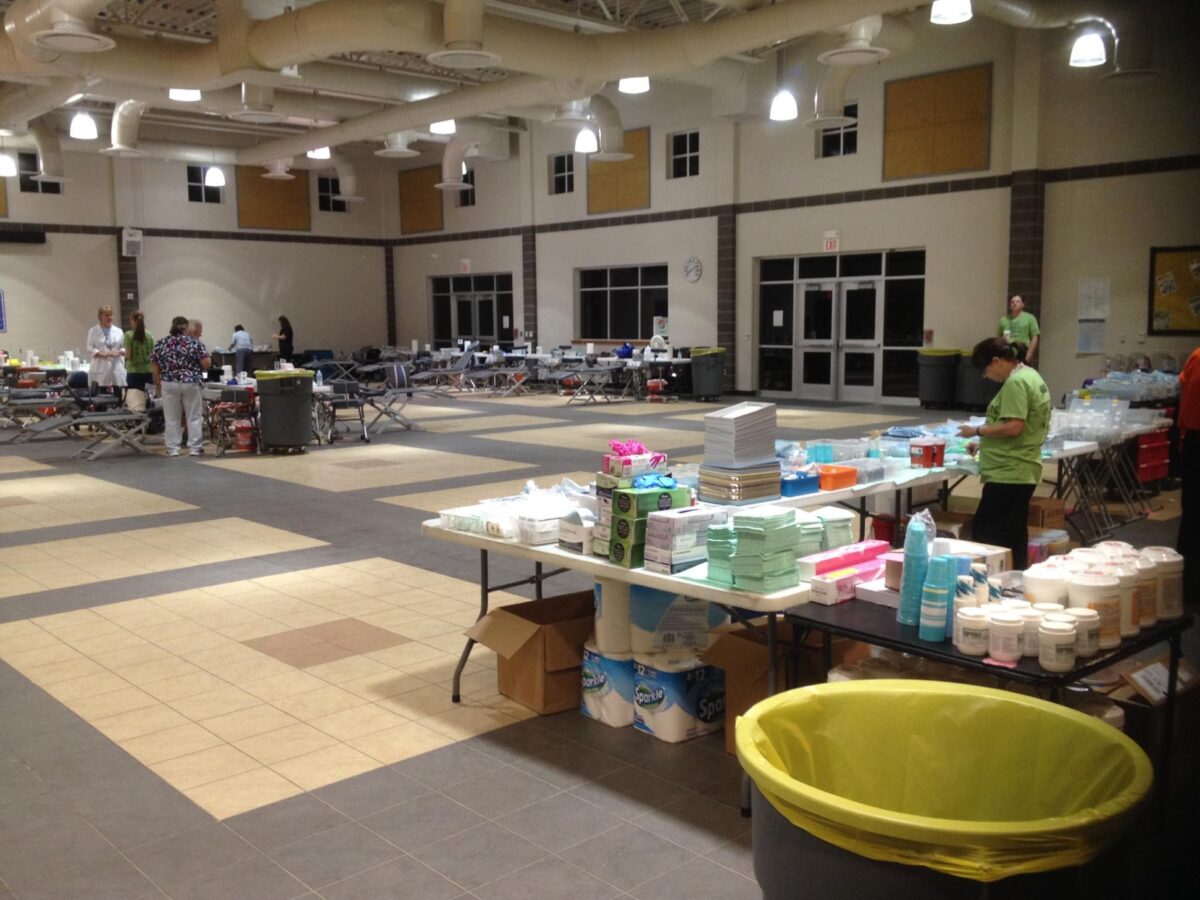
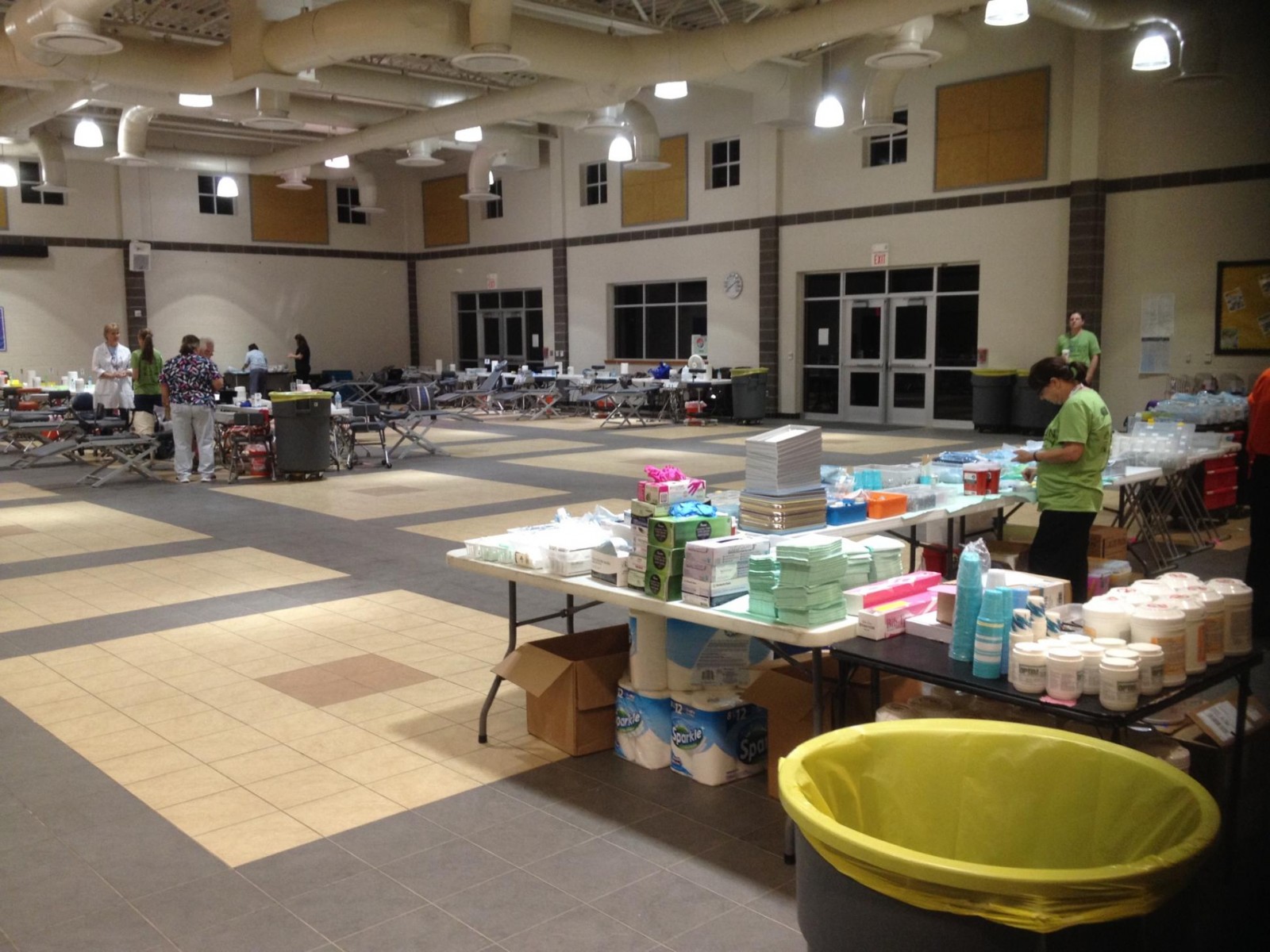
Methodist Healthcare Ministries Wesley Nurses recently participated in Texas Mission of Mercy – a mobile dental clinic that travels around the state providing basic dental care (including cleanings, fillings, or extractions), free of charge, to uninsured Texans. They provide services without any pre-qualifications; therefore, patients do not have to prove their poverty or residency. The event was held at Brady High School in Brady, Texas, and brought much-needed oral health care to the area. Volunteer dentists (assisted by volunteer dental students, hygienists, and dental assistants) examined and treated 238 patients in attendance.

Three Wesley Nurses – Theresa Whitley (Mertzon), Theresa Standage (Kerrville) and Charlotte Johnson (Brady) – served alongside the more than 200 volunteers by registering clients and assisting them with their health assessments.

"I am so proud to have been part of this service, especially after listening to patients express how happy they were to be able to smile and show their teeth and to have rotted teeth removed," said Johnson. "One man told me his mouth had never felt so clean."

Patients were lined up at the door at 5:30 a.m. Some slept in front of the school because they didn't want to miss the opportunity to be seen. Some drove all night to get to the event because this was their only opportunity to get dental care. Most patients were local, but some came from as far as Austin, Houston, Beaumont, and Fredericksburg. Texas Mission of Mercy provided help to people with dental problems, such as cavities, broken teeth, swollen gums, tooth infections, and cleanings, that hadn't been addressed for years.

"Many of the volunteers had been up since 2:00 a.m. getting ready for the event, but no complaints were heard and everyone seemed happy to be there," stated Standage. "I was amazed at the community involvement in Brady, and to see the volunteers interacting and assisting patients with a kind, caring heart. So many came together for the greater good of those in need," said Johnson.

Whitley shared that this was a fulfilling experience. "I had the opportunity to talk with many individuals from different parts of Texas and from various backgrounds – a retired DPS officer, a retired veteran, a pregnant woman, and a waitress, just to name a few," said Whitley. "However, there was one elderly gentleman that I had a conversation with that just really touched my heart. He thanked me for volunteering my time and said that we were 'angels' there to help all the people that came. I told the gentleman that I was the one who was blessed, more than he would ever know."

Wesley Nurse Theresa Standage is working with her community for Texas Mission of Mercy's Kerrville event on March 25, 2017. To volunteer, please email tstandage@mhm.org

Contributing authors: Ann Scarth, Charlotte Johnson, Teresa Whitley and Theresa Standage.

White close icon

Jaime Wesoloski

President & Chief Executive Officer

Jaime Wesolowski is the President and Chief Executive Officer at Methodist Healthcare Ministries. A healthcare executive with three decades of leadership experience, Jaime is responsible for the overall governance and direction of Methodist Healthcare Ministries. Jaime earned his Master’s Degree in Healthcare Administration from Xavier University, and his Bachelor’s of Science from Indiana University in Healthcare Administration. As a cancer survivor, Jaime is a staunch supporter of the American Cancer Society. He serves as Chair of the American Cancer Society’s South Texas Area board of directors and he was appointed as Chair to the recently created South Region Advisory Cabinet, covering eight states from Arizona through Alabama. Jaime believes his personal experience as a cancer survivor has given him more defined insight and compassion to the physical, emotional, and spiritual needs of patients and their families.