Methodist Healthcare Ministries sponsors camp for diabetic children

Methodist Healthcare Ministries of South Texas, Inc. is proud to have sponsored Camp Freedom, a residential/day camp of the South Texas Juvenile Diabetes Association for children ages 7-14 years old with Type 1 or Type 2 Diabetes. The event took place June 24-26 at the UT Rio Grande Valley Wellness & Recreational Sports Complex in Edinburg, Texas.


The goal of the South Texas Juvenile Diabetes Association is to provide a fun and safe camping experience for children who have diabetes, so that they do not see their diabetes as an overriding issue, but rather an important added factor. Campers enjoyed a fun filled weekend of swimming, educational activities, games, arts and crafts. Health care professionals, educators, and volunteers provided supervision under the guidance of local pediatric endocrinologists.

"Methodist Healthcare Ministries is delighted to support the South Texas Juvenile Diabetes Association, an organization that is making a difference in children's lives in the Rio Grande Valley," expressed Patricia Mejia, director of community engagement at Methodist Healthcare Ministries. "With nearly 2 million Texans living with diabetes, we rely on community partnerships to help address the high prevalence of this devastating disease."

The South Texas Juvenile Diabetes Association was established after determining the imperative need in the Rio Grande Valley and the lack of resources. The organization strives to give families support and encouragement so children with diabetes can live happy, confident lives.

For more information about the South Texas Juvenile Diabetes Association, please visit www.stjda.org

Listening in the Coastal Bend

By Tim Barr, collective impact strategy manager

"If you have come here to help me, you are wasting your time. But if you have come because your liberation is bound up with mine, then let us work together." – Australian Aboriginal Collective

For years, I have really appreciated this quote because it speaks to a fundamental truth of community engagement. In the long-run, communities do not need outsiders to come offer help and salvation. At Methodist Healthcare Ministries, we believe in the power of asset-based community development (ABCD), which recognizes that each community has immeasurable resources and untapped potential.

If we hope to see communities grow healthier and stronger, the role of an outsider is not to come with answers and solutions. Instead, outsiders must listen well, especially to those who are most familiar with the challenges. Truly liberating community engagement acknowledges that we are all interconnected and that liberation only happens when there is mutual respect and trust.

Grantmakers for Effective Organizations, an organization that advances smarter grant-making practices to enable nonprofits to grow stronger and achieve better results, underscores this conviction:

Effective stakeholder engagement starts and ends with respect — respect for the expertise that those on the front lines bring to the problems affecting their community, and respect for their capacity to develop solutions if given the chance. Assessing whether stakeholder engagement strategies have truly taken hold requires a shift in our traditional approach to evaluation and learning processes and the factors that constitute success.

Methodist Healthcare Ministries' board of directors prioritized the Coastal Bend region for increased investment, including staff time, grant-making and coordination of efforts. For several months, we've been listening in Corpus Christi and the Coastal Bend regions and have conducted:

–  13 interviews with Methodist Healthcare Ministries staff (Wesley Nurses and Community Health Workers)
–  5 interviews with Methodist Healthcare Ministries funded partners
–  17 interviews with community organizations
–  7 coalition meetings

To add more detail, 23 of the 35 interviews were with people or organizations based in Corpus Christi, and the remaining 12 were in rural areas outside the city. In addition to interviews, Methodist Healthcare Ministries is also conducting research on South Texas health concerns, following health-related stories in local newspapers, and contacting chambers of commerce to learn about upcoming events. Every piece of information is an opportunity to see a bigger picture and enhance the alignment of resources, stakeholders and plans.

While Methodist Healthcare Ministries is not conducting a formal Health Impact Assessment, the same principles and practices are being followed. Consistent with the methodology of the World Health Organization, we are relying on a mixture of quantitative, qualitative and participatory techniques to understand current health disparities and illuminate large-scale choices that will improve health and well-being for the working poor throughout this region.

While this might seem like a lot of listening – and not much doing – the truth of the matter is that we are only beginning to hear and understand what might be possible. Decision making will be significantly stronger and more effective if we are both patient and purposeful – building trust with community leaders, and discerning how best to work collectively. It is critical that we hear from a diverse pool of cross-sector partners such as nonprofits, churches, funders, and government to align efforts and address complex social problems. It is particularly important that we hear from leaders who look like and are accountable to the communities they are leading.

As our work evolves in the Coastal Bend, we will continue to prioritize relationship-building, research, and alignment of resources. Listening for common concerns and hopes, we know that a strengths-based, relational approach holds the most potential for effective and long-term system change. Indeed, let us recognize how our liberation is bound up together, and let us work together to improve the health of all who live in the Coastal Bend.

Tim Barr is the Collective Impact Strategy Manger for Methodist Healthcare Ministries and he supports, develops, and facilitates collaborative efforts in the Coastal Bend region.

Engaging the strengths of people and the community in health

By Catalina Schultze-Kraft, MSN, RN, staff development manager

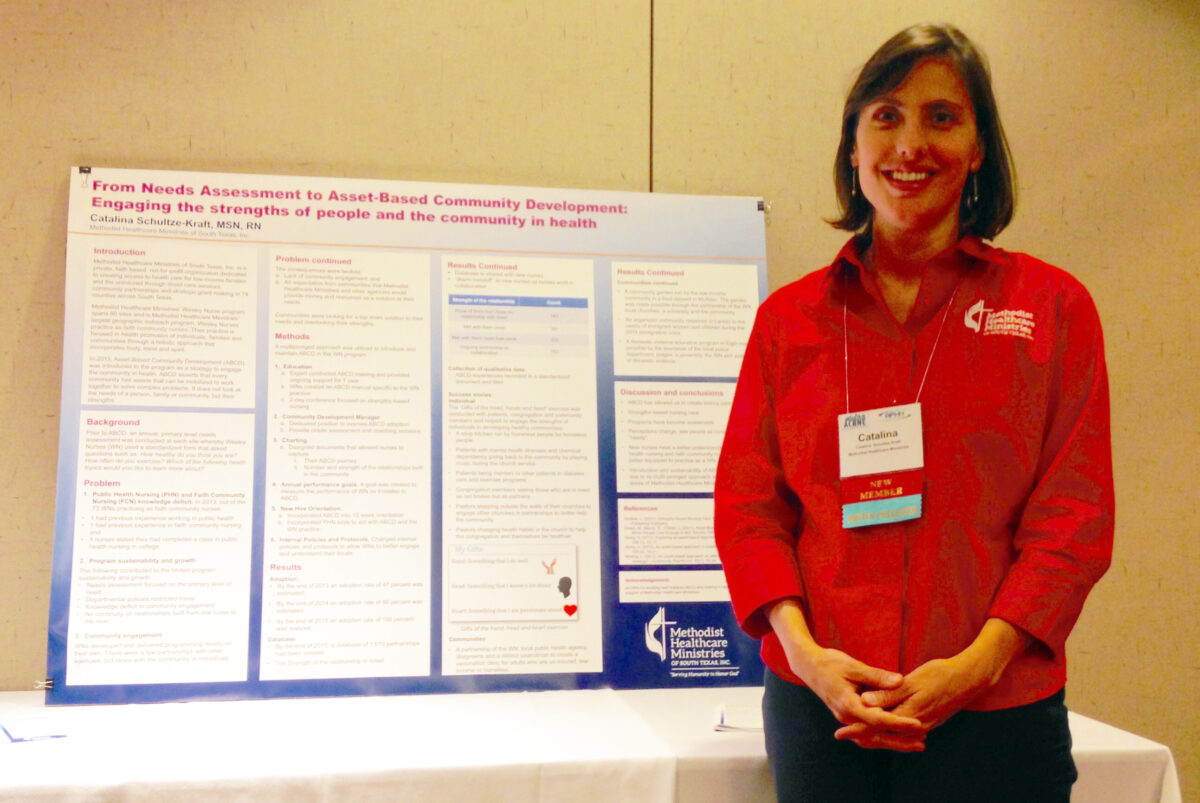
I recently had the honor of presenting at the 2016 Joint Meeting of the Association of Public Health Nurses (APHN) and the Association of Community Health Nurse Educators (ACHNE), held in Indianapolis. The conference, Public Health Nursing: Key to Our Nation's Health, focused on continuing the advancement of public health research and practice in the U.S.

Representatives from health departments of every state convened as well as public health nurses, public health and community health nursing educators, public health leaders, and students and partners interested in public health, health equity, population health, and other public health issues.

Being a presenter gave me the opportunity to describe a small piece of what Methodist Healthcare Ministries is doing to a larger audience. It allowed me to have conversations with people who work in various areas of public health. My presentation, "From Needs Assessment to Asset-Based Community Development: Engaging the strengths of people and the community in health," touched on Methodist Healthcare Ministries' approach to building and maintaining health throughout 74 counties in South Texas. Most striking for attendees was the large area Methodist Healthcare Ministries serves and how we are able to successfully implement initiatives such as Asset-Based Community Development (ABCD) in such a large geographic area.

Asset-Based Community Development (ABCD) was introduced to our Wesley Nurses in 2013 as a strategy to engage the community in health. ABCD asserts that every community has assets that can be mobilized to work together to solve complex problems. It does not look at the needs of a person, family or community, but their strengths. As a result, ABCD has allowed us to create lasting partnerships. New nurses to Methodist Healthcare Ministries have a better understanding of public health nursing and faith community nursing and are better equipped to practice as a Wesley Nurse. Perceptions have also changed and people are seen as contributors to the community.

As a conference attendee, my biggest takeaway was an initiative that public health leaders have developed to help all areas look for solutions to health problems. The "Triple Aim for Health Equity" focuses on:

  1. Expanding the understanding of what creates health. This means making sure that Social Determinants of Health (the conditions in which people are born, grow, live, work and age) are addressed when talking about health.
  2. Taking a "health in all policies" approach. Health equity is the goal. Health doesn't only mean access to health care, but also encompasses where we live, learn, work and play.
  3. Strengthening community capacity. Involving communities in health care can foster connectedness and trust, improve assessment efforts, and build a capacity of individuals to positively affect their community's future.

This year, I wanted to explore other nursing areas, in addition to faith community nursing, that align with Methodist Healthcare Ministries' mission. I wanted to explore where we rank in comparison to other programs that academia, governmental organizations, and not-for-profits are managing. This conference confirmed to me that our nursing team, and our organization overall, is headed in the right direction. We have a unique model that allows us to accomplish things other health departments are unable to do and improve the physical, mental and spiritual health of the least-served in South Texas.

Catalina Schultze-Kraft, MSN, RN, is a staff development manager for the Wesley Nurse program at Methodist Healthcare Ministries of South Texas, Inc. Methodist Healthcare Ministries' Wesley Nurse program is a faith-based, holistic health and wellness program committed to serving the least-served through education, health promotion and collaboration with individuals and communities to achieve improved wellness through self-empowerment. Learn more at www.mhm.org/programs/health-ministries

Harnessing community and innovation into collective impact

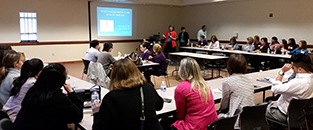
Senior Vice President of Strategic Planning & Growth, Rebecca Brune, recently spoke on behalf of Methodist Healthcare Ministries of South Texas Inc. at the Council on Foundation's 2016 Annual Conference in Washington D.C. Over 1,300 attendees gathered from across the country to advocate the importance of philanthropy and to connect with others in the field and enhance their skills. As one of three panelists for the "Harnessing community and innovation into collective impact" session, Brune provided an overview of Methodist Healthcare Ministries' Sí Texas: Social Innovation for a Healthy South Texas Project (Sí Texas Project), a Social Innovation Fund program, and its impact in South Texas.

The panel session was moderated by Lois Nembhard, Deputy Director for the Social Innovation Fund – a program of the Corporation for National and Community Service that combines public and private resources to grow the impact of innovative, community-based solutions that have compelling evidence of improving the lives of people in low-income communities throughout the United States.

Session speakers discussed progress made on their shared purpose initiatives. Additional panelists included fellow Social Innovation Fund grantees, Avo Makdessian, director of Silicon Valley Community Foundation's Center for Early Learning, who discussed early childhood education in San Mateo County; and Marc McDonald, director of grants management for the AARP Foundation who touched on back to work economic stability for women age 50 and above nationwide. Brune depicted how the Sí Texas Project is largely centered on the treatment of chronic disease and related behavioral health conditions in twelve South Texas counties.

Sí Texas focuses on integrated behavioral health models that are effectively improving health outcomes in communities with high rates of poverty, depression, diabetes, obesity and associated risk factors. Brune explained that Methodist Healthcare Ministries' Sí Texas project stimulates local solutions that improve both physical and behavioral health together, such as diabetes and depression. The project targets 12 South Texas counties: Cameron, Hidalgo, Starr, Willacy, Kenedy, Brooks, Jim Hogg, Zapata, Duval, Jim Wells, Kleberg and Webb. Methodist Healthcare Ministries is the first faith-based organization to receive funding from the Social Innovation Fund program. The project leverages both federal and non-federal dollars to South Texas that otherwise would not have been available to the region.

Shared measures are essential for any collective impact effort, but agreeing to them can be a challenging process. At the end of the session, attendees were taught how to assess the value of shared measures, and how to align multiple programs around the same performance measures.

For more on Methodist Healthcare Ministries and the Sí Texas Project, visit http://www.mhm.org/programs/sitexas. For more information about The Council on Foundations, which aims to provide the opportunity, leadership, and tools needed by philanthropic organizations to expand, enhance, and sustain their ability to advance the common good, visit http://www.cof.org/

Methodist Healthcare Ministries awards $25.1 million in health care grants

More than 80 grantees funded across South Texas

Methodist Healthcare Ministries of South Texas, Inc., a San Antonio-based not-for-profit organization that funds health care services to low-income families and the uninsured, will award $25.1 million in community grants to more than 80 agencies to assist hundreds of thousands throughout its 74-county service area. View 2016 funded partners.

Given annually, these grants are rooted in partnerships that support access to care, integrated delivery systems and patient-centered models. In partnership with Federally Qualified Health Centers (FQHCs), safety-net clinics, counseling services and regional community projects, Methodist Healthcare Ministries' goal is to create measurable impact at the community and regional levels to further establish health care networks. Awards are based on five core areas of giving: Primary & Preventive Care, Dental Services, Regionalization & Community Engagement, Social Services & Behavioral Health and Health Care Professional Shortages.

"Over time, we've refined our decisions in grant-making to an outcomes-based approach to ensure that our clients' needs are met, especially in rural areas where access to health care is limited," said Methodist Healthcare Ministries' President & CEO, Kevin C. Moriarty. "In my 20-year tenure, I've seen Methodist Healthcare Ministries' progression and advancement and it's exciting to think of all we could do into the future."

Funding is allocated to nearly 140 grant programs to deepen collaborative efforts, incentivize quality health outcomes, leverage and strengthen health care delivery systems and promote sustainable systems change.

The single largest area of giving this year is to Social Services & Behavioral Health. Nearly $10 million will be awarded to support integrated health care programs to include the systematic integration of behavioral health and social services. Funding to support Primary & Preventive Care is the second largest area with awards totaling $7.4 million.

Two San Antonio-based FQHCs, CentroMed and CommuniCare Health Centers, will receive the largest awards locally. CentroMed will receive $2.4 million for services in Bexar County.

"We are pleased to once again partner with Methodist Healthcare Ministries," said Dr. Ernesto Gomez, president & CEO at CentroMed. "This funding support will enable us to provide health care services to more patients, in particular, working families that may be uninsured, children with special needs, homeless families and victims of family violence."

CommuniCare Health Centers will also receive more than $2 million to serve patients who have limited access to psychiatric services.

Methodist Healthcare Ministries provides funding and/or works in partnership with 19 of the 22 FQHCs located in its service area. "The collaboration with our FQHC partners is essential to reaching underserved communities, particularly in rural communities where access to care, most especially access to behavioral health services, is severely limited," said Moriarty. "They play a critical role in helping us achieve our mission of creating access to quality care for all, regardless of ability to pay."

Methodist Healthcare Ministries strategically seeks partnerships that align with its mission and services and support its objectives. Methodist Healthcare Ministries' board of directors oversees the selection of funded partners and requests are considered on an annual basis by invitation only; unsolicited proposals are not accepted.

Since being founded, Methodist Healthcare Ministries has invested more than $230 million in grant-making to improve community health care in its 74-county service area which makes up 29 percent of Texas counties.

In addition to grant-making, Methodist Healthcare Ministries also operates two San Antonio-based primary health care clinics, and School Based Health Centers in the Schertz-Cibolo-Universal City and Marion Independent School Districts. The clinics address the needs of the uninsured and low-income families by providing services at no cost or on a sliding scale fee. The direct services Methodist Healthcare Ministries provides are a cornerstone of its charitable mission of creating access to care.

Methodist Healthcare Ministries' mission also includes its one-half ownership of the Methodist Healthcare System – the largest healthcare system in South Texas. This creates a unique avenue to ensure the Methodist Healthcare System continues to be a benefit to the community by providing quality care to all, and revenue to Methodist Healthcare Ministries for its programs and services.

About Methodist Healthcare Ministries of South Texas, Inc.
Methodist Healthcare Ministries of South Texas, Inc. is a private, faith-based not-for-profit organization dedicated to creating access to health care for the uninsured through direct services, community partnerships and strategic grant-making in 74 counties across South Texas. The mission of the organization is "Serving Humanity to Honor God" by improving the physical, mental and spiritual health of those least served in the Rio Texas Conference area of The United Methodist Church. The mission also includes Methodist Healthcare Ministries' one-half ownership of the Methodist Healthcare System, the largest healthcare system in South Texas, which creates a unique avenue to ensure that it continues to be a benefit to the community by providing quality care to all and charitable care when needed. 

Methodist Healthcare Ministries Receives 2015 Constant Contact All Star Award

Recognized for achievements using online marketing tools to drive success.

Methodist Healthcare Ministries of South Texas, Inc. has been named a 2015 All Star Award winner by Constant Contact®, Inc., the trusted marketing advisor to hundreds of thousands of small organizations worldwide. The annual award recognizes the most successful 10 percent of Constant Contact's customer base, based on their significant achievements leveraging online marketing tools to engage their customer base and drive results for their organization.

"We're happy to be recognized by Constant Contact for achieving strong marketing results and engaging with our readers," said Jessica Muñoz, director of communications at Methodist Healthcare Ministries. "Constant Contact's tools have helped us better manage relationships with our clients, patients, funded partners and other audience members, and we plan to continue the open line of communication in the year ahead."

Small businesses and nonprofits using Constant Contact's online marketing tools were eligible for this award. Criteria used to select this year's All Stars included:

• Level of engagement with email campaigns
• Open, bounce, and click-through rates
• Use of social sharing features
• Use of mailing list sign-up tools
• Use of reporting tools

"At Constant Contact, we aim to help small businesses become marketers so they can do even more business. Our All Stars are leading the way, showing us the difference online marketing can make for a small business or nonprofit. It's truly inspiring," said John Orlando, chief marketing officer at Constant Contact. "We're thrilled to recognize Methodist Healthcare Ministries for their commendable achievements in 2015 with this All Star Award."

To receive the latest Methodist Healthcare Ministries news (general news, upcoming events, research and policy publications, Sí Texas Project news, School Based Health Center updates, etc.), please subscribe to our mailing list.

About Methodist Healthcare Ministries of South Texas, Inc.
Methodist Healthcare Ministries of South Texas, Inc. is a private, faith-based not-for-profit organization dedicated to creating access to health care for the uninsured through direct services, community partnerships and strategic grant-making in 74 counties across South Texas. The mission of the organization is "Serving Humanity to Honor God" by improving the physical, mental and spiritual health of those least served in the Rio Texas Conference area of The United Methodist Church. The mission also includes Methodist Healthcare Ministries' one-half ownership of the Methodist Healthcare System, the largest health care system in South Texas, which creates a unique avenue to ensure that it continues to be a benefit to the community by providing quality care to all and charitable care when needed.

About Constant Contact®, Inc.
Constant Contact, an Endurance International Group company and a leader in email marketing since 1995, provides hundreds of thousands of small businesses around the world with the online marketing tools, resources, and personalized coaching they need to grow their business.

San Antonio-Area Child Poverty – Historical and Current Policies Mean Wide Disparities across Race, Ethnicity, Gender and Location

State of Texas Children 2016: Race and Equity in San Antonio Report finds wide-ranging racial and ethnic disparities in children's health, education and financial security that demand common sense policy solutions.

Video: Watch the report release event online.
Photos: View photos from the event.

SAN ANTONIO – Historical and current policies have created and maintained unequal opportunities and large disparities in child poverty across race, ethnicity and gender, according to State of Texas Children 2016: Race and Equity in San Antonio, a new report released by the Center for Public Policy Priorities (CPPP). For example, because people of color were historically denied access to high-opportunity neighborhoods, certain families consequently experienced poor living conditions, fewer services, and less economic mobility. Although no longer in legal practice, similar policies have had cumulative effects in the economic and educational benefits and disadvantages that can be passed on from generation to generation.

These policies and practices may be from San Antonio's past, but they still have a profound effect on the present. Notably, almost 130,000 children in Bexar County live in poverty. Of those children, 103,000 are Latino, 11,000 are Black, 13,000 are White and 1,000 are Asian. But the proportion of children affected by poverty within each group tells a different story. In Bexar County, poverty rates for Latino (32 percent) and Black children (32 percent) are nearly three times higher than they are for White or Asian children. Today, nearly one of every three Hispanic and Black children in Bexar County lives in poverty.

sa report
Read the 2016 San Antonio Report.

"This is unacceptable," said San Antonio Mayor Ivy R. Taylor, who spoke at the report release event today in front of over 300 community members. "We have to do better and be better for our children, our communities and our entire city. My goal is to connect every San Antonian, no matter their age, gender or ethnicity, to opportunities for prosperity. One way we are hoping to fill the gaps is through the My Brother's Keeper initiative, which focuses on improving the life outcomes of our young men of color. From educating our smallest citizens, to providing job training for adults, to caring for our aging seniors, we must work together to ensure that every citizen becomes a resource and not a responsibility."

reportRead the 2016 State of Texas Children Race & Equity Report

Bexar County Judge Nelson Wolff and Kevin C. Moriarty, President & CEO of Methodist Healthcare Ministries of South Texas, Inc., also made remarks at the event, which was co-sponsored by Methodist Healthcare Ministries of South Texas, Inc., Voices for Children of San Antonio, the Intercultural Development Research Association, and the San Antonio Hispanic Chamber of Commerce.

According to the report, with more than half a million kids living in the San Antonio metro area, the future of children in San Antonio will help determine the future of Texas. Additionally, by 2050, the Texas child population is projected to look very much like San Antonio today. Finding creative solutions to closing the educational, health and financial gaps between San Antonio kids from different backgrounds will require intentionally breaking down any obstacles to certain groups of children reaching their full potential and can be a model for the rest of the state.

Key findings include:
• White children in Bexar County are more likely to live in low-poverty areas while the majority of Latino children tend to live in moderate-to-high-poverty areas. High-poverty areas tend to have fewer public and private resources, which means Latino children are more likely than White children to experience segregated and under-resourced schools, unequal opportunity for job-training programs, and more.
• Nearly one of every four women (90,000+) in Bexar County between the ages of 15 and 44 lacks health insurance. The likelihood of being uninsured as a woman of childbearing age differs based on race and ethnicity, with Hispanic women being nearly three times as likely and Black women twice as likely, to be uninsured. Lack of coverage is related to delayed or inconsistent care should a woman become pregnant.
• An estimated 25.6 percent of children (or 120,470 children) in Bexar County are food-insecure, meaning they lack consistent access to enough food for a healthy diet. Hungry children have a harder time focusing in school and are more likely to have social and behavioral problems.

Key policy recommendations:
• Collect more data that is broken down by race and ethnicity.
• Create partnerships between schools, workforce development programs and businesses to promote pathways out of poverty and better support for families.
• Increase access to affordable health insurance for underserved families and women of reproductive age.
• Expand access to school-based child nutrition programs, such as afterschool meals, summer nutrition and school breakfast.

"As one of the fastest-growing areas in the country, the future of the San Antonio area and our state depend on the health, education and financial security of all our children—across gender, neighborhood, income, race and ethnicity," said CPPP Executive Director Ann Beeson. "Looking deep into the data, we found that too many children in San Antonio today continue to face tremendous barriers to opportunity because of the color of their skin."

The State of San Antonio Children 2016 report is part of the State of Texas Children 2016 statewide report. Both reports are part of the Kids Count project, a national and state-by-state effort to track the status of children in the U.S. funded by the Annie E. Casey Foundation. Check out the Kids Count Data Center for extensive child well-being data for each of Texas' 254 counties and seven largest metropolitan areas. Visit datacenter.kidscount.org

This research was funded by Methodist Healthcare Ministries of South Texas, Inc. and the Annie E. Casey Foundation.

Wesley Nurses Present at Church Health Center’s Westberg Symposium

Methodist Healthcare Ministries of South Texas, Inc. recently supported the Church Health Center's 30th annual Westberg Symposium, which exhibited two poster presentations by Methodist Healthcare Ministries' Wesley Nurses. Faith-based community nurses from all over the country convened in Chicago April 7-10 to cover areas such as theology, clinical pastoral education and whole person health care.

"We're proud to have taken part in the Westberg Symposium," said Jennifer Knoulton, director of nursing at Methodist Healthcare Ministries. "At Methodist Healthcare Ministries, we have adopted a faith-based community nursing approach to health ministry, carried out through our Wesley Nurse Program, which now spans 80 sites throughout South Texas."

Knoulton co-presented at the pre-conference session with a colleague from the Church Health Center. She spoke on the importance of helping faith community nurses incorporate asset-based community development (ABCD) into their practice, a strategy for sustainable community-driven development concerned with how to link micro-assets to the macro-environment. The premise of ABCD is that communities can drive the development process themselves by identifying existing, but often unrecognized assets, and thereby responding to and creating local economic opportunity. ABCD builds on the assets that are already found in the community and mobilizes individuals, associations, and institutions to come together to build on their assets, not concentrate on their needs, to begin to use what is already in the community. View presentation.

Wesley Nurses Cynthia Bishop, RN, BSN, MACM, and Angela Gonzalez, RN presented on preceptor-guided preparation for Wesley Nurse faith community nurses. They discussed that the Wesley Nurse program began using the faith community nurse model almost 20 years ago and that Wesley Nurses have shown great fortitude as they have adapted to ongoing changes in this specialized profession. Their poster presentation reflected the development of a preceptor-guided orientation tool that incorporates the competencies outlined in the American Nurses Association's Scope and Standards of Practice. View presentation.

Wesley Nurse Patricia Cisneros, RN, BSN demonstrated how the faith community nurse can advocate, facilitate, and coordinate resources for the least-served and bring awareness to rally the support of other nonprofits to assist in humanitarian relief. Her presentation, Finding A Way: Laredo Humanitarian Relief Team, discussed how the efforts of asset-based community development (ABCD) helped an ecumenical set of community partners show persistence despite not getting help from local officials to collaborate to provide humanitarian relief for travelers in a mass migration of women and children fleeing violence in their country. View presentation.

The Westberg Symposium focused on the ways faith-based community nurses make their mission more resilient through continuing to explore relationships between faith and health in their lives and ministries.

"From a primary care perspective, faith-based nurses like our Wesley Nurses, are instrumental in connecting people, congregations and community members to health and wellness," said Knoulton.

According to the Church Health Center – a faith-based nonprofit that provides affordable health care to working uninsured people – resilience in faith community nursing sustains belief in a better way of caring for people. Whether the need is for basic health education for a new diagnosis, or advocacy and support during a major life transition, faith community nurses foster strength in members of the faith community or the wider community.

To learn more about the Westberg Symposium, visit http://www.churchhealthcenter.org/westberg2016. To learn more about the Wesley Nurse program, visit http://www.mhm.org/programs/health-ministries

Child Abuse Prevention Assembly Convened Community Leaders

In honor of National Child Abuse Prevention Month in April, Methodist Healthcare Ministries of South Texas, Inc. hosted a Child Abuse Prevention Assembly Tuesday to bring together leaders and decision-makers in San Antonio to discuss how to prevent child abuse and neglect in our community. To raise awareness, Methodist Healthcare Ministries planted 4,941 pinwheels in front of their corporate headquarters in the medical center to represent each confirmed victim of child abuse last year in Bexar County.

"This is a critical issue that must remain top of mind," expressed Kevin C. Moriarty, president & CEO at Methodist Healthcare Ministries. "We as safety net providers, community leaders, advocates, health care professionals, philanthropists and elected officials must look for solutions to stop the number of victims from growing in our community."

Several San Antonio child abuse prevention experts were in attendance at this invite-only event, including Methodist Children's Hospital doctors and nurses, and representatives from local nonprofit agencies. Notable presenters included: Methodist Healthcare Ministries President & CEO Kevin C. Moriarty; ChildSafe President & CEO Kim Abernethy; Bexar County Children's Court Associate Judge Rich Garcia; City of San Antonio Police Department Chief William McManus, Methodist Children's Hospital Medical Director Dr. Sebrina Perkins, CPS Regional Director Erica Bañuelos and State Senator Jose Menendez.

"I look at those pinwheels and I hear that number, the almost 5,000 children – which is the confirmed number, although everyone here knows that's a greater number than what's reported – we need to do whatever we can to prevent even just one child from abuse," said Senator Jose Menendez. "I was thinking about the birth of my children, and being in the waiting room feeling so much anticipation and hope. Somehow along the way, you sometimes forget that feeling of excitement and nervousness of that brand new baby. Regardless of what stage of life they are in, we need to always treasure our children that way."

The pinwheels were planted to symbolize childhood, innocence and prosperity. They represent the hope that together we can help the kids in our community enjoy a safe, happy and healthy childhood.

Reports about abuse can be made to the Texas Department of Family and Protective Services at 1-800-252-5400 or www.dfps.state.tx.us or to a law enforcement agency. Additional information can be found at www.childwelfare.gov. To learn more about Methodist Healthcare Ministries' parenting programs, visit http://www.mhm.org/programs/family-wellness or call 800-959-6673.

Methodist Healthcare Ministries Sponsors United Communities of San Antonio 62nd Awards Dinner

Texas is ranked third in the country with more than 57 active extremist and hate groups. In one study, 49 percent of children in grades 4-12 reported being bullied by students at school at least once during the past month. Because individuals still suffer from bullying, exclusion, hatred, harassment and violence, Methodist Healthcare Ministries of South Texas, Inc. has contributed $2,500 to be a Silver Sponsor at the 62nd Annual Brotherhood/Sisterhood Awards Dinner of the United Communities of San Antonio, a human relations non-profit organization dedicated to fighting bias, bigotry, prejudice and racism in San Antonio.

United Communities of San Antonio 62nd Awards Dinner
Tuesday, March 8, 2016 at 6:30 p.m.
Pearl Stable (307 Pearl Pkwy, San Antonio, TX 78215)

Honorable attendees include:

  • Dr. Adena Williams Loston, President of St. Phillip's College
  • Susan L. Pamerleau, Sheriff of Bexar County
  • Josue (Joe) Robles, Jr., USAA Retired President and CEO / MG, USA (Ret).
  • Dr. Alice Viroslav, Clinical Assistant Professor of UTHSCSA/Neutroradiologist of Radsource, LLC

Each year, the United Communities of San Antonio Awards Dinner honors outstanding community leaders with the Brotherhood/Sisterhood Humanitarian Award for promoting diversity and respect, making a difference in the community, and up keeping the ideals of the United Communities of San Antonio.

"Methodist Healthcare Ministries is pleased to support the United Communities of San Antonio and to stand by their mission of promoting understanding and respect to eliminate bullying, prejudice and harm," said Kevin C. Moriarty, president & CEO at Methodist Healthcare Ministries.

Since being founded in San Antonio in 1954, the United Communities of San Antonio has promoted understanding and respect among all races, religions and cultures through advocacy, conflict resolution and education. The goal of the United Communities of San Antonio is to create a safe environment in which education, dialogue, and interaction among people results in mutual respect for self and others.

The 62nd Awards Dinner is open to the public; individual tickets are $175 each and may be purchased by visiting http://www.ucofsa.org/Givinglevels.html.

For more information about the United Communities of San Antonio, please visit www.ucofsa.org.

Methodist Healthcare Ministries’ School Based Health Centers Celebrate 15 Years of Service

Methodist Healthcare Ministries of South Texas, Inc., the largest private, faith-based funding source for health care services in South Texas, is proud to celebrate the 15th anniversary of its School Based Health Centers. In celebration of this milestone, along with honoring National School-Based Health Care Awareness Month, Methodist Healthcare Ministries will host an open house Tuesday, Feb. 23 from 3:00 p.m. to 4:30 p.m., at the School Based Health Center at Schertz Elementary (757 Curtiss Ave., Schertz, TX 78154).

Guests are invited to tour the clinic and meet the team of professionals who provide medical, dental and social services. Click here to register: http://www.mhm.org/events/416-school-based-open-house.

Since 2001, the School Based Health Centers at Krueger Elementary and Schertz Elementary, conveniently located on school campuses and both owned and operated by Methodist Healthcare Ministries, have helped children in the Schertz-Cibolo-Universal City and Marion Independent School Districts (as well as their siblings up to age 21) by providing pediatric primary health care, dental services, and social services. Both clinics stay open year-round and operate during business hours.

"Methodist Healthcare Ministries understands the importance of pediatric care and making it convenient to busy parents and accessible in rural communities," said Marilyn Stanton-White, director of primary care services of Methodist Healthcare Ministries. "The School Based Health Centers are a significant component of our organization's outreach so that our youth stay happy and healthy."

In addition, the School-Based Health Alliance — a nonprofit dedicated to providing the school-based health care field with high-quality resources, training, information, and guidance — will be hosting a Twitter chat right before the open house from 1:00 p.m. – 2:00 p.m. CT. The chat will focus on how school-based health centers improve child and adolescent health. Join by using the hashtag #SBHCmonth16. Connect with Methodist Healthcare Ministries any time with the hashtag #MHMSTX.

For more information about Methodist Healthcare Ministries' School Based Health Centers, please visit www.mhm.org.


Methodist Healthcare Ministries Sponsors ThriveWell Cancer Foundation’s Annual Luncheon

Methodist Healthcare Ministries of South Texas, Inc. will contribute $2,500 to be a Silver Sponsor at the annual luncheon of the ThriveWell Cancer Foundation, a non-profit dedicated to finding a cure for cancer by funding cancer research, providing patient support and offering programs to improve the quality of life for patients and their families.

ThriveWell Cancer Foundation Annual Luncheon
Friday, February 26, 2016 at 11:00 a.m.
Westin Riverwalk (420 W. Market Street, San Antonio, TX 78205)

This year's guest speakers are sisters Janet Holliday and Joan Katz, who both share a bond of surviving cancer. "Living, Loving and Thriving Side by Side: Identical Twins Sharing Their Story" will feature Holliday and Katz sharing their journeys and outlook on making each day count.

"Methodist Healthcare Ministries is pleased to support the ThriveWell Cancer Foundation, an organization that is truly impacting lives through their assistance," expressed Kevin Moriarty, president & CEO of Methodist Healthcare Ministries.

ThriveWell was established in 2007 to ease the burden of adult cancer patients and their families while on their cancer journey, working to meet the needs of those battling and winning the fight against cancer in the San Antonio area. Central to its mission is the development of community-based programs and services that are designed to improve the health and well-being of cancer patients and survivors.

The ThriveWell Cancer Foundation Luncheon is open to the public; individual tickets are $100 each and may be purchased by visiting www.thrivewell.org.

For more information about the ThriveWell Cancer Foundation, please visit www.thrivewell.org.

White close icon

Jaime Wesoloski

President & Chief Executive Officer

Jaime Wesolowski is the President and Chief Executive Officer at Methodist Healthcare Ministries. A healthcare executive with three decades of leadership experience, Jaime is responsible for the overall governance and direction of Methodist Healthcare Ministries. Jaime earned his Master’s Degree in Healthcare Administration from Xavier University, and his Bachelor’s of Science from Indiana University in Healthcare Administration. As a cancer survivor, Jaime is a staunch supporter of the American Cancer Society. He serves as Chair of the American Cancer Society’s South Texas Area board of directors and he was appointed as Chair to the recently created South Region Advisory Cabinet, covering eight states from Arizona through Alabama. Jaime believes his personal experience as a cancer survivor has given him more defined insight and compassion to the physical, emotional, and spiritual needs of patients and their families.