Use Your Voice to Protect Our Community Through Life-Saving Vaccines

For the last 200 years, vaccinations have been responsible for many global public health achievements, including the eradication of smallpox and significant reductions of other serious infections like polio and measles. Despite their undisputed effectiveness, “anti-vaccine” movements are quickly gaining momentum in the United States, including in our great State of Texas. In addition to growing misinformation, factors related to religious beliefs, personal freedoms and individualism have contributed to a rising numbers of parents choosing not to vaccinate their children. In Bexar County, recent data by the Texas Department of State Health Services (DSHS), shows the percentage of students claiming nonmedical vaccine exemptions has more than doubled, from 0.32 percent in 2011 to 0.80 percent for the 2017-2018 school year, despite the fact that opting children out of vaccinations greatly increases the risk of preventable disease outbreaks.

My internship this past year with Methodist Healthcare Ministries allowed me the opportunity to study the history of vaccines, how effective they’ve been in eradicating deadly diseases, ones that I admit I’ve taken for granted, until now. I’m more aware of the detrimental consequences of vaccine exemptions, including what types of policy measures are being taken at the state and local level to address the recent outbreaks around the state.

Before 2003, parents were only able to opt out of vaccinations for their children for religious or medical exemptions. However, during the 2003 Legislative Session, House Bill 2292 expanded the exemption provision to include “reasons of conscience.” Texas is one of 18 states that allows exemptions due to personal, moral or other beliefs. Since the implementation of the HB 2292, more than 57,000 children in Texas have opted out of vaccines – representing a twentyfold increase in the past 15 years. Data show that unvaccinated children typically cluster, which poses a significant threat for outbreaks. According to the Public Library of Science PLOS Medicine Medical Journal, four counties in Texas – including Harris, Tarrant, Collin and Travis – are among the top 15 counties in the U.S. with the highest number of kindergarteners with nonmedical vaccine exemptions. This trend is worrisome not only for the safety of our children, but for our vulnerable populations. Medically fragile individuals, including infants and the elderly, are not able to receive vaccines, due to serious allergies or weakened immune systems and rely on what is known as “herd immunity,” the resistance to the spread of diseases due to a significant portion of the population being vaccinated, which protects them from being exposed to preventable diseases.

In September 2018, DSHS, the state agency responsible for vaccination efforts, released a report highlighting strategies to increase vaccine coverage levels at the state level. Their multifaceted approach for the improvement of vaccination levels includes providing free vaccines to the community, employing quality improvement efforts, performing educational outreach and engaging and collaborating with partners and stakeholders. Two programs that offer free vaccines to eligible children and adults include the Texas Vaccines for Children (TVFC) and the Adult Safety Net (ASN) program. Additionally, DSHS developed educational strategies such as Vaccine Education Online and “Every Dose Matters” in efforts to educate communities on the importance of immunizations. The state also collaborates with stakeholders through the Texas Immunization Stakeholder Working Group (TISWG) to identify local needs and successes. Going forward, DSHS will continue to evaluate the effectiveness of existing public health strategies and work to implement policies that increase vaccine coverage levels and reduce the prevalence of disease in Texas.

As part of its mission to influence public policy to improve access to care for all Texans, Methodist Healthcare Ministries partners with organizations, such as The Immunization Partnership, or TIP, to advocate for vaccination coverage and educate communities on the importance of immunizations. TIP aims to eradicate vaccine-preventable diseases by developing and coordinating community resources through public and private partnerships. As part of Methodist Healthcare Ministries' policy work for the 86th Legislative Session, the organization and TIP are readying to defend protections in current law and ensure the exemption infrastructure is not weakened. A strong piece of this work includes the Parent’s Right to Know legislation that would allow parents to be informed of exemption rates at their local school campuses. Right now, all schools are required to gather data on vaccinations and exceptions, but DSHS aggregates and releases the data at the district level. The Parents Right to Know legislation would allow the data to be shared at the local school level and allow parents to make timely decisions as the safety and wellness of their children.

This internship experience with Methodist Healthcare Miniistries has helped me become a stronger vocal public health advocate and I strongly urge the community to learn about the benefits of vaccinating our families to prevent diseases, disabilities and cancer. Vaccinations protect our public’s health by preventing outbreaks and resurgence of diseases that have not been around in many years. I challenge you to be an advocate for promoting the importance of routine immunizations and to join me in not only protecting our loved ones, but entire communities.

Preparing the Next Generation of Healthcare Professionals

Abigail, an 11thgrade student at East Central Independent School District (ECISD), in San Antonio, isn’t shy about sharing her dreams for the future, especially when it comes to a career in healthcare.

“I want to become an obstetrician-gynecologist (OB-GYN) someday,” she said. “I believe I could reach that goal, especially after my experience at Methodist Healthcare Ministries.”

Abigail, 17, was among 22 other high school students from East Central ISD who participated in the school district’s Clinical Medical Assistant (CMA) rotations program, in partnership with Methodist Healthcare Ministries. The students rotated through 11 different departments at Methodist Healthcare Ministries’ Dixon Health & Wellness Center, located on 4212 E. Southcross, which is near where most of the students live and attend school.

“I’ve learned a lot during the program and even got to interact with patients,” said Abigail. “The rotations have helped me grow and confirm my interest in becoming a medical doctor. That’s what I’m passionate about.”

The students got to see healthcare in action as they rotated through services including dental, pharmacy, social work, medicine, physical therapy, lab, behavioral health, patient registration and administration. Students were also exposed to the high quality of care provided to the least served in the community by Methodist Healthcare Ministries, as well as inspired by the organization’s mission: “Serving Humanity to Honor God.”

“It was an eye-opener for me. I had no idea there was care like this for people who do not have access to healthcare. It’s great to see the care these patients receive,” said Anastacia, an 11thgrade student at East Central ISD. “I was also able to get a better picture of what I’m learning in my school books. Reading about it is one thing but to actually experience it, makes it real.”

It was the first time Methodist Healthcare Ministries participated in East Central ISD’s new program and it has proven to be a success.

“We’re glad they approached us to be part of this course because it’s the perfect match,” said Oanh Maroney-Omitade, vice president of clinical operations at Methodist Healthcare Ministries. “It’s great to be able to give these students a closer look at healthcare in action and to expose them to a caring and compassionate profession.”

Dolapo Sokunbi, a clinical administrator at Methodist Healthcare Ministries, said having the students rotate through the different departments has helped guide them in choosing their profession. “The students got to interact with our patients and learned how to meet their medical needs which includes physical, mental, emotional and spiritual care,” said Sokunbi. And, our team members were able to share their knowledge and experience with the students as well.”

Sokunbi said students were also able to take vital signs, assist with x-rays and lab work, as part of their experience and the program is designed to help students become better prepared for their CMA test this summer.

Marcus, a senior at East Central ISD, said the program boosted his confidence. “The program really helped me improve my confidence level. I gained confidence in my own abilities to learn about healthcare. It’s been a great experience for me.”

Anastasia agrees. She said the program has helped her become a better communicator, as well as inspired her to pursue a career in nursing. “I want to become a registered neonatal nurse. I really love working with people.”

“Our goal is to provide each student with the tools they need to move forward in their future careers,” said Brit Peek, manager of human resources at Methodist Healthcare Ministries. “We are so proud of these students for demonstrating a true passion for those in need of medical care in our community. We wish them the best as they continue their education.”

Peek said once students have passed their exam, they will become certified clinical medical assistants and qualified to apply for a CMA position anywhere they wish.

Maroney-Omitade said Methodist Healthcare Ministries hopes to continue equipping youths who are exploring a career in healthcare through the CMA training program at East Central ISD. But most importantly, she hopes each student takes what they learned and applies it, no matter where they decide to work.

Methodist Healthcare Ministries’ is dedicated to supporting initiatives designed to address the shortage of healthcare professionals in our communities. In 2018, we awarded $3.1M in grants to funded partners such as the Alamo Colleges District, UT Health San Antonio, and Texas A&M International University to support their efforts to address Texas’ healthcare workforce. Our Policy & Advocacy team also identified improving Texas’ healthcare workforce as one of the four key public policy priorities for the 86thTexas Legislative Session. Across the organization, we actively promote opportunities to improve the healthcare workforce that provides care for the least served in the community. To learn more, visit online at mhm.org.

Key Strategies to Pursue Health Equity

Systems change efforts sometimes grapple with a tension between: a) urgency to address brokenness that continues to do harm, and b) patience to gather enough resources and the right leaders to be effective and successful. Strategies to reduce health disparities and promote health equity can address both sides of this tension.

No one has a greater sense of urgency to improve health outcomes than those who are directly impacted by health disparities. Participatory designs in which marginalized communities identify their own health challenges, help design interventions, and assist in assessing the success of those interventions benefit from the urgency of and accountability provided by their participants.

Along those same lines, urgency is enhanced in coalitions and collective impact initiatives when non-professional community members are clearly and deeply involved in decision-making processes and equity is established as a primary goal from the outset.

The chart below from the Centers for Disease Control and Prevention (CDC) is a helpful tool to assess community participation and involvement. As work shifts more to the right, stronger partnerships and more ambitious outcomes become possible – equity becomes not only an end, but also a means to that same end.

(Source: American Association of American Medical Colleges) 

Practical recommendation 1: Abide by the phrase “with, not for” – do things with the people you are serving, not for them

On the other hand, a long-term approach (patience) is strengthened by perpetual efforts to build trust and deepen relationships, not only to generate resources (i.e., sustainable funding) but also to identify and develop leaders from and within marginalized communities. For example, training and hiring community members as promotores de salud (community health workers) increases leadership capacity and enhances collective efficacy. Similarly, organizations can implement programs providing training and real opportunities for patients and community members to exercise leadership in the promotion of community health.

Developing long-term community leadership for health equity – whether through community-based organizations, churches, or other associations – means that leaders rooted in the community will be prepared and in place when the time is right to move into action. Outside (or even inside) professionals should never be the first, last, and only line of defense!

Practical recommendation 2: Working towards health equity includes ensuring the people you serve have the resources and abilities necessary to continue the work – how you can develop leadership and capacity among the people you serve? How can you strengthen the human assets of the community?

As we strive for the highest level of health for all people, let us remember that this is everyone’s business. As a society, health equity is in our best interest socially and economically; for Methodist Healthcare Ministries, it is also a moral and theological imperative as we provide leadership to improve the wellness of the least served.

Tim Barr is the Collective Impact Strategy Manager for Methodist Healthcare Ministries. He supports, develops, and facilitates collaborative efforts in South Texas. Tim is also a member of the Climate Equity workgroup for the City of San Antonio’s Climate Action and Adaptation Plan.

To see part 1 of this blog series, click here.

To see part 2 of this blog series, click here.


Here’s to Your Health!

By now, you’ve probably seen and heard plenty of advertisements on how to get fit in 2019. For many, it’s a goal set at the start of the new year. However, making too many resolutions can be overwhelming which is why some folks often break them early on, said Dr. Edward Dick, senior vice president of Integrated Health Services at Methodist Healthcare Ministries.

“Some people make too many resolutions to improve their health. Try to make no more than three resolutions or goals, then identify why you’re setting those goals,” said Dr. Dick. “Consider starting with short-term goals. This will help maintain them. Longer-term goals can follow the quick win-wins.”

Dr. Dick said goals need to be attainable, measurable, and should always include grace along the way. And, as people try to reach their goals to shed extra pounds this year, Dr. Dick said to make sure to have a practical plan in place.

“The important thing is to keep moving by walking or doing some form of physical exercise. Walking is actually underrated but it’s extremely valuable.” He said walking is a highly effective form of physical activity and can help you reach your goal to lose weight, not to mention being inexpensive.

Here are some valuable tips, provided by Dr. Dick, to help jump-start your way to a healthier 2019:

  • Draft a plan with reasonable health goals. You may want to include an accountability buddy to help motivate and encourage you.
  • Start exercising. Consider walking and taking the stairs, if you can. Exercising can help maintain a healthy weight and fight against diseases like type 2 diabetes and heart disease.
  • Eat smarter by including more fruits and vegetables in your daily dishes. The fiber in many fruits and vegetables can help reduce the risk of high blood pressure, heart disease and stroke.
  • Drink more water and less sugary drinks. Water will help keep you hydrated, energized, focused and balances blood sugar.
  • Get a good night’s sleep. Establish a regular bed time and adopt simple steps for promoting good sleep. You can visit sleepfoundation.org for a list of tips for improving sleep and treating insomnia.
  • Consider joining a support group to help build mind, body and spiritual health.
  • Consult your doctor if you have chronic or serious medical conditions that might worsen with unsupervised exercise. And as always, consult your medical professional for any questions before starting your fitness plan.

Dr. Dick said if you lose momentum, don’t quit. Give yourself grace and start again. “It’s important to live in grace and not give up. We were designed by God to stay active. It’s good for us—­­­­physically, mentally and spiritually.”

He said as you go out and reach your goals to get healthier this year, keep in mind that moderation, watered with grace is the key! Happy New Year!

Methodist Healthcare Ministries is dedicated to creating access to healthcare for the uninsured through direct services, community partnerships and strategic grant-making in 74 counties across South Texas. Guided by its mission of "Serving Humanity to Honor God," the organization’s vision is to be the leader for improving wellness of the least served. The mission also includes Methodist Healthcare Ministries' one-half ownership of the Methodist Healthcare System, the largest healthcare system in South Texas, which creates a unique avenue to ensure that it continues to be a benefit to the community by providing quality care to all and charitable care when needed. For more information, visit www.mhm.org. 

Hope wrapped in a Christmas tree

Tears of joy rolled down Maria’s face, as she touched one of the glittery ornaments on her new Christmas tree. Maria, a client at Methodist Healthcare Ministries’ Wesley Health & Wellness Center, is one of the sixty-five individuals and families who received a beautifully decorated tree at Methodist Healthcare Ministries Annual Christmas tree giveaway event on Dec. 14.

“It’s been a hard year and I know we’re not supposed to lose hope. I had lost the spirit of Christmas,” said Maria. “Just seeing the Christmas tree decorated has helped give me hope. I know that God provides. It’s a gift.”

For the past six years, Methodist Healthcare Ministries has partnered with Methodist Healthcare System for this event. This year, Methodist Hospital and Methodist Children's Hospital decorated dozens of 6-foot Christmas trees with fun and sparkly ornaments and displayed them at the beginning of the holiday season. After hospital patients had the chance to enjoy them, the trees were packed up and shipped to Methodist Healthcare Ministries’ Wesley Health & Wellness Center, where they were displayed in a winter wonderland themed setting.

“It’s very emotional and overwhelming to see the faces of our clients, as they are given a Christmas tree. I feel blessed that we can do this for them,” said Margie Rodriguez, one of the family wellness program specialists with Methodist Healthcare Ministries. “It means a lot to them because these families would not have a Christmas tree in their home if we didn’t give them one. It’s a wonderful feeling.”

Helen Rodriguez, a volunteer at Methodist Healthcare Ministries’ Wesley Health & Wellness Center, agrees. “It feels so good to be able to give to others when they need it,” she said. “That’s what I love about this place. Everyone is so giving and caring. And, people need to feel supported.”

Methodist Healthcare Ministries’ Wesley Café also served hot chocolate, cookies, and filled the room with holiday music to help make the day extra special for the least served in our community.

In addition, San Antonio Spurs guard Marco Belinelli and the Spurs Coyote, stopped by to help spread some extra holiday cheer, as well as pose with families for photos.

“I feel very blessed today and I’m very grateful to those who donated these beautiful trees. They are so beautiful. I love mine,” smiled Maria, as she prepared to take her tree home.

CLICK HERE to see Christmas tree giveaway event.

Coastal Bend Day of Giving is Nov. 13

Methodist Healthcare Ministries of South Texas, Inc. is proud to give a shout out to our funded partners in Texas’ Coastal Bend, as they participate in the 10th Annual Coastal Bend Day of Giving, a one-day charitable challenge, beginning at midnight on Nov. 13.

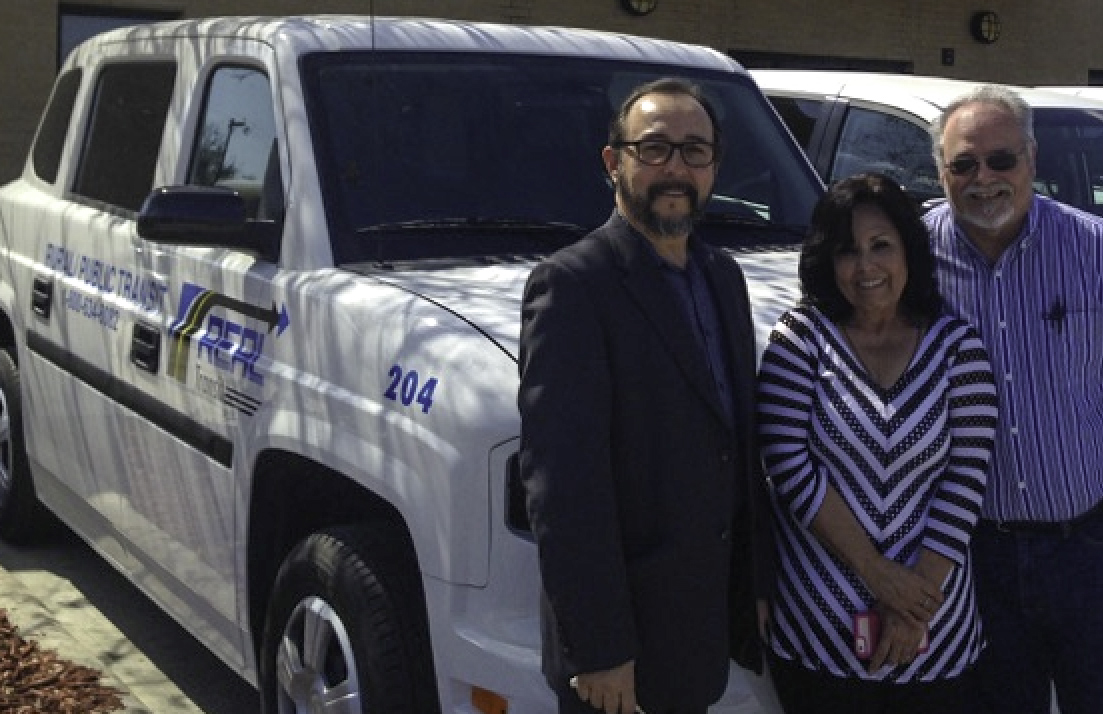
Partners like Rural Economic Assistance League (REAL, Inc.) benefit from the challenge. For 46 years, REAL has been on the forefront of providing critical health and quality of life assistance to communities in rural South Texas. 2018 is REAL’s first year participating in Coastal Bend Day of Giving. “We know that without the services we provide in rural areas, people would suffer from isolation and an inability to access services,” says REAL Director Martín Ornelas. “People call us because they need assistance. We’re the life link for them to continue having a fulfilling life.” From August 31, 2017 to September 1, 2018, REAL’s public transportation service provided 250,000 trips to senior citizens, people with disabilities and people who need a ride to appointments or other daily life needs.

For just 24 hours, area non-profits receive individual donations from the community, boosted by matching funds from the Coastal Bend Community Foundation. Those 24 hours go by fast, but the impact is long-lasting.

Other Methodist Healthcare Ministries of South Texas, Inc. partners who are participating in the 2018 Coastal Bend Day of Giving:

  • Amistad Community Health Center
  • Corpus Christi Metro Ministries
  • Family Counseling Service
  • Mission 911
  • Timon’s Ministries
  • Wesley Community Center

Schedule your donation and learn more about how Coastal Bend Day of Giving helps our funded partners continue to serve South Texas.

Welcome New President & CEO, Jaime Wesolowski

Monday, Oct. 1 was a truly momentous day in the life of Methodist Healthcare Ministries. We celebrated the grand opening of our Dixon Health & Wellness Center and dedicated the building in honor of its namesake, Bishop Ernest T. Dixon, Jr. We were joined by partners, community and civic leaders, stakeholders and members of the faith community to reflect on Bishop Dixon’s legacy and celebrate all the center will do in furthering his life’s work. The importance of the day was punctuated by the introduction of our new President & CEO, Jaime Wesolowski,

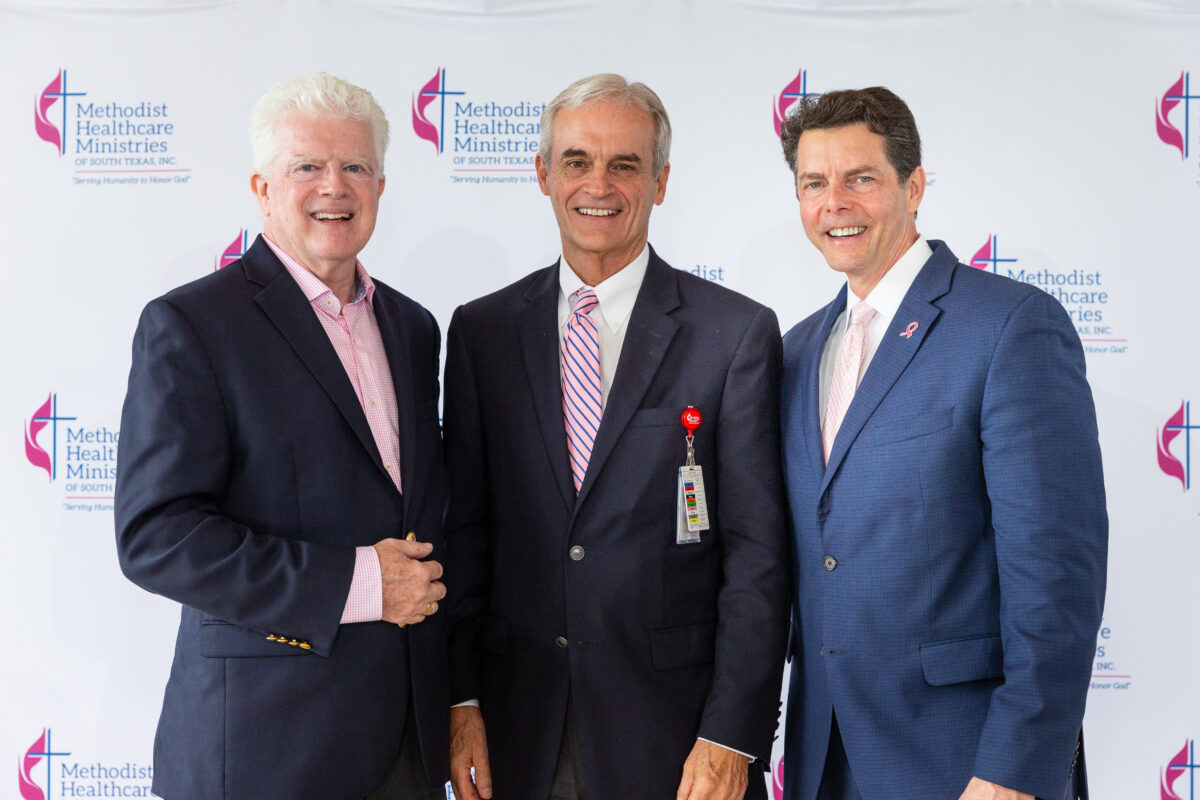
Pictured Left to Right: Kevin C. Moriarty, former president & CEO; Marc Raney, interim CEO; and Jaime Wesolowski, current president and chief executive officer of Methodist Healthcare Ministries.

whose first official act was to welcome the community into the center along with two very special guests: Kevin C. Moriarty, who served as Methodist Healthcare Ministries’ first president and CEO for more than 20 years, and Marc Raney, who most recently served as interim CEO since Kevin’s retirement last year. Methodist Healthcare Ministries is extraordinarily fortunate and blessed to have had such wonderful testaments to servant leadership guide the organization since our inception. I have no doubt Kevin and Marc will provide Jaime invaluable support and encouragement as he helps the organization continue to grow and thrive.

While the role of CEO at Methodist Healthcare Ministries is new to Jaime, he is certainly not new to the organization or the healthcare community in South Texas. For the last 11 years, Jaime served as the President and Chief Executive Officer at the Methodist Healthcare System, which Methodist Healthcare Ministries co-owns with HCA Healthcare. As President & CEO of Methodist Healthcare System, Jaime was responsible for a network of nine acute care facilities serving Bexar and 26 surrounding counties. Under his direction, the System earned state and national recognition for its quality improvement, patient safety and satisfaction efforts—including winning the Texas Award for Performance Excellence in 2014, demonstrating the highest level of quality in the state of Texas.

Jaime is also known in our community as a champion for cancer prevention and research and has been a passionate supporter the American Cancer Society and other cancer-related organizations. He is Chair of the American Cancer Society’s South Texas Area board of directors and was recently appointed as Chair to the newly created South Region Advisory Cabinet, covering eight states from Arizona through Alabama. We are proud of Jaime’s continued advocacy in the community and are glad to support him in those important efforts.

In addition to the usual routines of a chief executive officer and executing the board’s strategy for community health, Jaime’s role at Methodist Healthcare Ministries will include overseeing the local governance and the quality and charitable activities of the Methodist Healthcare System. Jaime brings a wealth of experience and expertise that uniquely positions him to advance this critical element of our mission. He will no doubt bring tremendous value to our partnership with HCA Healthcare as well as the 90+ partnerships Methodist Healthcare Ministries has enjoyed for over 20 years with Federally Qualified Health Centers, safety net clinics, and other providers and advocates that increase access to care for low-income, uninsured families across South Texas.

In scripture, Peter asks that “Each of you should use whatever gift you have received to serve others, as faithful stewards of God’s grace in its various forms,” (1 Peter 4:10); it is apropos for Jaime as he was a wonderful steward of Methodist Healthcare System. We on the board of directors have the greatest faith that Jaime will advance Methodist Healthcare Ministries’ mission and vision to become the leader for improving wellness of the least served to new heights.

It is my pleasure and great joy to welcome Jaime to the organization on behalf of the board of directors.

An intern’s call to engage in the fight against opioid addiction

Three years ago, if anyone had used the word ‘epidemic,’ it would not have occurred to me to preface it with the word ‘opioid.’ It is a bit disturbing to hear and read news reports on the extent to which opioids have affected families across the United States. Just recently, the Centers for Disease Control and Prevention (CDC) reported that 42,000 people died in 2016 due to opioid overdose and nearly 40 percent of those deaths involved a prescription opioid. Although Texas is currently posting a lower overdose death rate than the national average, overdose deaths in our Lone Star State are on the increase, going from 1.5 to 4.2 deaths per 100,000 people in 2016. Bringing it closer to home, four of the country’s 25 worst cities for opioid use rates are in Texas: Texarkana (#10), Amarillo (#13), Odessa (#15) and Longview (#17). As a healthcare policy intern in the Policy & Advocacy Department at Methodist Healthcare Ministries, I am interested in learning more about what types of initiatives, both local and statewide, are being mobilized to get ahead of this epidemic.

To better understand the systems in place to support communities affected by opioids, I first looked at the ways Methodist Healthcare Ministries combats opioid use. Two strategic pillars became clear very quickly — the first being strategic grantmaking. Guided by its vision to be the leader for improving wellness of the least served, Methodist Healthcare Ministries provides grants to numerous community stakeholders across South Texas in five categories — one of which is Social Services & Behavioral Health. In 2018, Methodist Healthcare Ministries allocated nearly $7.7 million for Social Services & Behavioral Health programs which includes counseling and recovery services that are important in treating opioid addiction. The second approach Methodist Healthcare Ministries employs to combat opioid addition is through its Community Counselors, stationed throughout South Texas, who provide direct access to behavioral health services.

I then turned my attention to statewide initiatives. What I found made me feel hopeful that state policymakers have acknowledged the urgency of the crisis and are working diligently towards a solution. Within the last couple of years, Texas has developed targeted initiatives and partnered with various community stakeholders to tackle opioid addiction. In 2017, the Texas Health and Human Services Commission (HHSC) received $27.4 million in Federal State Targeted Opioid Response grants to create the Texas Targeted Opioid Response (TTOR) Grant. The two-year grant aims at increasing outreach and general education regarding opioid treatment and training, hoping to reduce opioid related deaths and overdoses in Texas. HHSC plans to expand opioid prevention and treatment services through its existing partners and the recruitment of new providers to expand networks, all with the assistance of Local Mental Health and Behavioral Health Authorities and university partners.

In 2015, the Texas Legislature created the Texas Maternal Mortality and Morbidity Task Force to investigate high maternal mortality trends in Texas and revealed new data showing that drug overdose was the leading cause of pregnancy-associated deaths between 2012-2015, with 37 out of the 64 drug overdose maternal deaths in that period being due to an opioid. Connecting an opioid overdose as the cause of death for a young pregnant mom is something that leaves you a bit unsettled and sad. Two young lives are lost to the world before they had a chance to start. The Task Force points to existing programs aimed at preventing and treating opioid use in pregnant women as a key intervention strategy. To prepare lawmakers for the 2019 legislative session, Texas House Speaker Joe Straus (San Antonio) took action in October 2017 to create the House Select Committee on Opioids and Substance Abuse, directing the committee to study both the impact of addiction and effectiveness of the programs and treatment options and develop concrete principles and action items. Two of the 13 members of the Select Committee represent districts within Methodist Healthcare Ministries’ service area. 

Closer to the place I’ve called home for the past five years, I’ve learned that Bexar County leads the state in Neonatal Abstinence Syndrome (NAS) and has the third-highest per-capita rate of overdose deaths in Texas, as reported by the Rivard Report. In the summer of 2017, Bexar County Judge Nelson Wolff and San Antonio Mayor Ron Nirenberg created the Bexar County Joint Opioid Task Force to decrease the overall deaths due to opioids. Members of this task force — including experts in public health, medical and pharmaceutical professionals, first responders, educators and policy makers — will develop strategies to address the opioid crisis in a comprehensive manner with an aim to decrease the number of opioid deaths in Bexar County. The proposed strategies will include: increasing the use of overdose reversal drugs by first responders; improving provider training on evidence-based practices; increasing access and awareness of treatment options; and increasing public knowledge regarding the increase use and disposal of opioids.

My review of recent national and state reports on the impact of opioid addiction on our Texas families leaves me concerned, but even more importantly, it’s made me informed and aware. This epidemic has no boundaries, and shows no sign of slowing down. A recent Vital Signs report from the CDC reported that there has been a 30 percent increase in emergency department visits due to opioid overdose between July 2016 and September 2017 – a reminder that we need to engage and we need to do it now.

For my part, I look to join my Policy & Advocacy team in learning how Methodist Healthcare Ministries can continue to assist state efforts and how we can increase awareness of the problem in our communities. Our department will be following state and local policy initiatives over the legislative interim in preparation for the state’s 86th Legislative Session, scheduled to convene on January 8, 2019. Together we can ensure that Texas families are empowered to overcome this epidemic and future generations will have the tools to battle similar struggles.

For those suffering from opioid use, it is important to identify community resources that are available to treat their addiction as soon as possible. The Center for Healthcare Services and the San Antonio Council on Alcohol and Drug Awareness provides services for opioid addiction in Bexar County. The Substance Abuse and Mental Health Services Administration (SAMHSA) and the National Alliance on Mental Illness (NAMI) also provide helplines for those seeking help for opioid addiction. SAMHSA provides a treament finder of Opioid Treatment Programs throughout Texas. These programs offer counseling and medication assisted treatments for opioid addiction.

Coffee with Cassandra: Opportunities for professional development

Before you start your workday, enjoy your morning coffee with brew from Methodist Healthcare Ministries. This is your daily dose of stories that speak to the heart of our organization, paired with your favorite cup of joe!

As a growing organization of 400 plus team members, we place a high priority on providing them with opportunities to develop themselves professionally. Guided by our organizational learning and development team, Methodist Healthcare Ministries has created an outstanding culture of learning because we believe in the value of our team members continuously developing new ways to serve their communities.

For this Coffee with Cassandra, I had the chance to sit down with our staff development specialist, Camille Mendoza. She supports our team members through various professional development initiatives. She describes how providing professional development for our team members can create a larger impact for our patients and clients.

Caring Servant: Dayanara

Methodist Healthcare Ministries is composed of diverse team members all working together with one common goal: "Serving Humanity to Honor God." Guided by our core values — integrity, making a difference, teamwork, compassion and spirituality — each one of our team members plays an important role in creating access to health care for low-income, uninsured patients and clients. Throughout the year, we feature the stories of team members who have been nominated by co-workers for how they exemplify these qualities in our Caring Servant spotlight.

This month’s Caring Servant spotlight shines brightly on one of our parenting programs coordinators, Dayanara Santiago Quiñones, who demonstrated our core value of ‘making a difference’ when she stepped in to save the life of her client. Below is her story.

“Dayanara is committed to serving others. On multiple occasions, she has gone above and beyond to assist those in her Meld Special Needs class — a parenting group designed for parents and guardians of children living with a range of illnesses and disabilities.

During a recent group session, Dayanara witnessed one of the parents in her class suddenly choking on an apple. Having just completed her CPR and first aid recertification the week before, she sprang into action. After quickly verifying that the client was indeed choking and needed help, Dayanara immediately began first aid by giving back blows and performing the Heimlich maneuver. All the while she was concerned that the client had recently fallen and suffered a broken rib, but knew she had to take action and help. Within moments, the client spat out the piece of apple she was choking on and was fine thanks to Dayanara’s help.”

Dayanara's ability to quickly assess the situation, act, and avoid what could have been a detrimental situation helped save a life. Her actions that day, and every day are a testament to her desire to improve the physical, mental and spiritual health of those she serves.

It’s because of team members such as Dayanara that our organization truly carries out its mission of “Serving Humanity to Honor God.”

Get to know more of our Caring Servants on YouTube.

Farewell from Kevin C. Moriarty

When I announced my plans to retire last June, I shared a story with my team that shaped my life in ways I could not have imagined. It’s a story that paved the road for the wonderful journey I have been on for the last 22 years at Methodist Healthcare Ministries. It begins in Africa where I served as a teacher through the Peace Corps as a young man. One day, I burned my arm and was taken to see a doctor who was there on a mission with The United Methodist Church. I was so impressed by the sense of purpose the doctors and nurses who worked in the Methodist clinic had that it inspired me to consider working in health care. I could not have known then, but that experience was the start of a journey that has been guided by a passion for public service, health ministry, and profound love for my community. Through the years my journey has had incredible peaks, filled with wonderful people who carried me through life’s valleys. I have been blessed beyond measure to have been part of the Methodist Healthcare Ministries’ team and honored to serve as the organization’s first chief executive officer. And now, I stand ready to embark upon a new journey. But, I want to first take a moment and reflect on the impact Methodist Healthcare Ministries’ has had and share my hopes for all the good it has yet to do.

Together, the team has brought much-needed care to uninsured and low-income individuals and families across South Texas. In 1996, Methodist Healthcare Ministries operated one program of $300,000 for 2,900 patient and client visits; this year we have a budgeted expenditure of more than $112 million for nearly 950,000 patient and client visits. In the beginning, we provided grant funding to fewer than five agencies and today the organization has more than 90 funded partners. I am extraordinarily proud to have been part of something that created access to care for so many and for whom it would have been unobtainable otherwise.

The team at Methodist Healthcare Ministries has also grown. We started with just three employees, most of whom are still with the company, and today the team stands at 420 strong. The growth and impact have been incredible. I am so proud of all the team members who have made Methodist Healthcare Ministries’ successful—which for us, means more people received care and that’s what matters.

I wish to thank Jen, my wife, who has been by my side for 17 of my 22 years at Methodist Healthcare Ministries. She has attended countless events with me, representing Methodist Healthcare Ministries extraordinarily well.

It has been especially fulfilling growing the next generation of leadership within the organization. I have always used the words of John Wesley, founder of Methodism, to guide the decisions I made as CEO, to do all the good we can, by all the means we can, for as many people and as long as ever we can. I hope these words continue to serve as a guiding light for the team that will lead Methodist Healthcare Ministries into its future. I know Marc Raney, who will serve as interim CEO while the search for the next president of the organization is concluded, will continue to use the challenge John Wesley issued to us to inspire the organization to continue advancing our mission of “Serving Humanity to Honor God”—as he did for me when he hired me in 1996 during his tenure as chair of the Methodist Healthcare Ministries’ board of directors. It’s a reminder to me, that sometimes our journey comes full circle, and creates the opportunity to embark upon new ones. I am grateful to Marc for his mentorship, years of friendship and for his commitment to Methodist Healthcare Ministries.

I have carried countless patients’ and clients’ stories in my heart over the years as they are the reasons why Methodist Healthcare Ministries has also been a champion for policies that create access to quality care for all, regardless of ability to pay. Their stories have humbled and inspired me, and are living reminders of what the Bible tells us in Micah 6:8: To act justly, love mercy, and walk humbly. I will keep all their stories in my heart and top of mind as I continue my service to the community.

I started with a story about how my journey began and am now excited to travel down a new path, embark upon a new adventure. I know it will be just as wonderful as the last 22 years have been. I wish Methodist Healthcare Ministries, the board of directors, all the team members, partners and other entities who work so hard to advance its mission all the best and to keep doing all the good you can. Thank you for making this chapter in my own story such a memorable one.


The side I saw in Marion

You see the girl in the picture on the right with the white t-shirt and toothbrush – that’s me. My first encounter at Methodist Healthcare Ministries wasn’t in 2015 when I became a team member, it was actually in 2002. I was eight years old and the setting was School Based Health Center at Krueger Elementary. At first, I knew little of all the amazing ways Methodist Healthcare Ministries served its communities, but I was about to go on a journey that would open my eyes to every side of the organization.

My mom was the first person to introduce me to Methodist Healthcare Ministries. She has been faithfully serving as a front office supervisor at School Based Health Center since 2002 to ensure the pediatric primary health care and dental services the clinic offers are compassionately provided to children enrolled in the Marion and Schertz-Cibolo-Universal City Independent School Districts. When I was young, she would bring me along to help at community events the clinic hosted. I have so many memories of volunteering at the clinic, but my fondest were the annual back-to-school fairs. We would get there early and start organizing school supplies — backpacks, crayons, pencils, paper, notebooks — you name it! We took up a whole conference room and created an assembly line for children to come through and fill up their new backpacks. The line usually went out the door and wrapped around the clinic with families eager to get their children’s school supplies. From little ones starting their early education to juniors and seniors in high school, no one left without receiving what they needed. Hearing kids ask excitedly, “Is this my backpack? I get to keep it?” and telling them yes warmed my heart. At the end of the day, we typically filled about 200 backpacks for each child in need.

I thought, “Wow, how great that an organization could be this committed to serving their community!” Seeing that commitment to service from an early age inspired me to join Methodist Healthcare Ministries and make it a part of my future. Fast forward to 2015 —when I became a team member I was overwhelmed with happiness to know the impact I’d seen at School Based Health Center didn’t stop there.

Growing up, I had been exposed to the health care services side of our organization and the ways our clinics provide medical, dental and behavioral health services to patients in need. I hadn’t yet learned about our grant-making and advocacy side. My jaw dropped during our new hire orientation at the fact that we offer services in 74 counties across South Texas, and help more than 90 organizations across those counties better provide health care services to those in need. Through advocacy, we increase the public’s understanding of how health care policies can affect their communities. We also educate policy-makers on policy challenges in an effort to increase access to quality health care services for others.

Since my journey with Methodist Healthcare Ministries began almost three years ago, my eyes have been opened and my heart filled to see all the important ways our organization makes a lasting difference across South Texas. While I don’t directly work with patients, I know my purpose is to share the stories of team members who’ve dedicated themselves to improving the physical, mental and spiritual health of the least served. I think each team member has met a side of Methodist Healthcare Ministries that has left a mark in their hearts. The side I saw in Marion was only one piece of the organization. It shaped a new way of thinking for me – that serving those who need you the most can be done in many ways. As I look to the future, I’m excited to learn more through telling the powerful stories of how Methodist Healthcare Ministries fulfills its mission of “Serving Humanity to Honor God.”

White close icon

Jaime Wesoloski

President & Chief Executive Officer

Jaime Wesolowski is the President and Chief Executive Officer at Methodist Healthcare Ministries. A healthcare executive with three decades of leadership experience, Jaime is responsible for the overall governance and direction of Methodist Healthcare Ministries. Jaime earned his Master’s Degree in Healthcare Administration from Xavier University, and his Bachelor’s of Science from Indiana University in Healthcare Administration. As a cancer survivor, Jaime is a staunch supporter of the American Cancer Society. He serves as Chair of the American Cancer Society’s South Texas Area board of directors and he was appointed as Chair to the recently created South Region Advisory Cabinet, covering eight states from Arizona through Alabama. Jaime believes his personal experience as a cancer survivor has given him more defined insight and compassion to the physical, emotional, and spiritual needs of patients and their families.