Celebrating 25 Years of “Serving Humanity to Honor God“

On January 11, 1995, Methodist Healthcare Ministries of South Texas, Inc. was founded and began its mission of “Serving Humanity to Honor God.”We are incredibly proud of where we’ve been and excited for what’s ahead. We look forward to the future, as we continue to support resilient families and thriving communities across South Texas.

A Love Letter to Dianne Dorsett

Dear Dianne, 

You were the first team member employed by Methodist Healthcare Ministries — the same year this organization began its mission of “Serving Humanity to Honor God.” Your eyes have seen so much through the years. You were there when Methodist Hospital became the Methodist Healthcare System, organized through a new partnership with HCA Healthcare, in 1995. For the past 25 years, you have devoted your time, talents and treasures to fulfilling the mission and vision of this organization. Dianne, you have played a critical role in developing and implementing the processes and procedures that have enabled us to give back millions of dollars in healthcare services in 74 counties across South Texas.

From the beginning, you have served in a leadership role, helping shape the future of Methodist Healthcare Ministries. You first served as the Director of Administrative Services and even stepped-in as interim Director of Human Resources, then later became the Director of Board and Public Relations, and most currently, the Board Liaison.

In your role, as the leader in public relations and communications, you built the department from the ground up. You pioneered the department’s role in establishing effective strategic communications, inside and outside the walls of the organization. You were also the driving force in creating strong and lasting relationships with the news media. You are responsible for paving the way for future communicators whose careers have led them here to further the mission of Methodist Healthcare Ministries. You have crafted the first stories ever told on how people’s lives have changed for the better because of this organization’s dedication to humanity. You have planted seeds that will continue to grow, as we carry on in spreading the good news about this organization’s commitment to healthcare for the underserved. Because of you, our story has beautifully been told and will continue to be echoed in the airwaves of newscasts, digital and print publications, and social media feeds.

As the board liaison, you have been the person most directly responsible for connecting our board members to the senior leadership team. You have been an invaluable resource that keeps the board organized and have supported them as they carry out our mission. And, you take tremendous pride in making sure that our organization is recognized accurately and responsibly for the good work done for those we are passionately and dedicated to serving.

Your selfless commitment to being of service to others embodies a kind spirit and nurturing soul. Your passion for mentoring, leading, connecting, and faithfully answering the call to ministry by bringing the words of John Wesley to life in your daily walk: “Do all the good you can, by all the means you can, in all the ways you can, in all the places you can, at all the times you can, to all the people you can, as long as you ever can,” is evident in all you do. You have served as an extraordinary ambassador for Methodist Healthcare Ministries and have helped make this organization become a beacon of hope for those who need us the most.There’s no doubt that you will leave a legacy of integrity, commitment, and passion, for generations to come. You have definitely left your mark of excellence across this organization, and beyond.

God placed you here to bless others, as He has graciously blessed us with you. Thank you for faithfully serving and leading us into this new decade. You have helped build a strong foundation that will remain firm for years. Thank you for loving God so much and sharing His love in all you do for humanity. You are our champion, historian, connector, servant-leader, friend, and sister-in-Christ.

We will miss you. We love you!

Your Methodist Healthcare Ministries family

Thanksgiving Luncheon 2019

On Wednesday, November 27, 2019, Methodist Healthcare Ministries of South Texas, Inc. hosted our annual Thanksgiving Luncheon for the community around our Wesley Health & Wellness Center on the Southwest side of San Antonio.  Each year, we provide a tasty and fresh Thanksgiving meal to nearly 500 clients and their families, our neighbors and staff. This annual tradition started back in 2009 and is a fun, festive event that embodies our mission to "Serving Humanity to Honor God."  

"Having this opportunity to open our doors and see our patients and clients come in with their family and friends to share a meal together this Thanksgiving really warms our hearts as an organization and is a gratifying example of seeing our mission at work in our community", said Jaime Wesolowski, President & CEO of Methodist Healthcare Ministries.  "As an organization, we are continuously blessed to have such passionate and dedicated team members who are called to do this work and the smile on the faces of the people we serve today, and every day, gives our work more purpose and meaning."

The event is a true team effort and begins weeks in advance with our kitchen staff ordering the food and supplies needed to prepare the feast, which takes days to prepare.  Staff from across the organization, including our corporate officers, volunteer in different ways to greet our guests and serve them a warm meal that this year included turkey, ham, corn, mashed potatoes, stuffing, and more.  

It remains one of our team members' favorite traditions at Methodist Healthcare Ministries as it allows our patients and clients from all walks of life the opportunity to come together for a special day of thanks, grace and community.  Seeing joy on the faces of the families we serve, particularly the children, reminds us of why we do the work we do and fills us all with gratitude.  

In the spirit of the holiday, many blessings to you and your families.  Have a Happy Thanksgiving!

For a video with highlights from our 2018 luncheon, please click here.


Delayed Operations

UPDATE Friday, Sept. 20 12:30 p.m. Corporate Headquarters Update: CPS Energy has addressed the power outage in the area and our Corporate office is now open. Thank you.

Friday, Sept. 20 7:00 a.m. – PLEASE NOTE: Our Corporate office will open at a delayed time today due to a power outage in the area. CPS Energy is attempting to restore power, but no concrete time estimate is available at the moment. All other facilities will be open as usual. Thank you.


Notice of Closure

Thursday, Aug. 22 8:00 p.m. – PLEASE NOTE: Our San Antonio area clinics, Dixon Health & Wellness Center, Dixon Health & Wellness Center and School Based Health Centers will be closed during regular business hours on Thursday, August 22, 2019 for monthly staff training. Our Wesley Health & Wellness Center will be reopen from 4:30 p.m. to 7:30 p.m. for our regular extended business hours. Operations will resume as usual on Friday, August 23. This notice does not affect the pharmacy, which will operate on its regular schedule.


What I have seen and learned through a tour of our service region.

It's been a little over ten months since I joined Methodist Healthcare Ministries of South Texas, Inc., as President & CEO. It has been an incredible experience so far and I am constantly excited and impressed by the team members and partners I’ve been blessed to meet along the way. One of the first commitments I made when joining the organization was to tour our service area in my first year on the job; it’s a commitment I am making progress on. Thus far, I have visited the Rio Grande Valley, the Las Misiones region, the Laredo/Border region, the Concho Valley, and most recently, the Crossroads region. Each visit has presented me with an opportunity to see firsthand the great work our team members do and to understand the many different "Whys" that makes our organization so special.

During my visits, I've been blessed with opportunities to meet with some of our partners too and see their operations, I am inspired by their collective efforts to improve the health of their communities. From talking about diabetes education with Proyecto Juan Diego in Brownsville, to Integrated Behavioral Health at Mercy Ministries of Laredo or the challenges of addressing mental health with West Texas Counseling & Guidance in San Angelo, I am in awe of their commitment and exceptional performance (while stretching resources as far as they can go.) I have seen how the partners funded by Methodist Healthcare Ministries value and appreciate our support and make every effort to leverage those dollars into increasing access to care for patients in the communities they serve. They do as much as they can, in all the ways they can, as long as they can. It is truly inspiring.

Most importantly, on each visit I get to meet with our own team. Wesley Nurses, School Based Health Center Staff, Get FIT program staff, and community counselors, community health workers, parenting program staff and more all working diligently in their communities. I value the time we have spent together, oftentimes over a meal where I can hear their personal "why" and examples of how their work brings our mission to life. I also draw a lot of joy from seeing some of our programs in action, such as the Get FIT sites I toured in Santa Rosa, where I saw the types of programming and activities we promote to keep children actively learning everything from dance, to archery, playing sports and planting in a greenhouse. I even get to have a little fun!

All along the way, I am not only learning about how we have supported our programs and partners in the past, but also finding new ways to be of assistance in the moment. For example, I learned one of our partners was interested in having a representative from an area hospital serve on their board. One phone call later, I was able to connect that organization to leadership from a local hospital, so they could continue that discussion. Also, in touring our School Based Health Center in Schertz, I learned that one of the functions we serve is providing no-cost or low-cost vaccines to students. As I serve as the Chair for both the American Cancer Society's South Texas Area Board and their South Region Cabinet, I knew that increasing access to human papillomavirus (HPV) immunizations is an important issue facing school communities. I challenged our team to increase our immunization rates and they responded to that call in a big way. Through collaboration with the San Antonio American Cancer Society, and partnership with H-E-B Pharmacy and the Schertz-Cibolo-Universal City I.S.D., we hosted an immunization drive where we provided the HPV vaccine at a local middle school—ninety percent of the kids who participated received the HPV immunization. The immunizations offered to the kids are more than just immunizations needed for school—it’s cancer prevention and I am so proud that we can make such a profound difference in their lives. These are just two examples of ways in which these tours of service have helped to give me a greater sense for ways to support our partners and the patients we serve.

In the coming months, I will complete my promised tour of our service area by visiting the Hill Country region, the Coastal Bend area, and the Capital-area. I get a great deal of knowledge and experience from these visits. I know that as I continue to grow and learn in this position, I will get a better sense of the impact our programs and services have on the communities we serve, as well as how we can better support our team members and partners in their daily efforts to help us fulfill our mission of Serving Humanity to Honor God.

Treating mind, body and spirit: Integrated partnerships support whole-person care

Diabetes and depression occur together in the same person, but in American healthcare, they’re treated separately: The brain and the body get healthcare in different buildings, by different doctors, with different billing systems and different health records.

It's confusing, inefficient treatment. It’s also expensive, time-consuming, and if it’s hard for practitioners to navigate, imagine how the patient feels.

Wouldn’t it be better to treat related health conditions together, in a single office visit?

For a growing number of healthcare practices, the solution is Integrated Behavioral Health (IBH) – clinics with a combination of primary care and mental/behavioral health services in a single setting, and in many cases, in the same exam room. For example, IBH can help patients with chronic and mental illnesses like diabetes and depression, which often occur together.

Integrating care in vulnerable communities

Methodist Healthcare Ministries’ commitment to whole-person wellness for low-income, uninsured populations, is advanced through its investments in IBH models of care, through work with South Texas partner organizations and in providing direct services to our own clinical patients in San Antonio.

A key component of Methodist Healthcare Ministries’ advancement of IBH is Sí Texas: Social Innovation for a Healthy South Texas. The project began in 2014 to help organizations in 12 counties test, improve and grow IBH services. From 2014 to 2019, a grant from the Corporation for National and Community Service (CNCS) has made up to $20 million available for the Sí Texas initiative to implement, study and scale IBH in clinics serving vulnerable communities along the Texas border. The federal funds were matched 2:1 through partnerships with Methodist Healthcare Ministries, Valley Baptist Legacy Foundation and other Texas philanthropies.

“All types of providers have long recognized the importance of treating the whole person to achieve better outcomes for the patient.” says Jennifer Knoulton, vice president of regional operations. She explains that the challenges are about improving and aligning fragmented systems of care so integration can thrive.

Treating mind, body and spirit

The University of Texas Rio Grande Valley (UTRGV) is one of eight organizations selected for partnership with Methodist Healthcare Ministries to participate in the Sí Texas project. “IBH puts the brain back in the body,” says Dr. Deepu George, assistant professor of clinical family & community medicine at the University of Texas Rio Grande Valley (UTRGV) School of Medicine. “It creates health care that’s better at treating the whole person, mind, body and spirit.”

Meanwhile, in San Antonio, Methodist Healthcare Ministries has been working toward integration in its own Wesley Health & Wellness Center and Dixon Health & Wellness Center since 2016.

“Our team-based IBH model allows each team members’ skills to be used at the highest levels,” says Dr. Edward Dick, vice president of integrated health services. “We’re finding higher satisfaction for both our providers and patients in our clinics; we’re also finding that once providers have practiced in a successful IBH program, they wonder why they haven’t been able to work this way in the past. It’s a compelling return on investment.”

Filling gaps, building evidence

In the last decade, widespread evidence has shown that IBH works for patients and providers; however, the research was incomplete for vulnerable populations and local realities. Through the Sí Texas project, South Texas communities are producing specific information about how IBH can work for low-income, uninsured, Hispanic patients in Medically Underserved Areas (MUAs). Throughout 2019, nine research studies that are part of the Sí Texas project are being posted on the CNCS Evidence Exchange and on MHM.org. These studies establish effective, evidence-based models and practices ready to be adopted by other organizations, in communities with similar challenges.

Want to know more about IBH?

If you’re curious about the cost and health impact of Integrated Behavioral Health, here are some helpful online resources:

In Texas

Meadows Mental Health Policy Institute (MMHPI) is a nonpartisan nonprofit organization with a focus on mental health resources and services, and policies that impact healthcare implementation and access in Texas.

Hogg Foundation for Mental Health – as part of The University of Texas system, the Hogg Foundation advocates for mental health solutions that go beyond clinical settings into communities.

National Resources

Substance Abuse and Mental Health Services Administration (SAMHSA) is a national resource for integrated health information.

Well Being Trust is a national foundation that seeks to improve mental, social and spiritual health through a sense of community well-being.

The Health Resources and Services Administration (HRSA) is a federal agency with programs that address health issues related to geographic and economic vulnerability, much like the communities served by the Sí Texas project. The site’s data warehouse allows you to search by state and county for demographic information, existing healthcare programs and workforce information, and more.

The U.S. Department of Health and Human Services (HHS) is a federal agency that administers a wide range of healthcare-related programs and services, as well as regulations and laws governing healthcare. It administers and tracks community access to services and assistance.

Celebrating Community Health Workers Day

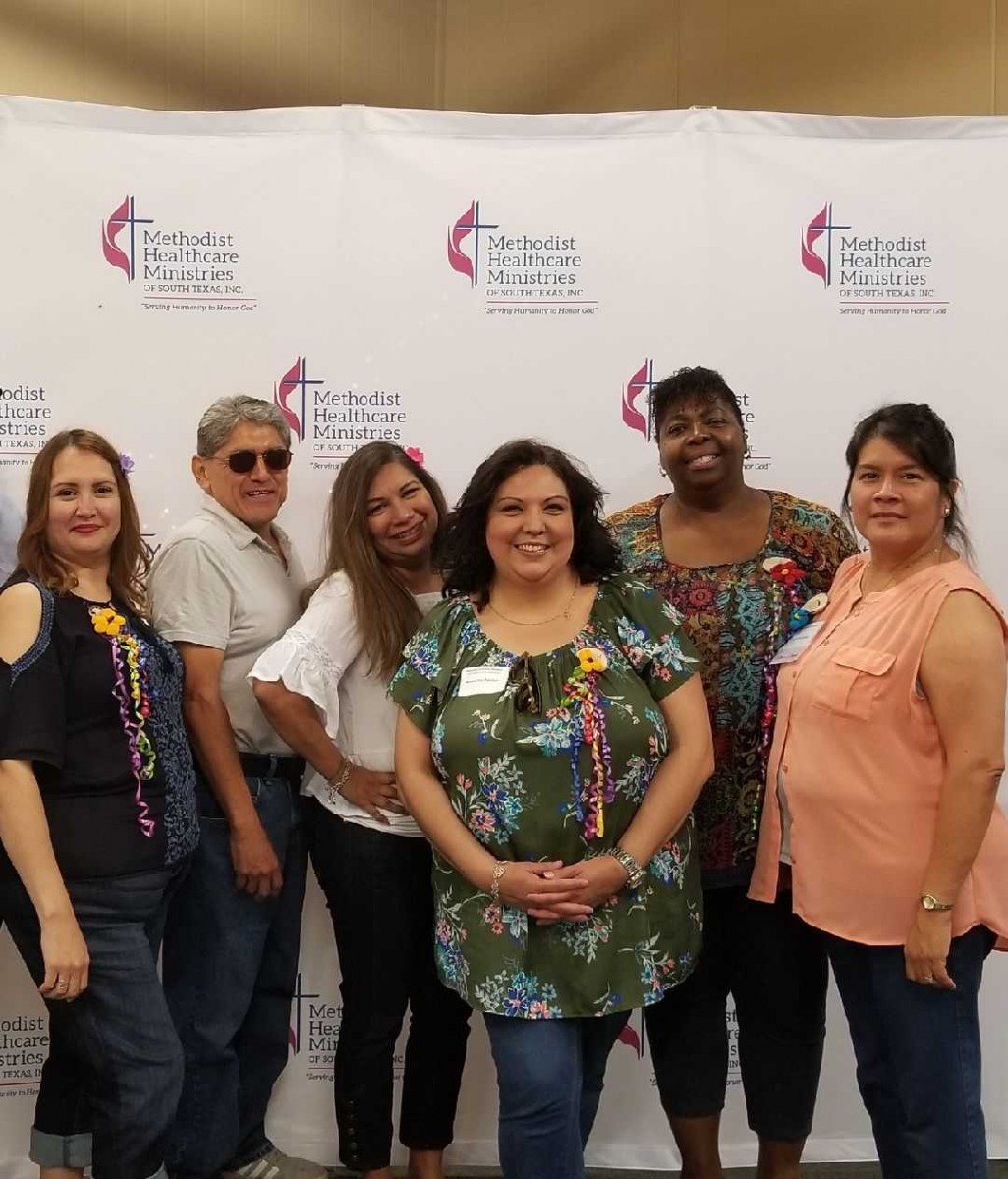
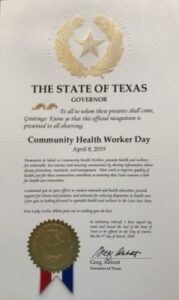
On April 8, 2019, citizens across Texas commemorated Community Health Worker Day, as proclaimed by Texas Governor Greg Abbott. The observance celebrates the efforts of Community Health Workers who conduct outreach and health education, provide support for clients and patients and advocate for reducing disparities in health care. It is a gratifying and humbling feeling to be honored for doing the work we love each and every day. As community health workers at Methodist Healthcare Ministries of South Texas, Inc., we are especially proud that the work we do helps our organization fulfill its vision.

Working with Methodist Healthcare Ministries as community health workers is an incredible learning experience that provides us with opportunities to expand and grow professionally through various trainings and professional development. These opportunities and trainings provided through MHM helps refine our skills and sharpen our knowledge. We feel very blessed to work for a wonderful organization, full of amazing people that enables and encourages its employees to continually improve themselves and develop as professionals.

In 2012, three of us started working at Methodist Healthcare Ministries as part of a pilot program where we worked on a part-time basis. Today, our team has grown to include six Community Health Workers; four based here in San Antonio, one in Corpus Christi and one in San Angelo. As a team, we have grown in our capabilities through our experience in the field. We have seen the impact we can achieve working out amongst the community, rather than just in our offices. We are able to better reach out to the people and meet them face-to-face and see the needs in the community firsthand.

Moreover, we are more productive and able to accomplish much more working in the field as a team. We network with other Community Health Workers, and other community members, doing the same type of work we do to better the community. We conduct outreach through our neighborhoods and at health fairs to reach the uninsured and overlooked. We visit with people in need of resources or who just need to speak to someone about what is going on in their lives. We are there to listen and do our very best to help with their needs.

Being a Community Health Worker with Methodist Healthcare Ministries is absolutely a true blessing and we are grateful to work for such an amazing organization. We have found a place where we can make a difference in people’s lives. Our job is to serve others and offer peace of mind and words of encouragement. To give hope that tomorrow will be a better day!!!

26.2 Miles to Transformation: How Capacity Building Helps Organizations Get Marathon Ready

The person who starts the race is not the same person who finishes the race.

Whether you’re competing with others or yourself, a marathon is a test of resilience and endurance. Nobody wakes up one day and runs 26.2 miles. There’s coaching, training and planning geared to your individual challenges. On race day, all that preparation and strategy, investment of time and energy and the skills acquired along the way transform a runner to an athlete.

Some nonprofit organizations want to compete but haven’t thought through everything they’ll need to run the course. They aren’t ready, and sometimes, they don’t know they aren’t ready and don’t know how to prepare. Sometimes they do know but can’t afford the coach – or the entry fee.

Philanthropic organizations want grantmaking to be transformational, leading to sustainable organizations and patient impact, but in South Texas, most nonprofits need more than grants to create lasting change.

To run the race, they need a special set of skills and core capacities—things like strategic or operational plans, or technology. That’s where capacity building comes in. It’s a term you may hear often, but it’s not always understood. Like many funding organizations, Methodist Healthcare Ministries of South Texas, Inc. uses capacity building to help its subgrantee partners through the Sí Texas Project develop skills and strengths that put them in the race. We don’t run for them; we give them what they need to do it on their own.

Capacity building is a process by which a nonprofit achieves the next level of operational, programmatic, financial, or organizational maturity to more effectively and efficiently advance its mission. Capacity building isn’t an overnight success story, it’s a continuous improvement strategy, and the goal is a sustainable organization working in response to the community.

Methodist Healthcare Ministries’ goal for its eight Sí Texas Project Subgrantees is “athlete,” and we’re grateful to offer the coaching and support to help them reach their goals and serve their communities. 

In 2016, we worked with Hope Family Health Center—one of our subgrantees in McAllen—and recommended capacity-building support that included facilitated strategic planning and help in choosing a new Electronic Health Record (EHR). Rebecca Stocker, Hope’s executive director, says the experience changed their organization in many ways. “The planning process helped us work through issues we might not have seen without the facilitation,” Stocker said. “We now have a blueprint that helps us build development relationships and continue serving our community; this path is much more attainable now.”

The new EHR allowed Hope to add mental and behavioral health services to their primary care structure, increasing the scope of care and services Hope offers to the underserved in the Rio Grande Valley. “We know that offering primary care and behavioral health under one roof improves the lives of our patients in so many ways,” Stocker said. “Our EHR helps practitioners communicate with each other in ways they couldn’t in the past, and it measures the effectiveness of our care with greater accuracy. This is what transformation looks like.”

Shirly Thomas is the Capacity Building Specialist at Methodist Healthcare Ministries of South Texas, Inc. She manages technical assistance contracts, develops training and sets the strategic direction for the Sí Texas program. Shirly has a Masters in Public Health from Boston University and is eager to see how organizational effectiveness and program support affects philanthropy.

The Southwest Texas Crisis Collaborative is Having a Positive Impact on Our Community

On Jan. 31, I was honored to speak at The Health Cell’s 2019 State of the Industry event, alongside Sarah Hogan from the South Texas Regional Advisory Council (STRAC). We presented on the Southwest Texas Crisis Collaborative (STCC), a unique and unprecedented partnership between local health systems, mental health care providers, public safety agencies and philanthropy that is improving the continuum of care for the most vulnerable residents – unfunded and underfunded patients experiencing mental illness, homelessness and/or chronic illness.

San Antonio is home to over 350,000 individuals in the safety net population – people who may not have insurance, live at, below or near the poverty level and are otherwise considered vulnerable. This is a population that often does not receive the care, or the quality of care that they need. San Antonio, like many other communities, had previously experienced the same bureaucratic and logistical obstacles to providing this population with the care they need. That is when community partners came together to form the STCC.​

The Collaborative brought together local health systems, mental health care providers, public safety agencies, city and county government, nonprofits, and philanthropic partners to develop a vision and a plan for how to close the gaps in the continuum of care and provide this population with access to the care they urgently need.

Methodist Healthcare Ministries took the lead by committing to funding the collaborative with nearly $20 million over five years to cover the initial year of STCC's operations and infrastructure, as well as four additional years of programming and initiatives. In a unique and unprecedented move, the city’s six competitor hospital systems invested a collective $8 million, with additional funding from Bexar County and the San Antonio Area Foundation, as well as the leveraging of state funding.This collection of resources has allowed the Collaborative to develop and implement new and innovative solutions to improve access to care for some of our most vulnerable residents.

There are multiple players involved in providing access and delivering care to this population throughout the community. STRAC serves as the “backbone” of the Collaborative and keeps everyone connected and working toward the established goals. With all of the key players at the table, the Collaborative has developed five key initiatives.

1. Enhance the MEDCOM Law Enforcement Navigation program

Enhancing the MEDCOM Law Enforcement Navigation program expedites access to psychiatric care for individuals who are experiencing a mental health crisis, but who are otherwise medically stable. Instead of taking all patients to the nearest emergency room, the MEDCOM coordinator can direct the officer to the closest, most appropriate mental health facility for treatment, depending on age, gender and bed availability. This leads to less people taking up beds or space in a crowded ER and allows the patient to get the help they need faster. On average, 800-900 patients were navigated directly to psychiatric care each month in 2018. We have seen a 97 percent adoption rate of this practice among 26 area law enforcement agencies, including the San Antonio Police Department and the Bexar County Sheriffs’ Office.

2. Decrease Overutilization of 911 residents at Haven for Hope

Haven for Hope holds the distinction of being the number one address for 911 calls in San Antonio. The focus of the second initiative we implemented in 2018 was to decrease the overutilization of 911 from residents at Haven for Hope and to decrease the rate of EMS transports to emergency rooms for conditions that could be managed otherwise. For this initiative, we established an Acute Care Station at Haven for Hope and the San Antonio Fire Department dedicated a paramedic trained in their Mobile Integrated Health model to the site each shift. The paramedic is on-site in the evening hours and able to respond to 911 calls and make an assessment about how to best treat the patient. In the majority of cases, the patients have been treated on-site and released and/or referred to the CentroMed clinic site at Haven for Hope for follow-up care. There are, of course, situations where the patient's condition necessitates transport to the hospital. Having the paramedic responding to 911 calls from Haven saves time and critical resources. This initiative has resulted in a decrease in the EMS transport rate from Haven for Hope from 70 percent in 2017 to 17 percent in 2018. When an ambulance transport costs about $900 and the triage in an ER costs about $1000, this translates into a roughly calculated savings of over $665,000 in 2018 alone.

3. Expand the Psychiatric Emergency Services unit

The third key initiative that the Collaborative launched is the expansion of the Psychiatric Emergency Services (PES) unit, an emergency room focused specifically on psychiatric crisis intervention. Patients may arrive at the PES by law enforcement or with a friend or family member. They see a psychiatrist within four hours of arrival and the average length of stay is 48-72 hours. Some patients are admitted to the inpatient unit, but the majority are discharged directly back to their home environment. The expansion of the PES provided capacity to allow us to implement an inter-facility transfer program. Using MEDCOM as the navigator, local emergency departments could transfer medically cleared patients to the PES via an “auto accept” process. In just 10 weeks of implementation, 922 patients were successfully transferred from an emergency department to the PES. Previously, it could take hours to days to transfer a patient from the emergency department to psychiatric care. The auto accept process has decreased the wait time to about two hours.

4. Provide Transitional Step-down Housing support

In late 2018, we welcomed Crosspoint, Inc. as a provider to the Collaborative with the opening of a behavioral health diversion program for individuals with a mental health diagnosis transitioning out of jail or inpatient hospitalization. Clients are able to stay up to 180 days, and receive 24/7 residential support, individual and group behavioral health services, and case management.

5. Develop the TAVConnect technology platform

We’ve also been developing the TAVConnect technology platform to help connect the dots and providers in the system of care, and to address patients’ social determinants of health, thereby facilitating better patient outcomes. We have 8 healthcare providers online and using the system. We expect to deploy TAVConnect to additional Collaborative partners in 2019.

Although the STCC is still relatively new, the Collaborative has achieved many early successes. But, what is most exciting, is the improved access to appropriate care we have provided for the neediest in our community.

This is leading to improved outcomes for all of the partners involved, but most especially for the patients as well as the communities we serve. We at Methodist Healthcare Ministries hope this unprecedented collaboration helps others outside San Antonio see what we already know to be true about our community: Through collaboration and partnership, we will do all the good we can, for as many as we can – regardless of ability to pay. This Collaborative is a pivotal and transformative moment for our community’s system of care — we are proud to be a part of It. Onward!

Keeping Kids Healthy

Imagine being a kid again and sitting in class feeling sick. Now imagine having parents that have no access to healthcare with limited financial resources. And, not knowing where to take their child for the medical care they need.

Thanks to Methodist Healthcare Ministries of South Texas, Inc., children enrolled in the Marion and Schertz-Cibolo-Universal City Independent School Districts can receive the care they need, despite not having health insurance.

Whether it’s a cold, toothache, ear infection, sports physical or making sure kids get their annual immunizations, Methodist Healthcare Ministries’ School Based Health Center teams can address those needs by providing high quality pediatric primary health care to evaluate students, as well as their siblings up to age 22.

Alicia Herrera, front desk supervisor for Methodist Healthcare Ministries’ two School Based Health Centers, said seeing her organization’s mission: “Serving Humanity to Honor God” in action by providing healthcare to the least served in these communities, has been incredibly rewarding.

“I’ve been working in the school based health centers for 17 years and I love it. To see children and their siblings get the care they need, when they need it, has been wonderful,” said Herrera.

She said students visit the School Based Health Centers during school hours, which are from 8 a.m. to 5 p.m., Monday through Friday. The two School Based Health Centers are conveniently located on the campuses of Schertz Elementary School (757 Curtiss Avenue), and Krueger Elementary School (217 West Otto Street). Services are available to children from across the two school districts and open year-round.

“We see kids of all ages — newborn to 22 — from the schools in the area. These children do not have access to healthcare and are in need of seeing a medical professional,” said Herrera. “We are here for them and always happy to get these kids to feeling better so they can get back to learning in the classroom. The families know us and trust us.”

She said the two Methodist Healthcare Ministries’ School Based Health Centers provide the following programs and services:

  • Diagnosis and treatment of simple illness or injury
  • Immunizations
  • Well-child exams
  • Physical exams
  • Sports physicals
  • Health promotion and education
  • Prescription assistance
  • Primary dental care, including exams, x-rays, cleanings, fluoride treatments and sealants
  • Dental treatment, including fillings, extractions and endontic treatment available
  • Sports mouth guards (in school colors)
  • Individual and family counseling, as well as case management services
  • Assistance with Medicaid, CHIP and SNAP application
  • Referrals to healthcare providers, specialists and other community resources

Herrera said clinical services provided to children at Methodist Healthcare Ministries’ two School Based Health Centers are charged on a sliding fee scale, based on annual household income. The School Based Health Centers do not offer urgent care services and insured patients must file claims on their own.

To learn more about the services offered at Methodist Healthcare Ministries’ School Based Health Centers, contact the Schertz center at 210-658-4875, or the Marion center at 830-420-2291, or visit online at mhm.org.

Is it a cold, allergies or flu?

Sneezing, coughing, congestion, itchy eyes, runny nose and feeling achy? So, could it be a cold, allergies or the flu? That is the question often asked by patients seeking relief.

Dr. Edward Dick, senior vice president of integrated health services at Methodist Healthcare Ministries of South Texas, Inc., said it may be hard to determine initially if it’s a cold or flu. “Generally, flu is much more severe in symptoms with a higher fever. There are tests available in the healthcare provider’s office or lab that can detect flu, but these are not perfectly sensitive or specific.”

He said when prescribing antiviral medications to patients, it’s usually based on test results, the severity and types of symptoms and whether the patient visits their doctor within 48 hours of the onset of symptoms. “In any given year, the types of flu circulating, and the Centers for Disease Control and Prevention (CDC) recommendations may vary so patients would do well to check the CDC’s website and discuss their options with their doctor.”

Dr. Dick explained how some patients with severe allergies, like cedar fever, may feel like they have the flu because of chills. However, allergies alone shouldn’t cause a fever. “Presence of a fever or worsening symptoms is a good reason to see your doctor. Chronic or repeat infections would also warrant a visit to the doctor’s office.”

Many suffer from cedar fever during this time of the year and while some people can recognize the symptoms, not everyone suffers from allergies, which can make it confusing to distinguish between allergies, a cold or the flu.

The following are tips to help you better identify symptoms and when it’s time to see your doctor, according to the CDC:

ALLERGIES: If your body mistakes dust or pollen for germs and attacks as an immune response — as if fighting viruses or other pathogens — that’s when you will begin to experience allergy symptoms. What happens is your body releases substances such as histamine, resulting in inflammation and causing a runny nose, watery eyes, coughing, fatigue and sneezing. Allergies aren’t contagious like colds and the flu, but, usually, last longer and cause people to feel miserable. Allergies can be a risk factor for developing a sinus infection.

COLDS: Catching a cold can be serious in young children or patients with compromised immune systems but is less severe among most folks. Colds and flu are both respiratory illnesses but caused by different viruses. A cold is caused by several respiratory viruses like rhinovirus, enterovirus, adenovirus, parainfluenza, and others. These viruses rarely lead to serious complications and recovery is a lot quicker, unlike the flu. Cold symptoms vary and often include a runny nose, congestion, sore throat, coughing and sneezing. A fever is less common among symptoms. Taking over-the-counter medications can help make you feel better sooner.

FLU: It is also known as influenza and is the most serious of cold-weather respiratory viruses that circulate during this season. Flu symptoms include fever, severe fatigue, headache, dry cough, chills, chest pain, body aches, and a sore throat. The flu kills thousands in the U.S. annually, resulting in hundreds of thousands admitted to the hospital, as well as infecting millions. The hardest hit by the virus are young children, seniors, pregnant women, and those with chronic illnesses. If you’re experiencing difficulty breathing, chest or stomach pain, dizziness, confusion, or severe and persistent vomiting, you should seek medical attention soon after these symptoms start.

Dr. Dick said you can protect yourself and others by washing your hands often and using hand sanitizer; covering your nose and mouth when coughing or sneezing into your sleeve or tissue; and avoiding contact with others infected with the virus will help reduce your chances of getting the flu, which is contagious. And, most importantly, get your annual flu shot.

Also, if you are sick with the flu, it’s best to stay home and away from crowds, family members, coworkers and those at high risk of flu complications.

Dr. Dick said if you’re currently sick with a cold, flu, or allergies, get plenty of rest so you can begin to feel better soon.

Methodist Healthcare Ministries is dedicated to creating access to healthcare for the uninsured through direct services, community partnerships and strategic grant-making in 74 counties across South Texas. Guided by its mission of "Serving Humanity to Honor God," the organization’s vision is to be the leader for improving wellness of the least served. The mission also includes Methodist Healthcare Ministries' one-half ownership of the Methodist Healthcare System, the largest healthcare system in South Texas, which creates a unique avenue to ensure that it continues to be a benefit to the community by providing quality care to all and charitable care when needed. For more information, visit www.mhm.org. 

White close icon

Jaime Wesoloski

President & Chief Executive Officer

Jaime Wesolowski is the President and Chief Executive Officer at Methodist Healthcare Ministries. A healthcare executive with three decades of leadership experience, Jaime is responsible for the overall governance and direction of Methodist Healthcare Ministries. Jaime earned his Master’s Degree in Healthcare Administration from Xavier University, and his Bachelor’s of Science from Indiana University in Healthcare Administration. As a cancer survivor, Jaime is a staunch supporter of the American Cancer Society. He serves as Chair of the American Cancer Society’s South Texas Area board of directors and he was appointed as Chair to the recently created South Region Advisory Cabinet, covering eight states from Arizona through Alabama. Jaime believes his personal experience as a cancer survivor has given him more defined insight and compassion to the physical, emotional, and spiritual needs of patients and their families.