Legislative Update, May 20

In this issue:

Upcoming Hearings for the week of May 20

Upcoming Events

View our 2019 Legislative Agenda

Advocacy

Bill Tracking

Research


___________________________________________________________________________________________

State Updates

On Their Way to the Governor’s Desk

With a little more than a week left in the 86th Legislative Session, bills are making their way to the Governor’s desk for his signature. Here are just a few that impact the delivery of health care for the communities we serve. 

HB 125 – Prohibits the state from publishing the home address of licensed mental health professionals online.

HB 2225 – requires birthing facilities to inform parents of deaf and hard of hearing infants about public resources available to them, including early childhood intervention (ECI) services.

SB 999 – develops a state plan to identify best practices related to the awareness, treatment and prevention of Alzheimer's disease.

SB 1142 – allows the Travis County Healthcare District (Central Health) to employ physicians to better provide medical care for indigent and needy residents.

SB 1378 – requires institutions of higher education planning to increase enrollment to medical degree programs to submit a specific plan to increase the number of corresponding first-year residency positions.

SB 2132 – provides women auto-enrolled into the state’s Healthy Texas Women (HTW) program with information about the program and a list of health care providers in the woman's geographic area.

Legislature Approves Extension of Cancer Prevention & Research Institute of Texas  

Approximately half of all cancers can be prevented through evidence-based prevention intervention services. Established in 2009, the Cancer Prevention and Research Institute of Texas (CPRIT) provides an infrastructure that supports and enhances the networks delivering cancer prevention services and conducting groundbreaking research throughout the state. On May 10, the Texas Senate passed House Bill 39 and House Joint Resolution 12 which will extend the CPRIT program and ask voters to amend the Texas Constitution to authorize $3 billion in general obligation bonds.

CPRITs investment in prevention grants makes it possible for the state to fully capitalize on its longstanding investment in Texas’ fight against cancer. Since 2010, CPRIT grantees have provided nearly 251,000 prevention vaccinations, 230,000 tobacco cessation services and 1,300,000 screening and diagnostics for breast, cervical, HPV-related, liver and colorectal cancers. Additionally, CPRIT has invested nearly 11 percent of its research portfolio – twice the national average – toward more than 150 cancer research projects aimed at improving survival rates and preventing children and adolescents from developing cancer. Methodist Healthcare Ministries worked with the American Cancer Society this legislative session to secure the reauthorization of CPRIT and ensure Texans receive lifesaving prevention clinical services and expedite innovation in childhood cancer research.

House Extends Health Care Coverage for Medicaid Mothers

The 2018 Texas Maternal Mortality and Morbidity Task Force Biennial Report found that 56 percent of maternal deaths between 2012 and 2015 occurred after 60 days postpartum. The most common contributing factor to maternal mortality included underlying medical conditions, such as diabetes and heart disease, due to the lack of access to quality care during the year after pregnancy and throughout the interconception period. On May 10, the Texas House voted 87-43 to pass House Bill 744 by Representative Toni Rose, which adopts the Task Force’s number one recommendation – to extend access to health care coverage from 60 days to 12 months following delivery.

The current 60-day postpartum coverage provided by maternal Medicaid does not allow women time to secure postpartum outpatient care and ensure access to interconception care services. Enabling eligible women to access and maintain continuous healthcare coverage is essential to help women identify and address health issues early on. HB 744 aims at improving the health of women, facilitate continuity of care, enable effective care transitions and promote safe birth spacing. Methodist Healthcare Ministries supports extending Medicaid coverage for women up to 12 months postpartum to ensure continuity of care, allowing women to receive treatment services for conditions such as substance use, diabetes and hypertension. House Bill 744 moves to the Senate where it awaits referral to committee and further action.

Bill Addressing Adverse Childhood Experiences Moves Forward

Texas ranks 30th in the nation for the number of children who have experienced two or more childhood traumas. Experiencing multiple stressful or traumatic events during childhood, known as adverse childhood experiences (ACEs), have shown to have profound effects on an individual’s cognitive, social and biological development. With nearly 24 percent of Texas children having experienced multiple ACEs, the Texas House voted 131-14 in favor of House Bill 4183 by Representative Tan Parker (R- Flower Mound), directing the state to develop a five-year strategic plan to address the social, health and economic impacts of adverse childhood experiences.

Studies have found that as the number of ACEs increases so do the risks of poor physical health, mental health and behavioral health outcomes. Using a public health framework, HB 4183 develops a strategic plan that identifies best practices and promotes the development of early intervention and prevention strategies to mitigate the impact of ACEs. Methodist Health Ministries supports empowering struggling families, promoting safe relationships and environments and building resiliency in children and families. On Wednesday, May 15, HB 4183 was heard by the Senate Committee on Health and Human Services and was left pending, awaiting further action.

Bill Promotes Best Practices for Physical Activity in Schools

Texas has the seventh-highest obesity rate in the country for youths between the ages of 10 and 17, with more than 600,000 youths considered obese. Children who are overweight or obese are five times more likely to be overweight or obese as adults and have an increased likelihood of developing chronic diseases, including diabetes and heart disease. On May 9, the Senate Committee on Education heard House Bill 455 by Representative Alma Allen (D-Houston), which provides guidance to school districts on adequate recess time while maximizing the effectiveness of outdoor physical activity.

Daily recess is shown to have health, social and academic benefits for students. Currently, the state does not provide school districts with specific guidance as to the best-practices for constructive physical activity and outdoor play time. HB 455 directs the Texas School Health Advisory Committee to develop age-appropriate model recess policies that encourage constructive outdoor play time. Methodist Healthcare Ministries provided written testimony to the Senate Education Committee in support of preventing obesity early in a child’s life to improve their health and productivity into adulthood. The bill was left pending in committee and awaits further action.

Senate Passes Medical Transportation Pilot Program for New Mothers

For many mothers in rural and urban areas, transportation to medical appointments is a significant barrier resulting in forgone health care or missed appointments. Missed appointments delay care which is associated with disrupted patient care, increased medical costs and increased emergency room visits. On Thursday, May 16, the Texas Senate voted overwhelmingly in support of House Bill 25 by Representative Mary Gonzalez (D-Clint), which creates a pilot program allowing pregnant and postpartum women to ride with their children to their pregnancy-related medical appointments under the Medicaid medical transportation program.

Currently, state and federal funds are not allowed to be used to transport a person who is not a Medicaid beneficiary to a medical appointment. This results in mothers having to travel without their children if they are going to a prenatal or postpartum appointment. HB 25 would allow health plans to leverage existing partnerships with ridesharing services to arrange for transportation for mothers and their children. The pilot program seeks to determine if the program reduces pregnancy-related complications, improves access to medical care and decreases missed appointments. Methodist Healthcare Ministries supported HB 25 as it worked through the House and Senate committee process. The bill, as amended in the Senate, heads back to the House for concurrence.

Upcoming Hearings for the week of May 20

Upcoming Events

Monday, May 27 – Last day of the 86th Legislative Session (Sine Die)

For more information on health care research, policy or advocacy, please contact Chris Yanas at cyanas@mhm.org.

Back to Top

Legislative Update, May 9

In this issue:

Upcoming Hearings for the week of May 6

View our 2019 Legislative Agenda

Advocacy

Bill Tracking

Research


___________________________________________________________________________________________

State Updates

State Trauma Program Funding Bill Moves Forward

Every four minutes someone in Texas is faced with an unexpected traumatic injury – annually resulting in over 130,000 trauma hospitalizations and costing designated trauma centers nearly $300 million in unreimbursed trauma care services. To help offset the unreimbursed costs and sustain the state’s trauma care system, the Texas Legislature created the Driver Responsibility Program (DRP) in 2003. Over the course of the 16-year program, however, the DRP has received growing opposition for its impact on low-income drivers and families. On May 1, Representative John Zerwas (R-Fulshear) laid out House Bill 2048 for consideration on the House floor, which repeals the DRP and proposes a new funding source for the state’s entire trauma care system.

The current DRP levies fines and surcharges over a three-year period for reckless driving and moving violations such as DWIs ($1,000 a year), driving without an insurance or valid ID ($250 a year) and driving with an expired license ($100 a year). When Texans are unable to pay the DRP fines, their driver’s licenses are revoked, resulting in more than 1.4 million drivers losing their licenses since the inception of the program. HB 2048 proposes reinstating revoked driver’s licenses due to unpaid fines, repealing the program, and replacing the funding using three different mechanisms: increasing state traffic fines from $30 to $50, imposing a $4 fee on auto insurance policies, and raising the fees for DWI to $3,000, $4,500, and $6,000 for subsequent convictions, respectively. The bill was amended on the House floor, including the addition of a provision that increases the amounts allocated to Emergency Medical Services and the Regional Advisory Councils by 2 percent and 1 percent, respectively.

House Bill 2048 received broad support from health care stakeholders, including the Texas Hospital Association, Texas Sheriff’s Association, HCA Healthcare, CHRISTUS Healthcare, University Health System, Doctors Hospital at Renaissance and the San Antonio Police Department. HB 2048 was voted out by the House on a vote of 143-0 and sent to the Senate where it awaits to be referred to committee. Methodist Healthcare Ministries supports the passage of HB 2048 and its efforts to develop a sustainable and equitable funding stream for the state’s trauma care system.

House Tackles Property Tax Reform

Property tax and education reform bills have been the top policy issues of the 2019 legislative session. Legislators have routinely heard from constituents who have voiced concerns with rising property taxes, and confusing tax systems. On April 30, the Texas House debated Senate Bill 2, sponsored in the House by Representative Dustin Burrow (R-Lubbock), who stressed to House members that the intent of SB 2 is to make the tax process more transparent, though the bill does not aim to lower property tax rates.

The House approved Senate Bill 2 by a vote of 107-40, with 20 members of the Democratic party voting in favor of the bill. As passed, the bill requires cities, counties and emergency service districts to hold an election to raise property tax revenue above 3.5 percent from the previous year, matching the version passed by the Senate last week. Both versions also allow taxing units to include indigent health care costs into their revenue growth calculations, although with slightly different mechanisms. Efforts to add amendments that would exclude flood risk mitigation, public safety expenses and economic development expenditures from the revenue growth calculations were voted down.

State leadership applauded the bill’s passage, despite strong opposition from cities and counties. Local government officials fear the unintended consequences of the reform will restrict both short term and long term growth needs without providing meaningful tax relief for its residents. Senate Bill 2 has moved to conference committee where conferees will negotiate final terms.

Bexar County House Freshman Ray Lopez Files Bills Protecting Vulnerable Youths

Newly sworn-in House member, Representative Ray Lopez (D-San Antonio), was given the opportunity to debate his bill, House Bill 4753, last week in the House Committee on International Relations and Economic Development. The bill calls for a study to examine the growing cost of child care affecting hard-working families throughout the state. Lopez, a former member of the San Antonio City Council, won a special election runoff to replace former state Representative Justin Rodriguez, who gave up his seat to accept an appointment as Bexar County Commissioner.

Lopez shared with committee members that some families are forced to spend up to 30 percent of their annual income on child care, much higher than the 7 percent level recommended by financial analysts. The disparity, disproportionately affecting single-family households with low incomes, recognizes that children of parents with limited incomes consequently lack access to child care resources. Representative Lopez stressed that investing in child care was the first step toward ensuring a child’s success and healthy development. HB 4753 was left pending in committee, where it will likely remain due to legislative session deadlines.

Representative Lopez also introduced House Bill 4757 which looks to improve access to healthcare coverage for youths in foster care. Under current law, youths aging out of foster care have access to state healthcare coverage until the age of 26, however many lose their coverage after they age out due to the difficult renewal processes and application forms that must be submitted annually. HB 4757 would streamline the redetermination process and create an auto-renewal process for youths after leaving state conservatorship to prevent any disruption in services, treatment or medication. Methodist Healthcare Ministries supports Representative Lopez’s initiative to protect the underserved and ensure access to healthcare coverage for all vulnerable populations.

Adequate Physical Activity Key to Future of National Security

Nearly 33 percent of youths in Texas are too overweight to serve in the military, and obesity is one of the leading reasons why 73 percent of young adults in Texas are ineligible to serve in the military. On May 1, Methodist Healthcare Ministries’ advocacy partners, Mission: Readiness and the Partnership for a Healthy Texas, held a press conference highlighting the importance of increasing physical activity in schools to curb the obesity epidemic. Senator Campbell (R-San Antonio) and Senator Kirk Watson (D-Austin) noted in their comments that this was a national security concern and both supported the implementation of obesity prevention strategies, such as the passage of Senate Bill 364 to ensure recess policies are adopted in all schools.

Dr. Deanna Hoelscher, Regional Dean of the UTHealth School of Public Health at Austin, explained that childhood obesity is estimated to cost an additional $12,900 in medical care per overweight child, placing a significant burden on the healthcare system. Retired U.S. Army Major General Rick Noriega added that engaging in meaningful recess and physical activity in schools would ensure Texas develops a healthy workforce and strong military. With the obesity rate of fourth-grade students in Texas currently 44 percent higher than the national average, the time to act is now.

Methodist Healthcare Ministries remains a staunch advocate in preventing childhood obesity. It supports an upstream approach which includes supporting the Partnership for a Healthy Texas’ Senate Bill 1834, which creates a pilot program to incentivize the purchasing of healthy foods for individuals using SNAP benefits and Senate Bill 952, which creates standards for nutrition, physical activity and screen time in licensed child care facilities. Both bills have passed the Senate and are waiting to be heard in the House Committee on Human Services.

Upcoming Hearings for the week of May 6


For more information on health care research, policy or advocacy, please contact Chris Yanas at cyanas@mhm.org.

Back to Top

Legislative Update, April 30

In this issue:

Upcoming Hearings for the week of April 29

Upcoming Meetings & Events


View our 2019 Legislative Agenda

Advocacy

Bill Tracking

Research


___________________________________________________________________________________________

State Updates

Knowing the Immunization Status of Students in a School Campus Matters

Texas has seen a twentyfold increase since 2003 in the number of nonmedical exemptions for school vaccination requirements. Vaccination exemptions tend to cluster geographically, create pockets of under-vaccinated children, and leave communities vulnerable to disease outbreaks, such as measles and whooping cough. On April 23, Senator Kel Seliger (R-Midland) laid out Senate Bill 329, also known as the “Parent’s Right to Know Bill,” in the Senate Health and Human Services Committee. The bill aims to improve community awareness on the importance of vaccinations and improve the state’s ability to identify pockets of disease and implement timely public health interventions.

Immunization exemption data currently collected by the state of Texas is aggregated at the school district level. Parents in support of SB 329 contend that sharing the data at the local campus level will improve community awareness and allow families to make informed decisions when enrolling their children in school. Testimony shared with committee members pointed out that parents of children with compromised immune systems need access to the data collected by the government on their child’s immediate surroundings so that they can make decisions related to their child’s health and well-being. Rekha Lakshmanan, with The Immunization Partnership, testified in support of SB 329, noting the bill ultimately seeks to provide greater transparency regarding the number of immunization exemptions which puts Texans unnecessarily at risk of vaccine-preventable diseases. Witnesses opposed to the bill claimed improving transparency would result in a backlash against unvaccinated individuals.

Organizations signing up in support of SB 329 included the Texas PTA, Williamson County Health District, Texas Public Health Coalition and Texas Medical Association, which explained how the school campus data would be invaluable in responding quickly to disease outbreaks. Methodist Healthcare Ministries supports SB 329 and is a longtime advocate of immunization policies that protect children and their families. The bill was left pending in committee.

Increasing the Physician Education Loan Repayment Cap

Texas ranks 47th in the nation in its ratio of primary care physicians to total population. The low ratio of primary care providers impacts access to care, especially for the 6 million Texans living in 123 counties with a full primary care professional shortage area designation. To encourage new physicians to work in underserved communities, Texas currently pays up to $160,000 of a physician’s student loan in return for a four-year commitment to practice in an underserved area and care for patients enrolled in the CHIP and Medicaid programs. Over the last five years, the program, known as the Physician Education Loan Repayment Program (PELRP), has enrolled 750 physicians caring for patients in rural communities, urban community health centers and correctional facilities. On April 23, the Senate Higher Education Committee took testimony on Senate Bill 998 by Senator Chuy Hinojosa (D-McAllen), which revamps the PELRP by increasing the maximum available loan repayment amount to each participating physician by $20,000 over a four-year term for a maximum of $180,000. This increased amount more closely reflects the educational debt load of recent medical graduates.

According to the Association of American Medical Colleges, 76 percent of medical students graduate with student debt and their total debt load has increased significantly over the past decade. The average educational debt of a new physician has grown from $173,000 in 2011 to $190,000 in 2016. Testifying in support of SB 998, Alan Schalscha, Chief Medical Officer of CommUnityCare, emphasized that the increased loan repayment amount is necessary to remain competitive with actual physician debt and will assist in attracting physicians to practice in medically underserved areas. The bill received support from many stakeholders, including the Texas Association of Community Health Centers, the Teaching Hospitals of Texas and the Texas Medical Association. Methodist Healthcare Ministries works to secure physicians for rural clinics who are often unable to successfully recruit providers for their communities. Passage of SB 998 will strengthen the PELRP and allow medically underserved areas to competitively recruit physicians for necessary medical care. The bill was left pending in committee.

APRNs and PAs Prescribing Authority Improves Access to Care

In Texas today, there are 206 counties designated as a mental health professional shortage area, with 73 percent of these counties lacking a single psychiatrist. As a result, patients must often wait several weeks or drive several hours for an appointment to see a psychiatrist. Currently, only psychiatrists can prescribe schedule II controlled substances, such as ADHD medication, pain medication or even opioid treatment medications. However, 42 other states already allow advanced practice registered nurses (APRNs) and physician assistants (PAs) to prescribe these drugs under a physician’s supervision. On April 24, the House Public Health Committee heard testimony on House Bill 2250 by Representative Eddie Lucio, III (D-San Benito), which looks to improve continuity of care, increase access to care and reduce administrative burdens for hospitals.

The future of health care depends on a team-based approach to patient care. Under the current law, a supervising physician must be present for an APRN or PA to prescribe or adjust a Schedule II drug. Testifying in support of House Bill 2250, Sharon Hilgartener, with Texas Nurse Practitioners, stated that changing the dosage of pain medication while the patient is in the hospital is currently within her scope of practice. However, upon discharge, if the dosage on a patient’s prescription needs to change, a physician must sign off. The inability to reach a physician often results in delayed patient discharge, decreased throughput, decreased patient satisfaction scores and ultimately lower reimbursement rates. The Texas Medical Association also went on record in support of HB 2250. Methodist Healthcare Ministries values a patient-centered system of care that reflects the patients’ needs and improves access to health care services. The bill was left pending in committee.

State Property Tax Cap Bill Weakens Local Health Care Safety Net Systems

Texas’ rapid population increase places an unparalleled demand on its police, firefighters, paramedics and other local community services. As the cost of providing these services continues to rise, local governments rely on their ability to raise funds through property tax revenues to meet the needs of their residents. Under current law, local governments may raise property tax revenue by up to 8 percent without holding a local election. On April 15, the Texas Senate passed Senate Bill 2 by Senator Paul Bettencourt (R-Houston), which seeks to limit the capacity of local governments and special purpose districts to raise taxes by more than 3.5 percent above the previous year’s revenue and retains a 2.5 percent revenue cap for school districts. Reducing the property tax cap restricts local governments from providing necessary services, such as building and maintaining essential infrastructure, investing in schools and protecting against public health threats.

Local government officials and health care advocates from across the state are opposed to the current language in the Senate’s property tax cap legislation. The legislation threatens to weaken an already vulnerable health care safety net system, especially for providers in rural communities, who cannot rely on state and federal reimbursement to remain viable. Property tax revenues are also used to maintain the underfunded Texas trauma system as well as to offset the state’s share of Medicaid payments to hospitals.

Senate Bill 2 differs from the House’s property tax bill, House Bill 2 by Representative Dustin Burrows (R-Lubbock), which will be debated April 30 on the House floor. The current proposal places a 2.5 percent revenue cap on counties, cities and special purpose districts; however, the bill exempts local hospital districts and school districts from the revenue cap.

Methodist Healthcare Ministries remains engaged in tracking state legislation that restricts local governments from meeting their basic obligations to citizens. Texas needs a fully funded and sustainable health care safety net system to serve the uninsured and underserved of this state.

Upcoming Hearings for the week of April 29

Upcoming Meetings & Events

Saturday, May 4 at 10:30 – Minds Matter Conference; Breaking the Silence on Suicide (San Antonio College)​

For more information on health care research, policy or advocacy, please contact Chris Yanas at cyanas@mhm.org.

Back to Top

Celebrating Community Health Workers Day

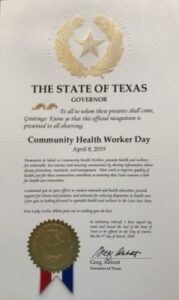
On April 8, 2019, citizens across Texas commemorated Community Health Worker Day, as proclaimed by Texas Governor Greg Abbott. The observance celebrates the efforts of Community Health Workers who conduct outreach and health education, provide support for clients and patients and advocate for reducing disparities in health care. It is a gratifying and humbling feeling to be honored for doing the work we love each and every day. As community health workers at Methodist Healthcare Ministries of South Texas, Inc., we are especially proud that the work we do helps our organization fulfill its vision.

Working with Methodist Healthcare Ministries as community health workers is an incredible learning experience that provides us with opportunities to expand and grow professionally through various trainings and professional development. These opportunities and trainings provided through MHM helps refine our skills and sharpen our knowledge. We feel very blessed to work for a wonderful organization, full of amazing people that enables and encourages its employees to continually improve themselves and develop as professionals.

In 2012, three of us started working at Methodist Healthcare Ministries as part of a pilot program where we worked on a part-time basis. Today, our team has grown to include six Community Health Workers; four based here in San Antonio, one in Corpus Christi and one in San Angelo. As a team, we have grown in our capabilities through our experience in the field. We have seen the impact we can achieve working out amongst the community, rather than just in our offices. We are able to better reach out to the people and meet them face-to-face and see the needs in the community firsthand.

Moreover, we are more productive and able to accomplish much more working in the field as a team. We network with other Community Health Workers, and other community members, doing the same type of work we do to better the community. We conduct outreach through our neighborhoods and at health fairs to reach the uninsured and overlooked. We visit with people in need of resources or who just need to speak to someone about what is going on in their lives. We are there to listen and do our very best to help with their needs.

Being a Community Health Worker with Methodist Healthcare Ministries is absolutely a true blessing and we are grateful to work for such an amazing organization. We have found a place where we can make a difference in people’s lives. Our job is to serve others and offer peace of mind and words of encouragement. To give hope that tomorrow will be a better day!!!

Legislative Update, April 23

In this issue:

Upcoming Hearings for the week of April 22

Upcoming Meetings & Events


View our 2019 Legislative Agenda

Advocacy

Bill Tracking

Research


___________________________________________________________________________________________

State Updates

House Passes Health Literacy Bill

One out of five Texans lack the knowledge to manage their health and prevent disease. Knowing how to seek medical care and take advantage of preventive services requires understanding health information to make informed decisions. Last Tuesday, Representative John Turner (D- Dallas), laid out House Bill 2032 on the House floor for consideration, where it easily passed on a vote of 101-33 and is now headed to the Senate. The bill directs the Statewide Health Coordinating Council (SHCC) to create an advisory committee that will develop a state plan to increase health literacy so that Texans are able to obtain, process and understand basic health information to make healthy decisions. 

The health impacts of low health literacy result in the reduced physical and mental health of Texans. Methodist Healthcare Ministries championed similar legislation in 2017 and returned this session to support the SHCC’s formal recommendation to establish these provisions in statute. The development of a health literacy plan will increase patient adherence, decrease hospital readmissions and increase a patient’s ability to manage medications correctly. Work continues to secure a hearing for HB 2032 in the Senate Health and Human Services Committee in the coming weeks.

House and Senate Appoint Budget Conferees

The House and Senate have completed work on their respective versions of the state’s two-year budget, the 2020-2021 General Appropriations Act, and must now come to an agreement before the legislative session officially ends on May 27. House Speaker Dennis Bonnen and Lieutenant Governor Dan Patrick each named five members to the Budget Conference Committee to iron out the differences between the House and Senate appropriation bills.

  • In the House, Representative John Zerwas (R- Fulshear) will serve alongside Representatives Greg Bonnen (R-Friendswood), Sarah Davis (R-Houston), Oscar Longoria (D-Mission), and Armando Walle (D-Houston).
  • In the Senate, Senator Jane Nelson (R-Grapevine) will serve alongside Senators Joan Huffman (R-Houston), Lois Kolkhorst (R-Brenham), Larry Taylor (R-Friendswood), and Robert Nichols (R-Jacksonville).

Leaders remain optimistic about reaching an agreement on the budget, however, there are significant differences between the House and Senate. The House budget appropriates $116.5 billion in state funds and $2.3 billion from the Economic Stabilization Fund (ESF), while the Senate budget appropriates $116.8 billion in state funds and no dollars from ESF. The Legislative Budget Board has released the following summaries for the House and Senate bills. Methodist Healthcare Ministries has several important issues that will be decided in conference negotiations, including funding for the reconstruction of the San Antonio State Hospital, outpatient mental health treatment, substance use treatment, women’s health programs, early childhood intervention services, and other budget items. Conferees are expected to convene for their first meeting on Tuesday, April 23.

Improving Access to Oral Health Through Teledentistry

While oral healthcare has improved across many states, Texas continues to fall behind and currently ranks 44thin the nation for rural oral healthcare. Currently, 310,000 Texans do not have access to dental care, with 93,000 insured patients needing to travel more than 15 miles to access dental services and 411,000 people living in a designated dental health professional shortage area. As a result of the low ranking, the U.S. Rural Health Report Card for 2017 gave Texas an “F” for rural access to dental care. To improve access to dental care for underserved areas, Senator Charles Perry (R-Lubbock) filed Senate Bill 792. The bill received a hearing last week in the Senate Health & Human Services Committee and remains pending.

Of Texas’ 29 million resident’s, teledentistry stands to provide care to 3.1 million patients in rural communities. SB 792 defines teledentistry and enables dentists to supervise up to two dental hygienists at alternative sites using telemedical services, bringing care directly to patients. Witnesses in support of the bill testified that SB 792 lays the groundwork for improving access to oral healthcare and explained the need to integrate medicine and dentistry through telehealth oral consultations for effective disease prevention and identification, such as cancers.

Increasing access to routine oral health care services that prevent tooth decay and reduce the prevalence of chronic diseases is a legislative priority for Methodist Healthcare Ministries. In an effort to engage local faith communities on improving access to dental care, the Ministries providing funding to Texas Impact to develop the 2018 primer, Equipping Texas Faith Communities for Oral Health Leadership.

Border Health Bills Get Heard in Senate Committee 

In response to emerging public health threats, such as tuberculosis and Zika outbreaks, the Task Force of Border Health Officials was formed last session to identify public health priorities uniquely affecting counties on the Texas-Mexico border. Local health department officials appointed to the Task Force released a legislative report in December outlining both short-term and long-term recommendations that would aim to: improve the public health infrastructure, reduce communicable diseases, reduce chronic diseases, improve environmental health and improve maternal child health in border counties. To codify these recommendations into law, Senator Eddie Lucio, Jr (D-Brownsville) laid out the following bills in the Senate Health and Human Services Committee last week.

  •  Senate Bill 1119– Establishes the border public health initiative to reduce the adverse health impacts of diabetes, hypertension, and obesity for adults and children by promoting educational resources, screenings and referrals.
  • Senate Bill 1120– Provides border-specific continuing education training to community health workers, health care professionals and local public health employees to diagnose and treat communicable diseases, such as tuberculosis and increase immunization rates.
  • Senate Bill 1121– Improves access to laboratory agreements for public health departments along the border so that public health departments in a short time frame can test specimens to diagnose and treat diseases.
  • Senate Bill 1122– Establishes a sanitarian recruitment and retention program that would improve disease management response by controlling vector breeding of food-borne, water-borne, vector-borne and zoonotic diseases, such as Zika.
  • Senate Bill 1124– Establishes the public health multidisciplinary response team (consisting of an epidemiologist, nurse, sanitarian and public health specialist) which would be deployed to assess the border health infrastructure, response capabilities and develop countermeasures to mitigate emerging public health threats.
  • Senate Bill 1312– Issues restricted pesticide applicator licenses to local health departments for the sole purpose of mosquito control in border counties. The bill also directs the study of the ongoing needs of border counties related to infectious disease management.
  • Senate Bill 1313– Establishes a school-based childhood obesity and other chronic disease prevention demonstration program and establishes a chronic disease prevention program for adults to serve border counties. MHM supports this bill to establish best practices to successfully address childhood obesity and chronic disease prevention.

Testifying in support of these bills were Dr. Hector Gonzales, with the City of Laredo Health Department, and Eduardo Olivarez, with the Hidalgo County Health and Human Services Department. They explained how border counties are uniquely affected by transnational diseases and public health threats and emphasized the importance of growing local health care professionals that understand the bi-cultural needs of the region. Methodist Healthcare Ministries staff attended the Task Force hearings in Austin over the interim to learn more of the health needs impacting border counties and registered in support of the Senate bills. SB 1124 and SB 1312 were unanimously voted out of the Senate Health and Human Services Committee and have been placed on the Senate Intent Calendar. The remaining bills are currently pending in committee awaiting further action.

Upcoming Hearings for the week of April 22

Upcoming Meetings & Events

Friday, April 26 at 12:00 – Texas Tribune: A Conversation on Children’s Health and Vaccines. Registration In Person / Livestream

Saturday, May 4 at 10:30 – Minds Matter Conference; Breaking the Silence on Suicide (San Antonio College)


For more information on health care research, policy or advocacy, please contact Chris Yanas at cyanas@mhm.org.
Back to Top

Legislative Update, April 16

In this issue:

Upcoming Hearings for the week of April 15

View our 2019 Legislative Agenda

Advocacy

Bill Tracking

Research


___________________________________________________________________________________________

State Updates

Mental Health Grants Identified for School-Based Health Centers

One in five children experiences serious mental illness, and with the tragic school shooting at Santa Fe High School and the impact of Hurricane Harvey still being felt around the state, increasing access to mental health screening and treatment for youths has become eminent. Last Wednesday, the House Public Health Committee took testimony on House Bill 1335, authored by Rep. Four Price (R-Amarillo), which creates a behavioral health grant program for school-based health centers. School-based health centers allow school districts and community partners, such as local mental health authorities and nonprofit organizations, to develop cooperative health care programs for students and families in schools. Currently, these health centers focus on immunizations, dental health care, health education and preventive health strategies. House Bill 1335 would create a dedicated grant for behavioral health professionals in schools, integrating behavioral health services in the school environment and ultimately improving the emotional well-being and academic performance of at-risk students.

With 1.9 million youths in Texas needing behavioral health services by age 14, integrating behavioral health services in schools will increase access to care at a critical stage in youth development. Testifying in support of HB 1335, Dr. Teandra Gordon, with Legacy Community Health, spoke to the positive impact of providing mental health services in schools, especially for our uninsured or underinsured students. Joining in support were Meadows Mental Health Policy Institute, NAMI Texas, Texans Care for Children, the Hogg Foundation for Mental Health, among other health advocates. There were also witnesses who registered in opposition to the bill, arguing the program would diminish parents’ rights and distract school teachers from focusing on teaching.

Methodist Healthcare Ministries owns and operates two school-based health centers, located on the Schertz and Marion Independent School District campuses in Guadalupe County. Both offer pediatric primary care and dental services, as well as behavioral health counseling. Methodist Healthcare Ministries supports the passage of House Bill 1335 and its efforts to expand early identification and intervention of behavioral health needs for children. The bill was left pending in committee where it awaits further action.

Extending Health Services for Post-Partum Moms 

Roughly 1.8 million Texas women are in need of access to preventive health services, yet less than a quarter of these women currently receive the care they need. When women experience gaps in their healthcare coverage, it increases their risk for negative health outcomes. The Texas Maternal Mortality and Morbidity Task Force found that over one-half of pregnancy-related deaths occurred after 60 days postpartum and that 80 percent of these deaths were potentially preventable had these women received access to health care coverage. The House Human Services Committee heard from witnesses last week on House Bill 1110 by Rep. Sarah Davis (R-Houston), which seeks to maximize the utilization of services and programs in the women’s healthcare safety net, reduce the state’s maternal mortality rates and save Texas taxpayer dollars. 

As recommended by the Maternal Task Force’s Biennial Report, House Bill 1110 extends coverage for maternal Medicaid benefits from 60 days to 12 months postpartum. Signing up in support of the bill were advocates representing Healthy Futures of Texas, Texans Care for Children, Children’s Defense Fund, the Center for Public Policy Priorities, and The Texas Women’s Health Coalition. The bill was left pending in committee by Chair James Frank (R-Wichita Falls). Methodist Healthcare Ministries joined advocates in support of HB 1110 and efforts by Rep. Davis to improve access to health care services for women which will improve maternal health and reduce poor health outcomes.

Bolstering the Early Childhood Intervention Program in Texas

Annually, the Texas Health and Human Service’s Early Childhood Intervention (ECI) program serves more than 50,000 children statewide between the ages 0-3 with physical, intellectual or mental disabilities. Children in this program receive speech, occupational and in-home therapies which are instrumental to their development. On April 9, House Bill 12 by Rep. Sarah Davis (R-Houston) was heard by the House Human Services Committee. The bill establishes safeguards for the ECI program, eases the burden on providers and increases access to services for families in need.

To develop a sustainable ECI program, the bill’s committee substitute would require private insurers cover select ECI services (e.g., specialized skilled training and case management), ensure parity exists between private insurers and Medicaid, create an ombudsman for ECI providers, and establish an ECI telehealth pilot program. Noted during the hearing was the fact that parents with private insurance often opted not to secure ECI services primarily because not all services are covered by their insurers. Concern was also expressed for parents having to pay high deductibles. Christie Shaw with West Texas Centers testified in favor of the bill, noting the committee substitute would expand their current pilot program and encourage providers be reimbursed for their services.

Between 2010 and 2018 Texas lost 16 ECI providers, impacting 83 counties and more than 7,600 children statewide. Stephanie Rubin with Texans Care for Children emphasized the importance of having an adequate ECI provider network, and that with only 42 current providers for the entire state, the telehealth program would be critical in improving access to services.

Methodist Healthcare Ministries supports increasing access to ECI services which improve childhood outcomes and result in cost savings to the state by reducing the number of children who need special education services later in school. House Bill 12 was left pending in committee. The companion bill, Senate Bill 2225 by Senator Judith Zaffirini (D-Laredo), currently awaits a hearing in the Senate Health and Human Services Committee.

Funding Recovery Community Organizations and Peer to Peer Counseling Model

Substance use disorders affect 1.6 million adults and 1.1 million children in Texas, however, accessing treatment and recovery services is an ongoing challenge. Only 8.6 percent of Texans over the age of 12 who use illicit drugs receive treatment, far below the national average of 14.1 percent. Fortunately, recovery community organizations (RCOs), independent nonprofit organizations led by representatives of local communities of recovery, help connect people to treatment and fill the gap in the SUD treatment infrastructure. These unique organizations provide recovery and family supports through peer-to-peer counseling services. House Bill 1613 by Rep. Joe Moody (D-El Paso) seeks to bolster community-led efforts by RCOs that combat substance use disorder by securing reimbursement for providers who use peer-to-peer counseling services. 

RCOs participate in organizing recovery-focused community education, outreach programs and peer-based support services. HB 1613 defines the parameters, certification requirements, training requirements and the scope of RCOs to qualify for Medicaid reimbursements. Currently, RCOs are sustained through federal, state and private grants. The implementation of a billable service through the Medicaid program, however, would allow RCOs to focus on increasing the quality of long-term recovery services. Advocates of the RCO model testified on the value of the peer-to-peer model of care, the cost-effectiveness of RCOs and how the program ensures fidelity to recovery.

Increasing access to behavioral health and substance use disorder services through the peer-to-peer counseling model is a priority for Methodist Healthcare Ministries, which recognizes the vital importance in accessing treatment and saving lives. HB 1613 was left pending in committee.

Bill Looks to Increase Telepharmacy Sites in Rural Counties

The link between poor medication adherence and hospital readmissions is well documented. A single day gap in medication therapy increases the chance of hospitalization by 50 percent. By contrast, having a pharmacy located at a clinical site that provides medications to patients upon leaving a medical visit, can reduce rehospitalizations by 40 percent. On Wednesday, the House Public Health Committee took testimony on House Bill 1706 by Representative Tom Oliverson (R-Houston), which seeks to increase access to prescription medication in underserved communities by expanding the list of healthcare facilities eligible to host a telepharmacy site to include: federally qualified health centers, community health centers, birthing centers, hospitals, ambulatory surgical centers, outpatient clinics and public health clinics.

Low volume of prescriptions, notably in rural areas, prevents pharmacies from being staffed by pharmacists. Fortunately, current law allows remote pharmacies to operate in rural areas using a telepharmacy system, with the stipulation that they be located at least 22 miles from a Class A pharmacy. At these remote dispensing sites, the pharmacy technician fills the prescription, has the prescription reviewed by a pharmacist using technology, and remotely secures a 2-way HIPAA compliant consultation between the patient and pharmacist. House Bill 1706 directs telepharmacies to operate in a setting which will allow for convenient access to a pharmacist, increasing first-fill and medication adherence rates. Witnesses in support testified that the bill would allow a community mental health center to co-locate a pharmacy dispensing site at a satellite campus to reach the most vulnerable patients, namely those with mental illness.

Methodist Healthcare Ministries supports the efforts of House Bill 1706 to increase access to medications for patients in underserved and remote areas of the state, ultimately working toward improving patient outcomes, curbing hospital readmissions and decreasing overall healthcare costs. HB 1706 was left pending in committee, awaiting further action.

Upcoming Hearings for the week of April 15

For more information on health care research, policy or advocacy, please contact Chris Yanas at cyanas@mhm.org.
Back to Top

Legislative Update, April 8

In this issue:

Upcoming Hearings for the week of April 1

Upcoming Meetings & Events

View our 2019 Legislative Agenda

Advocacy

Bill Tracking

Research


___________________________________________________________________________________________

State Updates

Texas Budget Bill Moves through House and Senate 

Texas lawmakers worked until the late hours of the night on March 27 to debate the Texas budget for FY 2020-2021. As the only bill that must pass during the 140-day legislative session, lawmakers had one more opportunity to amend the proposed budget before it heads to the Senate and ultimately the conference committee negotiating process. More than 350 amendments were filed, however a large number were withdrawn by the authors or ruled out on a technicality. Ultimately, the House passed a $251 billion budget with $87.6 billion dedicated to health and human services programs.

Methodist Healthcare Ministries expresses its thanks to State Representative Roland Gutierrez (D – San Antonio) for filing an amendment to fully fund the reconstruction of the San Antonio State Hospital, estimated at $323 million for the 300-bed facility. The amendment was ultimately placed in Article XI of the House budget, essentially a wish list of proposals that are not formally adopted but do remain in play during conference committee negotiations.

House Bill 1 proceeded to the Senate Finance Committee last week and was heard Wednesday, April 4. The Senate Committee Substitute to House Bill 1 (CSHB 1) was voted out unanimously and is scheduled to be voted on by the full Senate Tuesday, April 9. CSHB 1 currently includes $248 billion with $92.2 billion allocated for health and human services. Specific initiatives in the Senate version include:

  • $948 million for community mental health services for adults and children
  • $315 million for Women’s Health Programs
  • $313 million for early childhood intervention services
  • $252 million for EMS and trauma care systems
  • $167 million for immunizations initiatives for adults and children

With only seven weeks remaining in the 86thLegislative Session, Methodist Healthcare Ministries continues its efforts to advocate for programs and funding that impact the healthcare of our neediest families.

Committee Looks at Incentivizing Healthy Food Purchases for Low-income Families 

The Senate Health and Human Services Committee heard testimony this week on legislation that would direct the state to study local programs across communities working to incentivize the purchase of fruits and vegetables through the Supplemental Nutrition Assistance Program (SNAP). Senate Bill 1834 by Representative Carol Alvarado (D – Houston) would give low-income Texans access to affordable healthy foods through a state pilot program that would stretch current SNAP benefits even further.

Passage of the federal Agricultural Improvement Act of 2018, more commonly known as the Farm Bill, appropriated roughly $250 million over five years for SNAP incentive programs to encourage fresh produce consumption. Texas has started to take steps to promote the availability of SNAP incentive programs, such as the popular Sustainable Food Center’s Double Dollars program, which provides SNAP recipients an extra dollar for every dollar of SNAP benefits spent on locally grown fresh fruits and vegetables. A number of incentive programs exist at the local level, but to date, no state-level programming or investment has been made.

Farmers, grocery store owners, local vendors, and small retail stores would also benefit from higher sales of locally grown produce. Testifying on behalf of the Sustainable Food Center, Alex Canepa spoke in favor of SB 1834, stating his farmers markets currently support incentive programs. He noted that Texas is lagging other states who are already implementing successful programs, giving Michigan as an example.

SNAP benefits are 100 percent federally funded and assist millions of low-income families with the purchase of groceries. Studies show that many of these same low-income families are disproportionately struggling with obesity and Type 2 diabetes. Nearly 30 percent of all Texas children benefit from the SNAP program and over half of SNAP recipients in Texas are under the age of 18. Methodist Healthcare Ministries joined efforts with the American Heart Association and the Partnership for a Healthy Texas coalition to support the passage of SB 1834. The bill was left pending in the Senate Health and Human Services Committee by Chair Lois Kolkhorst.

Nurse Practitioner Bill Aims to Increase Access to Care 

Access to care advocates testified before members of the House Public Health Committee in support of House Bill 1792 by Representative Stephanie Klick (R-Fort Worth) which looks to expand access to primary care by providing a pathway to full practice for nurse practitioners, certified nurse midwives and clinical nurse specialists. The bill would require at least one year of experience under a delegating physician and increase the required continuing education requirements for APRNs from 20 to 48 hours, the equivalent of physician continuing education requirements.

Current Texas law prevents advanced practice registered nurses from providing health care to the full extent of their licensure and training. Today, APRNs must sign a delegation agreement with a collaborating physician to practice, even though the partnering physician is not required to be on-site or see any of the patients. Advocates testified this delegation agreement adds to health care bureaucracy and red tape, taking time away from patients and increasing costs for businesses and providers. Twenty-four states, the Veterans Administration and all branches of military have repealed laws that include these delegation agreements to increase access to care for their patients.

Testifying in opposition were physicians representing the Texas Medical Association as well as other independent providers, who shared that the extensive level of education and experience of a medical doctor were needed to ensure the necessary oversight and safety of patients. HB 1792 was left pending in committee.

House Bill Allows Dentists to Delegate Delivery of Anesthesia to Licensed Hygienists

Members of the House Public Health Subcommittee on Health Professions also heard testimony on House Bill 2275 by Representative Stephanie Klick (R-Fort Worth). The bill, as filed, would allow dentists to delegate to a licensed hygienist the ability to deliver an anesthetic in the presence of a dentist. The delegation provision is optional and does not create a mandate.

Witnesses testifying in support noted that this practice is currently allowed in 48 other states. The Texas Dental Hygienist Association registered in support of HB 2275 and shared the different levels of training and education necessary for accreditation. Dr. David Reeves, a member of the Texas Dental Association Periodontists and an instructor at the VA testified in support of the bill, stating that local anesthesia is safe when proper dosages and techniques are utilized. Testifying in opposition to the bill was a representative of the Texas Dental Association who stated the bill lowered the standards of care and was unnecessary. HB 2275 was left pending in committee. Methodist Healthcare Ministries signed up in support of HB 2275 which increases access to oral health in Texas.

Upcoming Hearings for week of April 8

Upcoming Meetings & Events

Apr 15-16: TX Campaign to Prevent Teen Pregnancy 8thAnnual Symposium– Sponsored by Methodist Healthcare Ministries (Austin)

For more information on health care research, policy or advocacy, please contact Chris Yanas at cyanas@mhm.org.
Back to Top

26.2 Miles to Transformation: How Capacity Building Helps Organizations Get Marathon Ready

The person who starts the race is not the same person who finishes the race.

Whether you’re competing with others or yourself, a marathon is a test of resilience and endurance. Nobody wakes up one day and runs 26.2 miles. There’s coaching, training and planning geared to your individual challenges. On race day, all that preparation and strategy, investment of time and energy and the skills acquired along the way transform a runner to an athlete.

Some nonprofit organizations want to compete but haven’t thought through everything they’ll need to run the course. They aren’t ready, and sometimes, they don’t know they aren’t ready and don’t know how to prepare. Sometimes they do know but can’t afford the coach – or the entry fee.

Philanthropic organizations want grantmaking to be transformational, leading to sustainable organizations and patient impact, but in South Texas, most nonprofits need more than grants to create lasting change.

To run the race, they need a special set of skills and core capacities—things like strategic or operational plans, or technology. That’s where capacity building comes in. It’s a term you may hear often, but it’s not always understood. Like many funding organizations, Methodist Healthcare Ministries of South Texas, Inc. uses capacity building to help its subgrantee partners through the Sí Texas Project develop skills and strengths that put them in the race. We don’t run for them; we give them what they need to do it on their own.

Capacity building is a process by which a nonprofit achieves the next level of operational, programmatic, financial, or organizational maturity to more effectively and efficiently advance its mission. Capacity building isn’t an overnight success story, it’s a continuous improvement strategy, and the goal is a sustainable organization working in response to the community.

Methodist Healthcare Ministries’ goal for its eight Sí Texas Project Subgrantees is “athlete,” and we’re grateful to offer the coaching and support to help them reach their goals and serve their communities. 

In 2016, we worked with Hope Family Health Center—one of our subgrantees in McAllen—and recommended capacity-building support that included facilitated strategic planning and help in choosing a new Electronic Health Record (EHR). Rebecca Stocker, Hope’s executive director, says the experience changed their organization in many ways. “The planning process helped us work through issues we might not have seen without the facilitation,” Stocker said. “We now have a blueprint that helps us build development relationships and continue serving our community; this path is much more attainable now.”

The new EHR allowed Hope to add mental and behavioral health services to their primary care structure, increasing the scope of care and services Hope offers to the underserved in the Rio Grande Valley. “We know that offering primary care and behavioral health under one roof improves the lives of our patients in so many ways,” Stocker said. “Our EHR helps practitioners communicate with each other in ways they couldn’t in the past, and it measures the effectiveness of our care with greater accuracy. This is what transformation looks like.”

Shirly Thomas is the Capacity Building Specialist at Methodist Healthcare Ministries of South Texas, Inc. She manages technical assistance contracts, develops training and sets the strategic direction for the Sí Texas program. Shirly has a Masters in Public Health from Boston University and is eager to see how organizational effectiveness and program support affects philanthropy.

Legislative Update, April 1

In this issue:

Upcoming Hearings for week of April 1

Upcoming Meetings & Events

View our 2019 Legislative Agenda

Advocacy

Bill Tracking

Research


___________________________________________________________________________________________

State Updates

Health Advocates Testify for State Health Literacy Plan

State Representative John Turner with health literacy advocates from San Antonio, Dallas and Fort Worth, TX

Methodist Healthcare Ministries submitted testimony in support of House Bill 2032 by Representative John Turner (D-Dallas) at the House Public Health committee hearing last Wednesday. The bill would direct the Statewide Health Coordinating Council’s advisory committee to develop a plan that will increase health literacy, so Texans are able to obtain, process and understand basic health information to make healthy decisions. Dr. Caroline Bergeron from the Bexar County Health Collaborative, Dr. Oralia Bazaldua and Dr. Teresa Wagner from University of North Texas Health Science Center (UNTHSC) also testified in support of the bill. The bill will be amended to include oral health and is expected to be voted out of the Public Health Committee in the coming weeks.​

One out of five Texans lacks the knowledge to manage their health and prevent diseases. Low health literacy is linked to poor health outcomes, less frequent use of preventive services and higher rates of hospitalization. Knowing how to seek medical care and take advantage of preventive services requires understanding health information to make informed decisions. House Bill 2032 would save lives by increasing communication between patients and providers, improve the health of Texans by increasing access to preventive health care services and reduce health care costs by reducing unnecessary admissions to hospitals. Methodist Healthcare Ministries was instrumental in bringing this issue forward in 2017 and strongly supports the passage of House Bill 2032 and its efforts to improve the health and wellness of all Texans.

Lawmakers Propose Legislation to Ensure Continuity of Care for Women

Throughout the week, Methodist Healthcare Ministries supported several bills that would ensure women receive health services after delivery. Methodist Healthcare Ministries provided testimony to the House Human Services Committee in support of House Bill 744 by Representative Toni Rose (D-Dallas) to extend Medicaid for postpartum women up to 12 months. Several organizations testified in support of the bill, including the Texas Women’s Health Coalition and United Methodist Women, which was left pending in the committee by Chairman James Frank (R-Wichita Falls). Additionally, the House Insurance Committee considered House Bill 937 by Representative Sarah Davis (R-West University Place) to allow women to receive a 12-month supply of prescription contraceptives at one time. Supported by Methodist Healthcare Ministries, House Bill 937 was left pending in the committee by Chairman Eddie Lucio, III (D-Brownsville).

On Wednesday, The House Public Health Committee took testimony on House Bill 1641 by Representative Angie Chen Button (R-Richardson) and House Bill 2028 by Representative Julie Johnson (D-Carrolton). Both bills would ensure women receive proper follow-up care after delivery by requiring the Health and Human Services Commission (HHSC) to provide information about the Healthy Texas Women program, including a list of providers in the area who are contracted with the program. House Bill 2028 would also require HHSC to provide a list of local hospitals in the notice. Both bills were left pending in the committee by Chairwoman Senfronia Thompson (D-Houston). Methodist Healthcare Ministries weighed in favorably on House Bill 1641 and House Bill 2028 to ensure continuity of quality care for women after pregnancy.

House Appropriations Committee Passes Budget Bills

On Monday, Methodist Healthcare Ministries submitted testimony to the House Appropriations Committee on health-related budget items in the General Appropriations Bill (House Bill 1) by Representative John Zerwas (R-Richmond) and the Supplemental Appropriations Bill (Senate Bill 500) by Senator Jane Nelson (R-Flower Mound). Both bills were voted favorably out of the House budget committee.

Methodist Healthcare Ministries’ testimony focused on securing full replacement funding for the San Antonio State Hospital and increases in salaries for state hospital employees. Full funding for construction and salaries are crucial to sustain operations and increase access to inpatient behavioral health services for the families in SASH’s 55-county catchment area. Methodist Healthcare Ministries also included recommendations for increased funding for outpatient behavioral health services, coordinated specialty care for First Episode Psychosis (FEP) and substance use services administered by the Department of Family and Protective Services (DFPS).

Texas Senate Committee Discusses Recess Policies in Schools

Methodist Healthcare Ministries provided written testimony in support of Senate Bill 364 by Senator Kirk Watson (D-Austin) at the Senate Education Committee’s hearing on March 12. The bill would require the Texas Education Agency to develop age-appropriate model recess policies that encourage constructive outdoor play time, provide guidance to school districts on maximizing physical activity and encourage Boards of Trustees to solicit input from local school health advisory councils (SHACs) for the adoption of policies that improve academic, physical and mental well-being. Senator Watson offered an amended version of SB 364 that would require SHACs, in lieu of the Texas Education Agency, to develop recess policies. The bill was left pending in committee.

Texas has the seventh highest obesity rate for youth ages 10-17 in the U.S., with over 600,000 Texas youth who are considered obese. Daily recess is shown to have health, social and academic benefits for students; however statewide policy recommendations do not exist. Senate Bill 364 would ensure children are active throughout the day, so they are more likely to thrive academically and socially. Methodist Healthcare Ministries supports the efforts of Senate Bill 364 to reduce childhood obesity and improve the health of our youngest generation.

Public Health Community Advocate to Raise Age to Purchase Tobacco Products

Several public health advocates testified in support of Senate Bill 21 by Senator Joan Huffman (R-Houston) at the Senate State Affairs Committee hearing last week, asking to raise the minimum age to purchase tobacco products from 18 to 21, more commonly known as Tobacco 21. Testimony focused on the medical and public health benefits associated with raising the age to access for tobacco products, including the prevention of cancer and other chronic diseases.

Senator Huffman shared with committee members that two-thirds of Texas voters favor raising the age for buying tobacco products to 21. About 95 percent of smokers start before the age of 12 and over 10,000 kids in Texas become daily smokers every year. Studies show that 498,000 Texas kids will ultimately die prematurely due to smoking. Raising the age to purchase tobacco is an effective strategy to fight tobacco use, one that the City of San Antonio effectively enacted on behalf of its residents on October 2018. Methodist Healthcare Ministries fully supports the Tobacco 21 initiative and all prevention efforts that improve the health and wellness of our communities.

Upcoming Hearings for week of April 1

Upcoming Meetings & Events

Apr 2: Immunization Advocacy and Rally Day– Sponsored by Methodist Healthcare Ministries (Austin)

Apr 15-16: TX Campaign to Prevent Teen Pregnancy 8thAnnual Symposium– Sponsored by Methodist Healthcare Ministries (Austin)

For more information on health care research, policy or advocacy,please contact Chris Yanas at cyanas@mhm.org.

Back to Top

The Southwest Texas Crisis Collaborative is Having a Positive Impact on Our Community

On Jan. 31, I was honored to speak at The Health Cell’s 2019 State of the Industry event, alongside Sarah Hogan from the South Texas Regional Advisory Council (STRAC). We presented on the Southwest Texas Crisis Collaborative (STCC), a unique and unprecedented partnership between local health systems, mental health care providers, public safety agencies and philanthropy that is improving the continuum of care for the most vulnerable residents – unfunded and underfunded patients experiencing mental illness, homelessness and/or chronic illness.

San Antonio is home to over 350,000 individuals in the safety net population – people who may not have insurance, live at, below or near the poverty level and are otherwise considered vulnerable. This is a population that often does not receive the care, or the quality of care that they need. San Antonio, like many other communities, had previously experienced the same bureaucratic and logistical obstacles to providing this population with the care they need. That is when community partners came together to form the STCC.​

The Collaborative brought together local health systems, mental health care providers, public safety agencies, city and county government, nonprofits, and philanthropic partners to develop a vision and a plan for how to close the gaps in the continuum of care and provide this population with access to the care they urgently need.

Methodist Healthcare Ministries took the lead by committing to funding the collaborative with nearly $20 million over five years to cover the initial year of STCC's operations and infrastructure, as well as four additional years of programming and initiatives. In a unique and unprecedented move, the city’s six competitor hospital systems invested a collective $8 million, with additional funding from Bexar County and the San Antonio Area Foundation, as well as the leveraging of state funding.This collection of resources has allowed the Collaborative to develop and implement new and innovative solutions to improve access to care for some of our most vulnerable residents.

There are multiple players involved in providing access and delivering care to this population throughout the community. STRAC serves as the “backbone” of the Collaborative and keeps everyone connected and working toward the established goals. With all of the key players at the table, the Collaborative has developed five key initiatives.

1. Enhance the MEDCOM Law Enforcement Navigation program

Enhancing the MEDCOM Law Enforcement Navigation program expedites access to psychiatric care for individuals who are experiencing a mental health crisis, but who are otherwise medically stable. Instead of taking all patients to the nearest emergency room, the MEDCOM coordinator can direct the officer to the closest, most appropriate mental health facility for treatment, depending on age, gender and bed availability. This leads to less people taking up beds or space in a crowded ER and allows the patient to get the help they need faster. On average, 800-900 patients were navigated directly to psychiatric care each month in 2018. We have seen a 97 percent adoption rate of this practice among 26 area law enforcement agencies, including the San Antonio Police Department and the Bexar County Sheriffs’ Office.

2. Decrease Overutilization of 911 residents at Haven for Hope

Haven for Hope holds the distinction of being the number one address for 911 calls in San Antonio. The focus of the second initiative we implemented in 2018 was to decrease the overutilization of 911 from residents at Haven for Hope and to decrease the rate of EMS transports to emergency rooms for conditions that could be managed otherwise. For this initiative, we established an Acute Care Station at Haven for Hope and the San Antonio Fire Department dedicated a paramedic trained in their Mobile Integrated Health model to the site each shift. The paramedic is on-site in the evening hours and able to respond to 911 calls and make an assessment about how to best treat the patient. In the majority of cases, the patients have been treated on-site and released and/or referred to the CentroMed clinic site at Haven for Hope for follow-up care. There are, of course, situations where the patient's condition necessitates transport to the hospital. Having the paramedic responding to 911 calls from Haven saves time and critical resources. This initiative has resulted in a decrease in the EMS transport rate from Haven for Hope from 70 percent in 2017 to 17 percent in 2018. When an ambulance transport costs about $900 and the triage in an ER costs about $1000, this translates into a roughly calculated savings of over $665,000 in 2018 alone.

3. Expand the Psychiatric Emergency Services unit

The third key initiative that the Collaborative launched is the expansion of the Psychiatric Emergency Services (PES) unit, an emergency room focused specifically on psychiatric crisis intervention. Patients may arrive at the PES by law enforcement or with a friend or family member. They see a psychiatrist within four hours of arrival and the average length of stay is 48-72 hours. Some patients are admitted to the inpatient unit, but the majority are discharged directly back to their home environment. The expansion of the PES provided capacity to allow us to implement an inter-facility transfer program. Using MEDCOM as the navigator, local emergency departments could transfer medically cleared patients to the PES via an “auto accept” process. In just 10 weeks of implementation, 922 patients were successfully transferred from an emergency department to the PES. Previously, it could take hours to days to transfer a patient from the emergency department to psychiatric care. The auto accept process has decreased the wait time to about two hours.

4. Provide Transitional Step-down Housing support

In late 2018, we welcomed Crosspoint, Inc. as a provider to the Collaborative with the opening of a behavioral health diversion program for individuals with a mental health diagnosis transitioning out of jail or inpatient hospitalization. Clients are able to stay up to 180 days, and receive 24/7 residential support, individual and group behavioral health services, and case management.

5. Develop the TAVConnect technology platform

We’ve also been developing the TAVConnect technology platform to help connect the dots and providers in the system of care, and to address patients’ social determinants of health, thereby facilitating better patient outcomes. We have 8 healthcare providers online and using the system. We expect to deploy TAVConnect to additional Collaborative partners in 2019.

Although the STCC is still relatively new, the Collaborative has achieved many early successes. But, what is most exciting, is the improved access to appropriate care we have provided for the neediest in our community.

This is leading to improved outcomes for all of the partners involved, but most especially for the patients as well as the communities we serve. We at Methodist Healthcare Ministries hope this unprecedented collaboration helps others outside San Antonio see what we already know to be true about our community: Through collaboration and partnership, we will do all the good we can, for as many as we can – regardless of ability to pay. This Collaborative is a pivotal and transformative moment for our community’s system of care — we are proud to be a part of It. Onward!

Legislative Update, March 19

In this issue:

Upcoming Meetings & Events

View our 2019 Legislative Agenda

Advocacy

Bill Tracking

Research


___________________________________________________________________________________________

State Updates

Methodist Healthcare Ministries Sponsors Violence and Trauma Conference in Edinburg

With one in three Texans experiencing domestic violence in their life, family violence is a serious issue in Texas. On Tuesday, March 19, the RGV Equal Voice Network is hosting a Conference on Interpersonal Violence and Trauma at The University of Texas Rio Grande Valley (UTRGV) campus in Edinburg, Texas. Methodist Healthcare Ministries is proud to sponsor the event to promote awareness and education on issues regarding interpersonal violence and trauma. The half day conference will include a keynote presentation by Julian D. Ford, Ph.D., ABPP on promoting healthy relationships among young adults dealing with violence and trauma and a panel discussion about risk and resilience in interpersonal trauma.

In 2018, Methodist Healthcare Ministries joined Texas Impact in commissioning Responding to Family Violence: A Toolkit for Texas Faith Communities, a publication that provides educational materials and resources for congregations to promote awareness about family violence. Supporting public policies that provide services and resources for family violence victims is a top priority for the Ministries.

Texas Legislators Discuss Funding for San Antonio State Hospital Reconstruction

This past week, the Senate Finance and the House Appropriations Committees discussed funding the reconstruction of state mental health hospitals, including the San Antonio State Hospital (SASH). Methodist Healthcare Ministries submitted written testimony to the Senate Finance Committee in support of Senate Bill 500 by Senator Jane Nelson (R-Flower Mound. Bexar County mental health stakeholders joining in with support testimony included The Center for Health Care Services, University Health System and Clarity Child Guidance Center. Senate Bill 500 was voted out of the Senate Finance Committee on Monday and voted out favorably by the Senate Chamber on Wednesday. The bill was referred to the House Appropriations Committee and has been posted for a hearing on Monday, March 18.

The House Appropriations Committee met last Tuesday to accept subcommittee recommendations which includes reconstruction funds for SASH and an increase in salaries for state hospital employees. The Committee voted to adopt $270 million in funds for the San Antonio State Hospital, along with funding for other state hospitals in Texas. Committee members adopted an increase of $30 million for state hospital staff salaries, which is 50 percent of HHSC’s initial budget request. Work continues to secure full funding of SASH and HHSC’s exceptional item request for state hospital salaries, which are essential to sustain operations.

House Committees Look to Improve Children’s Health

Methodist Healthcare Ministries provided written testimony in support of several bills that would improve the health and wellness of Texas’ youngest generation in several committee hearings this week. House Bill 680 by Representative Joe Deshotel (D-Beaumont), which was heard in the House Committee on International Relations and Economic Development, would require the Texas Workforce Commission to assess and report the average cost of child care and total number of providers and children participating in the state’s subsidized child care program. The bill was left pending in the committee by Chairman Rafael Anchia (D-Dallas).

Methodist Healthcare Ministries also weighed in on House Bill 340 and House Bill 342 by Representative Philip Cortez (D-San Antonio) this past week. HB 340 would reduce childhood obesity by requiring 30 minutes of daily recess for children from pre-K to 2nd grade, providing schools the opportunity to improve students’ physical activity and health. The bill was left pending in the House Public Education Committee by Chairman Dan Huberty (R-Houston). HB 342 addressed efforts to reduce the state’s uninsured rate for children by requiring continuous coverage on the Medicaid program for up to 12 months. The State’s current Medicaid policy allows for a six-month continuous coverage for children, followed by month-to-month audits on family income. HB 342 was left pending in the House Human Services Committee by Chairman James Frank (R-Wichita Falls).

House Public Health Committee Addresses Access to Women’s Health Programs

On Wednesday, Methodist Healthcare Ministries supported House Bill 1589 by Representative Evelina Ortega (D-El Paso) in written testimony to the House Public Health Committee. House Bill 1589 informs women about their auto-enrollment into the Healthy Texas Women (HTW) program during their third trimester, securing continuity of care for women’s health services after delivery. The bill was left pending in the Public Health Committee by Chairwoman Senfronia Thompson (D-Houston).

Auto-enrollment from Medicaid into the HTW program 60 days postpartum has been an important policy change to increase the number of women who access health care after they deliver through Medicaid. Legislative initiatives such as House Bill 1589 would ensure more women who are auto-enrolled are able to receive services. HTW increases continuity of care for women in a vulnerable period after delivery by improving birth spacing and health outcomes for future pregnancies, leading to stronger families and savings to the state and local taxpayers. Methodist Healthcare Ministries supports House Bill 1589 and its efforts to eliminate barriers to preventive healthcare and family planning services.

Ray Lopez Wins Race for Texas House District 125

Ray Lopez (D-San Antonio) won the special election runoff for House District 125 to replace former State Representative Justin Rodriguez who vacated the seat to accept the two-year appointment of Bexar County Commissioner. This will be Lopez’ third political office after spending eight years on the San Antonio City Council and almost a decade as a trustee for the Northside Independent School District. Methodist Healthcare Ministries congratulates Representative-Elect Lopez on his appointment and looks forward to working with him to improve the health and wellness of the residents of District 125.

Upcoming Meetings & Events

Mar 19: Senate Education Committee Hearing – Children’s Health (Austin)

Mar 19: House Human Services Committee Hearing (Austin)

Mar 19: Senate Health & Human Services Committee Hearing (Austin)

Mar 19: House Insurance Committee Hearing (Austin)

Mar 19: Conference on Interpersonal Violence and Trauma – Sponsored by Methodist Healthcare Ministries (Edinburg)

Mar 20: House Public Health Committee Hearing (Austin)

Mar 20: House Juvenile Justice & Family Issues Committee Hearing (Austin)

Mar 20: House Higher Education Committee Hearing (Austin)

Mar 20: Senate Higher Education Committee Hearing (Austin)

Mar 21: House Corrections Committee Hearing (Austin)

Mar 21: House County Affairs Committee Hearing (Austin)

Mar 21: House Urban Affairs Committee Hearing (Austin)

Mar 22: Bexar County Mental Health Consortium Meeting (San Antonio)

Mar 28: Texas Impact Advocacy Day (Austin)

Mar 30: SASH Spring Thing 5K – Sponsored by Methodist Healthcare Ministries (San Antonio)

Apr 2: Immunization Advocacy and Rally Day – Sponsored by Methodist Healthcare Ministries (Austin)

Apr 15-15: Texas Campaign to Prevent Teen Pregnancy’s 8th Annual Symposium (Austin)

For more information on health care research, policy or advocacy,please contact Chris Yanas at cyanas@mhm.org.

Back to Top

Legislative Update, March 8

In this issue:

Upcoming Meetings & Events

View our 2019 Legislative Agenda

Advocacy

Bill Tracking

Research


___________________________________________________________________________________________

State Updates

Methodist Healthcare Ministries Sponsors Healthcare “Let the People Vote!” Rally

“Let the People Vote!” Rally
March 4th, 2019

On Monday, health care advocates from across the state gathered at the Texas Capitol to urge state lawmakers to allow voters to decide whether Texas should expand the state’s Medicaid program. Nearly two dozen Texas organizations came together for the Texas Rally, sponsored in part by Methodist Healthcare Ministries, to support Senate Bill 524 by Senator Nathan Johnson (D-Dallas), House Bill 590 by Representative Celia Israel (D-Austin), House Bill 840 and House Joint Resolution 46 by Representative John Bucy (D-Austin) to place Medicaid expansion language on the ballot in Texas.

Texas is one of 14 states that chose not to expand Medicaid to cover additional populations of needy adults under the Affordable Care Act. Currently, Texas Medicaid covers low-income adults who are pregnant, children, seniors in long-term living facilities and Texans with severe disabilities or near-death illnesses. There are also a small number of parents earning less than $320 a month who also qualify. Should voters support federal funding for expansion, over 1 million Texans would become eligible to receive affordable health insurance.

A recent poll by the Episcopal Health Foundation revealed that 64 percent of Texans promote a statewide Medicaid expansion. Methodist Healthcare Ministries strongly supports increasing access to health insurance for our communities.

Methodist Healthcare Ministries Leads Healthcare Advocacy Efforts for VIVA San Antonio Chamber’s Day at the Capitol 

Members of the San Antonio Chamber’s Healthcare and Bioscience Committee with Lexi O’Hair, Policy Analyst for Senator Jose Menendez (D-San Antonio)

Methodist Healthcare Ministries led healthcare advocacy efforts for the VIVA San Antonio Chambers of Commerce Day at the Capitol on Tuesday, March 5. Members of the Chambers’ Healthcare Committees met with legislative staff from Representative Trey Martinez Fischer (D-San Antonio), Senator Donna Campbell (R-New Braunfels), Senator Jose Menendez (D-San Antonio), Representative Philip Cortez (D-San Antonio), Representative Senfronia Thompson (D-Houston) and Representative Steve Allison (R-San Antonio) on healthcare issues impacting the residents of San Antonio and Bexar County.

Methodist Healthcare Ministries’ Department of Policy and Advocacy staff educated policymakers on the need to improve access to health coverage for an estimated 300,000 uninsured adults in Bexar County and the importance of funding for the full reconstruction of the San Antonio State Hospital, as well as the need to create the necessary number of graduate medical education (GME) residency slots to keep our medical school graduates in Texas.

The group also asked legislators to support state agencies’ requests for substance use funding for all Texans, especially the most vulnerable populations. Methodist Healthcare Ministries appreciates the opportunity to lead San Antonio businesses and local government organizations on legislation affecting health care for San Antonio.

House Insurance Committee hears testimony on Health Care Expansion Bill

On Tuesday, Methodist Healthcare Ministries provided written testimony to the House Insurance Committee in support of House Bill 565 by Representative Garnet Coleman (D-Houston) to expand Medicaid coverage up to 100 percent of the Federal Poverty Level (FPL) and protect individuals with pre-existing conditions. It is estimated that close to 700,000 low-wage Texans continue to fall into the “coverage gap” – these are individuals who do not have employer-sponsored coverage, earn too little to qualify for health insurance subsidies through the federal healthcare exchange programs and do not qualify for Medicaid coverage. HB 565 would help close the coverage gap by allowing individuals below the 100 percent FPL to receive Medicaid benefits through a sliding scale subsidy to purchase a health benefit plan.

To support a strong health care infrastructure, Texas must increase access for uninsured residents through affordable health coverage, especially for our families below 100 percent of the FPL. It is essential for the State to invest in public health programs that protect and improve the health of vulnerable Texans by supporting statewide initiatives that secure access to providers and services for our families. HB 565 was left pending in the committee by Chairman Eddie Lucio, III (D-Brownsville).

State Clubhouses Seek Increased State Funding for Services

Clubhouses across Texas, including the San Antonio Clubhouse, are requesting an increase in state funding from $1.7 million to $5 million for the 2020-2021 biennium to expand the clubhouse delivery model across the State. The Clubhouse model is an evidence-based, recovery-oriented program for adults diagnosed with a mental illness to improve their ability to function successfully in the community through a peer-focused environment. The 85thLegislature designated $1.7 million for 14 certified Clubhouses in Texas, however, mental health stakeholders are seeking an additional $3.3 million to increase access to these services in more Texas communities.

Clubhouses provide a caring, supportive community and meaningful work to individuals living with mental illness to avoid crises that often result in hospitalization or incarceration. The evidence-based model surrounds the person with a community of peers and programs that helps them thrive in the community. Clubhouses can save $2,650 a day in hospitalization and jail prevention costs for local communities. Increased funding for the expansion of Clubhouse facilities is a legislative priority for Methodist Healthcare Ministries, which also supports and financially invests in the San Antonio Clubhouse facility and programs.

Texas Legislature Moves Forward with Healthcare Workforce Bills 

The Texas House and Senate voted to progress legislation this week that would improve the healthcare workforce in the State. On Tuesday, the Senate Chamber approved Senate Bill 10, by Senator Jane Nelson (R-Flower Mound), which addresses child psychiatric workforce issues by establishing a Child Psychiatry Access Program (CPAP) at health-related institutions to provide telemedicine and telehealth services for pediatricians and primary care providers throughout the state.

On Wednesday, the House Higher Education Committee voted House Bill 80, by Representative Lina Ortega (D-El Paso), out of the committee to be considered on the House floor. HB 80 would require the Texas Higher Education Coordinating Board to conduct a study on statewide and regional shortages in health professions, focusing on doctoral degrees such as physicians, nursing, psychology and dentistry. The House Higher Education Committee also considered House Bill 1065, by Representative Trent Ashby (R-Lufkin), to establish a Rural Resident Physician Grant Program to encourage new graduate medical education (GME) positions in rural and nonmetropolitan areas.

Texas’ rapid population growth places unparalleled demand on its healthcare workforce, ultimately diminishing access to care for all residents. To make matters worse, the provider workforce is disproportionally distributed across Texas with more than 57 percent of the state’s physicians practicing in the five most populous counties, despite only representing 44 percent of the population. These bills would bolster the healthcare workforce and increase access to care for Texans living in rural communities. Methodist Healthcare Ministries supports legislation to incentivize and support healthcare providers to serve in areas with limited access to health care treatment, notably in our state’s rural communities.

Upcoming Meetings & Events

Mar 11: Senate State Affairs: Guardianship and Healthcare Workforce (Austin)

Mar 11: House Appropriations: Budget Riders (Austin)

Mar 11: Senate Finance: Supplemental Appropriations (Austin)

Mar 12: House Appropriations: salary requests and Capital Needs (Austin)

Mar 28: Texas Impact Advocacy Day (Austin)

Mar 30: SASH Spring Thing 5K– Sponsored by Methodist Healthcare Ministries (San Antonio)

Apr 2: Immunization Advocacy and Rally Day– Sponsored by Methodist Healthcare Ministries (Austin)

For more information on health care research, policy or advocacy,please contact Chris Yanas at cyanas@mhm.org.
Back to Top

White close icon

Jaime Wesoloski

President & Chief Executive Officer

Jaime Wesolowski is the President and Chief Executive Officer at Methodist Healthcare Ministries. A healthcare executive with three decades of leadership experience, Jaime is responsible for the overall governance and direction of Methodist Healthcare Ministries. Jaime earned his Master’s Degree in Healthcare Administration from Xavier University, and his Bachelor’s of Science from Indiana University in Healthcare Administration. As a cancer survivor, Jaime is a staunch supporter of the American Cancer Society. He serves as Chair of the American Cancer Society’s South Texas Area board of directors and he was appointed as Chair to the recently created South Region Advisory Cabinet, covering eight states from Arizona through Alabama. Jaime believes his personal experience as a cancer survivor has given him more defined insight and compassion to the physical, emotional, and spiritual needs of patients and their families.