Coffee with Cassandra: Enrolling in the affordable care act

Before you start your workday, enjoy your morning coffee with brew from Methodist Healthcare Ministries. This is your daily dose of stories that speak to the heart of our organization, paired with your favorite cup of joe!

As an organization dedicated to creating access to care, we at Methodist Healthcare Ministries know there are many barriers low-income and uninsured families face when trying to find affordable health care services. The Affordable Care Act has given many uninsured people options to find affordable healthcare coverage, giving them access to preventive services and routine care, not to mention having coverage when urgent or critical care is needed.

I had the chance to sit down with Andy Hernandez, our community development manager, at our Wesley Health & Wellness Center which serves San Antonio’s Southside community, to discuss the timely topic of the Affordable Care Act.

Coffee with Cassandra: Being a quality organization

Before you start your workday, enjoy your morning coffee with brew from Methodist Healthcare Ministries. This is your daily dose of stories that speak to the heart of our organization, paired with your favorite cup of joe!

Methodist Healthcare Ministries is a faith-based organization guided by our mission of “Serving Humanity to Honor God.” At the core of that mission is a commitment to ensure the services we provide our patients and clients are the safest and highest in quality.

I had an opportunity to sit down with Dawn Wilder, our director of quality, safety & compliance. Dawn dives into the meaning and importance of quality improvement and why it’s integral to the work of Methodist Healthcare Ministries.

“Congratulations, you have diabetes” – how Marco overcame Type 2 diabetes

Congratulations, you have diabetes!  … Those were the words my childhood friend, Marco, remembers being told by his physician when he was diagnosed with Type 2 diabetes in 2010. He was only 35 years old. By the time Marco was officially diagnosed with diabetes, his doctor concluded he had been suffering from a developed case for several years. Marco estimates he was feeling symptoms related to Type 2 diabetes for about four years before seeing a doctor; symptoms like chronic fatigue, having a hard time staying awake after meals, major changes in vision, neuropathy, blurred vision, frequent urination, intense cravings for sugary foods and constant hunger. He even noticed a dark patch of skin forming around his neck. The medical name for this is Acanthosis Nigricans and it is often a sign of a serious health problem, like Type 2 diabetes. Marco had also gained a significant amount of weight.


Marco and I grew up together. When we were in high school, Marco was a 5’6” powerhouse hovering at about 180 lbs. He was fast, lean, and could bench press nearly 300 lbs. He played fullback on the football team; when he carried the ball, he was like a red flash running by. You felt sorry for anyone who got in his way because when Marco put his shoulder into you, it felt like getting hit by a wrecking ball. Marco was the kind of athlete that didn’t only work hard when he was carrying the ball, he was that guy coaches all encouraged us to be the guy that would give 100 percent every single play from whistle to whistle and still take the time to motivate and encourage the rest of the team.

By 2010, years after graduating high school, Marco gained over 60 lbs. When I asked him why he never went to the doctor even though he was having symptoms related to Type 2 diabetes he said he had intended to go, but during that time life was just too busy. He and his wife, Jenny, were both embarking on opening small businesses, buying a house and raising a young child. Along with these life stressors, Marco didn’t have health insurance. It was too expensive many of us can relate to this experience, I know I can. Unfortunately, there were major consequences for not having seen a doctor at the first sign of symptoms, and by the time he was diagnosed with Type 2 diabetes, Marco was already very sick.

This is a common scenario in the Rio Grande Valley where Marco lives. Located at the southernmost tip of Texas, the Rio Grande Valley lies along the northern bank of the Rio Grande river, which separates Mexico from the United States. It has one of the largest populations of people with diabetes in the nation, and unfortunately, by the time people get to see a doctor and get tested, they are already very sick and have had diabetes for several years. A good number of these individuals are even suffering from kidney failure by the time they’re diagnosed. According to the Kaiser Family Foundation, Texas has the highest rate of uninsured individuals in the nation. About one in four people in Texas, 25 percent, do not have health insurance; however, the rate of uninsured in the Rio Grande Valley is even higher. In 2013, the Kaiser Family Foundation estimated the rate of uninsured individuals in the Rio Grande Valley was about 38 percent. There is a large body of research that suggests not having health insurance makes a difference in people’s access to necessary medical care and their financial security. Uninsured individuals are less likely to receive preventive care, and more likely to be hospitalized for conditions that are preventable. Furthermore, uninsured individuals can quickly gain insurmountable levels of debt from medical bills.

So, what was the last straw for Marco? What finally sent him to the doctor? He suddenly couldn’t see! He was suffering from diabetic retinopathy. His on-and-off blurred vision had progressed, and while driving home from work one day, his vision went blurry and stayed that way. Marco said it truly scared him; that day he sat at home terrified because he didn’t know what was happening to him. The following day he went to see a doctor, and the doctor suspected it was retinopathy due to diabetes. He had to have emergency surgery to correct his vision.

On the day Marco was officially diagnosed, his blood sugar was sky high the glucometer read 530! When his blood work came back confirming he was diabetic, his doctor said to him, “Congratulations, you have diabetes.” Marco was given a prescription and was sent on his way. This all took place before the Affordable Care Act was established, so since Marco now had a preexisting condition, the monthly premium to insure him was tremendously high. Despite his diagnosis, Marco still couldn’t get health insurance. Besides being handed a script for his medication, Marco was not offered any health education or nutrition information. Marco knew he needed to cut out sugar and watch what he ate, so his blood sugar wouldn’t get so high. Other than that, he wasn’t sure what else he should do.

Nearly a year after taking prescribed medication and dieting, Marco’s blood sugar was still out of control so his doctor added insulin to his treatment. That was the proverbial straw Marco had had enough. He couldn’t imagine managing the rest of his life that way. He was taking a bunch of medicine, trying to eat right, spending a lot of money on prescriptions and doctors, and he still wasn’t feeling any better, so he was resolved to make a change.

Sometime in 2011, Marco started walking every day. He walked 2 miles nearly every day for six months. He lost a few pounds and noticed his blood sugar was getting a bit easier to control. Then, he dusted off the bicycle in his garage and braved the blistering Valley heat. He cycled to and from work, a 10-mile round trip. Marco also cut nearly all sugar from his diet and stopped drinking sodas and beer. He primarily ate chicken, fish and vegetables. He would add some grains on occasion but mainly kept to a diet consisting of meat and greens. His dedication paid off and his doctor told him he could stop taking insulin, but he had to continue taking his other prescribed medication. By this time, Marco’s family and friends were noticing a change in him. He was dropping weight and was a lot less temperamental. Marco said he stayed motivated because his wife, Jenny, and his son, Ethan, were super supportive and they too adopted his more active lifestyle. Marco carried around his lab results and showed them to friends and family to show them how well he was doing; receiving praise from his family, friends, and even his surprised doctors motivated him. Yet, despite his great success, Marco was still frustrated by having to take prescribed diabetes medication, but he figured it was something he was going to have to accept.

To add variety to his exercise routine, Marco joined a gym in 2014 with an old friend  a competitive powerlifter. Marco began waking up at 5 a.m., five times a week, to go lift weights before heading to work. Marco loved getting back into weightlifting. He worked out daily with competitive weightlifters and pushed himself to new limits. After working out for several months, his workout buddies encouraged him to sign up for competitions. Now he competes regularly as a competitive powerlifter regularly sends me text messages with updates on how much he benches, its inspiring. He recently let me know that he had bench pressed 300 lbs. twice! It’s amazing considering Marco is 42 years old, 5’6,” and now keeps his weight between 210 and 220 lbs. Even more impressive than his bench press, is the fact that Marco no longer takes any medications to manage his blood sugar. Since 2014, Marco has not taken a single pill or had to endure a single injection to manage his diabetes. It took him four years of incremental lifestyle changes and hard work to get well, and he managed to do that without health insurance and minimal support from his doctors. With his improved health, Marco finally was able to afford health insurance in 2014 when the Affordable Care Act came into play. His pre-existing condition was no longer a factor in the cost of coverage, so he was able to take advantage of a plan.

Marco’s story is about as rare as a unicorn, but there are aspects of his experience that are important and need to be examined closely by policymakers. Relative to what it costs to treat an individual with diabetes on a yearly basis, the interventions Marco used to get well were relatively cheap. According to research published in 2013 by the American Diabetes Association, people with diabetes have health care expenditures 2.3 times higher than individuals without diabetes  $13,741 versus $5,853 per year. So, if you have diabetes, your yearly health care expenditures are nearly $8,000 more per year.

If you think about Marco’s story, it wasn’t medication that made him better, nor did he undergo some special medical procedure to get well. Instead, it was incremental lifestyle changes that made the difference. He focused on diet and exercise. If you ask Marco, he’ll tell you the first year after being diagnosed, he focused primarily on diet, but he did not see significant improvements in his blood sugar readings until he began exercising. He saw the biggest improvement in his blood sugar regulation after he added weightlifting to his exercise routine. He feels it was the weightlifting that ultimately helped him cross the bridge to no longer needing any medication.

Another major factor in Marco’s recovery was the support he had from his family. It is important to mention that Jenny and Ethan supported Marco by trying to eat the same things he ate and avoiding keeping sugary foods and drinks in their home. Initially, this was challenging, but over the years they said it has gotten easier.

I wonder if Marco would have focused on his health immediately after his diagnosis, had his doctor written him prescriptions for the things he actually needed: family support, health education, walking shoes, a bicycle and a gym membership. If that’s the remedy for successfully battling diabetes, why are we and our health care system primarily focused on medication and doctor’s visits? Wouldn’t it be great if your insurance plan covered the things you need to make healthy lifestyle changes? Our health care system and policymakers must work together to provide communities with safe, affordable, and accessible places for people to exercise.

It’s also important to note, Marco was really sick when he found out he had diabetes and he hadn’t been to a doctor in years. Imagine if Marco would have had access to affordable health insurance and would have taken advantage of preventive health screenings. His diabetes progression could have potentially been avoided. If we really want to put a dent in successfully reducing the number of individuals with diabetes, there needs to be a focus on prevention.

Since 2014, Methodist Healthcare Ministries has been working with Rio Grande Valley stakeholders in a collective impact initiative called Unidos Contra la Diabetes (UCD). By working collectively, health care providers in the region are working to align their efforts and place more focus on diabetes prevention, not just treatment. There is still a lot of work to be done, but efforts like UCD are important. Even more important, I believe, are stories like Marco’s that elicit hope, because too many people and health care providers in these high-diabetic communities are feeling hopeless. You rarely hear about the success stories, so here is one of them.


Congratulations, Marco! You overcame diabetes!


Coffee with Cassandra: Understanding our Sí Texas Project

Before you start your workday, enjoy your morning coffee with brew from Methodist Healthcare Ministries. This is your daily dose of stories that speak to the heart of our organization, paired with your favorite cup of joe!

The approach Methodist Healthcare Ministries’ takes to our work is as diverse as the communities in South Texas that we serve; from health care services to grant-making and advocacy, we are dedicated to improving health outcomes for all our patients and clients.

Our Sí Texas Project is one example of how we are looking for solutions to improve both physical and behavioral health together in communities struggling with multiple risk factors. I am excited to sit down with Stephanie McClain, our Sí Texas Project impact manager, at our Corporate Headquarters in San Antonio to talk about this initiative.

Coffee with Cassandra: Seeking prevention through community well-being

Before you start your workday, enjoy your morning coffee with brew from Methodist Healthcare Ministries. This is your daily dose of stories that speak to the heart of our organization, paired with your favorite cup of joe!

Today we dive into an article recently published on Methodist Healthcare Ministries’ blog which explores the idea of looking upstream, an approach to address the root causes that create suffering.

I am happy to sit down with Tim Barr, our collective impact strategy manager and author of, “Looking upstream: Seeking prevention through community well-being.” Tim provides a passionate explanation about why those concerned about health should look beyond treating people when they are sick and instead look upstream to explore why they are getting sick.

The body of Christ is not one member, but many

“For the body is not one member, but many.” – I Corinthians 12:14

This summer, I received a call from one of my community partners looking for assistance for one of their patients. After some background information, I learned the patient has a form of early dementia and needed help making a doctor’s appointment. Working alongside my Methodist Healthcare Ministries team members, we were able to help “Mrs.” not only get a doctor’s visit in place but also help her in various other ways as well.

As a Wesley Nurse, my job not only entails helping my clients get access to health care but also looking at their social determinants of health.

My journey of assistance began with a visit to Mrs.’ home. I was accompanied by my fellow team member, Aaron Milan, one of our community health workers. When we arrived at Mrs.’ home, we discovered she lived in a mobile trailer and that the steps leading up to her doorstep were not sturdy. She told us that she had fallen on them a few times before. As a community health worker, Aaron’s role is to build community partnerships and connect people to health care services and resources, so he had the contact information for a company that builds ramps. After working together and pooling our resources, a team was secured to build a new ramp and steps outside the trailer. The new addition helped Mrs. and her family access their home safely. She responded, “It’s nice to know people still care.”

As we continued talking to Mrs., we discovered she also needed assistance acquiring her medications, so my next step was connecting her to Karen Green, my fellow Wesley Nurse in San Angelo. Karen was able to help Mrs. obtain some of her medications right away and direct her to a nearby prescription assistance program.

With the timing of the Texas Mission of Mercy event in San Angelo – an event chaired by another fellow Wesley Nurse, Teresa Whitley – Mrs. and her husband were also able to receive dental services.

By collaborating with my team members and with community partners, we were all able to care for a patient in need. This is how the verse from I Corinthians 12:14 symbolizes our ministry, “for the body is not one member, but many.

Coffee with Cassandra: Advocating for our patients and clients

Before you start your workday, enjoy your morning coffee with brew from Methodist Healthcare Ministries. This is your daily dose of stories that speak to the heart of our organization, paired with your favorite cup of joe!

As an organization with many moving pieces through health care services, we also work with similarly focused organizations and state government in developing more socially conscious public policies.

Our government relations team devotes all their efforts towards advocating for Methodist Healthcare Ministries’ patients and clients needs through public policy. My conversation with Chris Yanas, director of governmental affairs, covers our advocacy efforts and how she collaborates with others to create positive change.

Coffee with Cassandra: Connecting through Generational Learning

Before you start your workday, enjoy your morning coffee with brew from Methodist Healthcare Ministries. This is your daily dose of stories that speak to the heart of our organization, paired with your favorite cup of joe!

Have you wondered why the young professional in your department isn’t understanding the work that you relate to? Or, maybe you're trying to teach someone of a different generation a new skill and it’s not registering?

Understanding different generational perspectives in the workforce and how various age groups learn is important. During my conversation with Melody Swisher, organizational learning and development manager, we will discover why Generational Learning is a trending topic for Methodist Healthcare Ministries.

Coffee with Cassandra: The impact of being commissioned

Before you start your workday, enjoy your morning coffee with brew from Methodist Healthcare Ministries. This is your daily dose of stories that speak to the heart of our organization, paired with your favorite cup of joe!

Creating a space for our regional team members to reflect on their ministry and the impact they can make in their communities is important. It is for this reason that we have our annual Methodist Healthcare Ministries’ pastors summit and forum.

During my interview with Omar Chavez Jr., RN, Wesley Nurse, I learned that the commissioning ceremony creates a spiritual connection beyond what I had imagined.

Coffee with Cassandra: Rural health barriers to Get FIT

Before you start your workday, enjoy your morning coffee with brew from Methodist Healthcare Ministries. This is your daily dose of stories that speak to the heart of our organization, paired with your favorite cup of joe!

Living in a big city has a lot of advantages like short drives to parks, shopping and more. But for families in rural communities enjoying a park or accessing health care can mean long drives far from home. Rural living can be nice, but it can create barriers to care.

During my interview with Christian Umana, Family Wellness Programs Coordinator, I discovered why the Get FIT program is so vital to lives of nearly 400 children living in rural South Texas.

Funded Partner Spotlight: Triple H Equitherapy

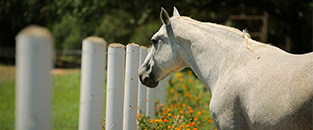
Founded 22 years ago, Triple H Equitherapy, a therapeutic riding center, offers people of all ages and with any kind of special need a place to work with horses to experience health and healing. Methodist Healthcare Ministries has proudly supported Triple H Equitherapy since 1996 through funding for their psychotherapy programs.

Triple H Equitherapy uses an innovative approach to provide behavioral health treatment for children and veterans that have gone through caustic and traumatic life experiences. Treatment focuses on relationship building with horses as part of a traditional therapeutic plan, helping clients overcome trauma and improve their mental health. Healing relationships with their horses empower clients to develop life skills that help them relate to themselves and the world around them in healthy and sometimes joyful ways.

“The most exciting thing that I’ve noticed about the horses is that they work with folks in an unconditionally, excepting and loving way,” said Ginger Eways, executive director at Triple H Equitherapy. “When you put anyone in an environment of unconditional love and acceptance, good things are going to happen.”

Learn more about grant-making at Methodist Healthcare Ministries. To learn more about Triple H Equitherapy, visit http://www.triple-h.org/.

What is a Wesley Nurse? A look at the specialty of faith community nursing.

This year, we’re celebrating the 20th anniversary of our Wesley Nurse program, a faith community nursing program that provides holistic care – body, mind and spirit – through education, health promotion and facilitation of community resources.

While we have an extensive outreach program throughout 74 counties in South Texas, some may wonder what being a Wesley Nurse is all about. Simply put, Wesley Nurses help individuals and communities improve their health and wellness through self-empowerment and access to health care resources and information.

Before talking more about faith community nursing and Wesley Nurses, let’s talk about registered nurses in general. Most of us have had contact with an RN at some point in our lives, whether through the illness of a loved one, our own health care needs or at school. You may have seen your registered nurse removing or replacing a medical device, setting the rate on an IV pump, teaching topics such as nutrition, asking a lot of invasive questions or checking your blood pressure. An RN differs from other types of health care professionals in that they may practice independently of other health care providers, or in collaboration with them. As such, many situations call for a team approach. Respect for human dignity and a primary commitment to the patient (or community of patients) are the basis for all nursing actions, in addition to promoting health, and advocating for and protecting the rights, health and safety of patients. According to the American Nurses Association, RNs are collaborators, ethicists, agents of social justice and accountable for their own actions. RNs observe, identify, name a problem or risk, and then reduce suffering; this is followed by observing the response and carefully adjusting or repeating the process until the goal is reached. An RN’s restorative work is not simply limited to physical well-being, but at its best, also encompasses care for the emotional, social and spiritual care of the patient and their loved ones.

Within registered nursing there are subspecialties. Each requires specialized education and training, such as residencies or mentoring after becoming licensed. One of those subspecialties is faith community nursing. Faith Community Nursing draws its heritage from the roots of nursing, which evolved from the early church and the concept of Shalom, which is wholeness, completeness, contentment and peace. Faith community nurses differ from clinical specialties (e.g. trauma nursing, surgical nursing, home health nursing) in that their focus is on intentional nurturing of the patient’s spirit. As a faith community nurse, I work within a community to prevent illness and promote practices that lead to the best health. With my patients, I carry out practices such as active listening, counsel, prayer, presence, advocacy, referral and education.

Within the faith community nursing specialty, a group of more than 80 nurses, belonging to Methodist Healthcare Ministries are referred to as Wesley Nurses. We provide care to uninsured and at-risk individuals and are knowledgeable in professional nursing and spiritual care. Wesley Nurses document what takes place in the lives of their patients, track outcomes carefully, plan programs to address the education needs of a population, and develop relationships with people in the community. After my roles in emergency, home health and management settings, I am pleased to have been led to this calling. I’m currently working on donating diapers to assist Helping Hands, inviting the community to a back-to-school event, delivering meals to families over the summer, arranging for patient transportation to doctor appointments and writing cards to/visiting people who feel isolated. As a Wesley Nurse, I’m challenged to use all of what I have learned as an RN and as a follower of Christ.

Amy Roedl, RN, is a Wesley Nurse with Methodist Healthcare Ministries of South Texas, Inc. Methodist Healthcare Ministries' Wesley Nurse program is a faith-based, holistic health and wellness program committed to serving the least served through education, health promotion and collaboration with individual and community in achieving improved wellness through self-empowerment. To learn more, visit www.mhm.org or contact Amy at aroedl@mhm.org.

White close icon

Jaime Wesoloski

President & Chief Executive Officer

Jaime Wesolowski is the President and Chief Executive Officer at Methodist Healthcare Ministries. A healthcare executive with three decades of leadership experience, Jaime is responsible for the overall governance and direction of Methodist Healthcare Ministries. Jaime earned his Master’s Degree in Healthcare Administration from Xavier University, and his Bachelor’s of Science from Indiana University in Healthcare Administration. As a cancer survivor, Jaime is a staunch supporter of the American Cancer Society. He serves as Chair of the American Cancer Society’s South Texas Area board of directors and he was appointed as Chair to the recently created South Region Advisory Cabinet, covering eight states from Arizona through Alabama. Jaime believes his personal experience as a cancer survivor has given him more defined insight and compassion to the physical, emotional, and spiritual needs of patients and their families.