Research Skills Come in Handy for Planning a Groovy Halloween Party

by Anne Connor
aconnor@mhm.org

The Research, Policy & Planning Department was selected to host the Corporate Offices’ Halloween party this year. We chose “The Decade of the 1960s” as our theme. This offered a wide range of costume possibilities, a great musical selection, and something a little more upbeat than the typical “scary” Halloween focus. How do you put together an authentic theme and atmosphere when most of your team members are too young to remember the 1960s? Research! 

Katrin Ludwig chaired the highly creative party committee, from brainstorming through shopping and implementation. A thousand details, such as decorations, how the contests would operate, communications and awards all received consideration. 

One of the biggest challenges was how to come up with a strong visual theme for the 1960s without a decoration budget. The team solved the problem with a lot of research and a little ingenuity. We researched images from the 1960s, and used them to create table tents and placemats. Our favorite set of decorations consisted of giant letters spelling out “GROOVY,” along with flowers and peace signs. We cut these out and colored them ourselves, and attached them to the vertical beams next to the board room windows.  In true “Green Team” fashion, we cut the letters out of old foam board from discarded signs and displays, saving them from the landfill.

Happy_Group_Photo

The next step in creating a ‘sixties atmosphere was music. Covita Moroney, our newest team member, went all-out producing an audiovisual extravaganza. She spent hours putting together an eclectic selection of 1960s music, merged with a huge array of digital images from the decade. Three sets of images played from different projectors throughout the board room, really “setting the scene.”

Vanessa Sweet, in an amazing “Mary Poppins” costume, emceed the event. The first feature was a Jeopardy game developed and operated by Sandra Martinez. The questions were challenging but not too obscure, no matter what decade you were born.

The costume contest featured a “People’s Choice” award (by applause meter), won handily by Ed Codina for his highly convincing “hippie” costume. The “Critics’ Choice” costume award went to April Holman, also dressed as a hippie. There were two group  costumes as well: The gang from “Scooby-Doo” (Accounting & Finance), and a group of “worker bees” demonstrating their flower power (Wesley Nurse Health Ministries™).

The food was incredible; Variak Khus and Sandra Martinez organized the food for the potluck and the food competition. There were so many items that we had plenty of time in the food line to admire everybody’s costumes. The “People’s Choice” award went to Fabiola Gil de Rubio for her Puerto Rican Saffron Rice & Beans, and the “Critics’ Choice” award went to Marilyn Stanton for her Meatballs. 

A special thanks to all the judges, and especially to Linda Lopez for mentoring us throughout this process!

$5.3 million grant focuses on mental health services

by Rosanne Fohn
HSC News, Volume: XLIV, Issue: 22

With the assistance of a $5.3 million grant from Methodist Healthcare Ministries of South Texas Inc., The University of Texas Health Science Center at San Antonio is poised to become a pivotal partner in the delivery of mental health care services in San Antonio and South Texas.

The four-year grant, awarded Oct. 12, will fund the creation of the South Texas Access to Recovery Program (STAR). The program will begin in January and will establish a new, multidisciplinary training and clinical care program and address the acute shortage of access to behavioral health care and mental health professionals in the region.

The Department of Psychiatry in the School of Medicine will coordinate the grant in conjunction with the School of Nursing’s psychiatric/mental health program and the Physician Assistant Studies program in the School of Health Professions.

“We are very grateful for this grant from Methodist Healthcare Ministries that will help us improve mental health care services for San Antonio and South Texas,” said William L. Henrich, M.D., MACP, president of the UT Health Science Center San Antonio. Kevin C. Moriarty, president and CEO of Methodist Healthcare Ministries, said, “The demand for mental and behavioral health services is not likely to shrink the way state funding for services did during the last legislative session. There is a great need, especially in light of the many individuals and families who will be impacted by those state cuts. Our hope is that the funding we have committed to will ease some of the burden our communities will suffer as a result.”

Shortage of mental health professionals

Pedro Delgado, M.D., professor and chair of the Department of Psychiatry at the Health Science Center explained, “The need for mental health care professionals in South Texas is immense. Texas has only about half the number of mental health providers per 100,000 residents compared to the national average, and one in 20 South Texans will develop severe mental illness at some time in their life. As our mental health providers get older and the population of our region increases, it is important that we create a pipeline of health care providers now and come up with new ways to provide care, especially for the most vulnerable patients who do not have access to care for a variety of reasons.”

Some of the reasons for difficulty in accessing mental health care include the stigma associated with having mental illness, cultural inhibitions, lack of private health insurance, shortage of psychiatrists and limited number of coordinated mental health programs to treat individuals with multiple diagnoses, said A. Camis Milam, M.D., associate professor, chief medical officer and psychiatrist-in-chief in the Department of Psychiatry, who is co-principal investigator of the grant along with Dr. Delgado. “About 1,000 patients each month go to the Crisis Care Clinic and local emergency rooms for mental health care treatment,” she said.

STAR will address these issues by:

  • Creating four new behavioral health training and practice programs;
  • Establishing a transitional care clinic to provide for the needs of patients who receive care from local emergency rooms and inpatient programs;
  • Integrating behavioral health care into community care settings in a patient-centered model.

New education programs

Currently, very few mental health care professionals enter public health or health care systems to provide care for the underserved population in South Texas. To increase the number of professionals in this field, the Department of Psychiatry is creating a Community Behavioral Healthcare Track. Beginning in July, two psychiatry residents each year will be admitted to this new track within the four-year residency program. A new position will be established in the clinical psychology residency program in the Department of Psychiatry.

The grant also will enhance and expand the School of Nursing’s Master’s of Science in Nursing psychiatric/mental health nurse practitioner program in community behavioral health. Beginning Jan. 1, the grant will support a behavioral health nursing faculty member and provide scholarships for psychiatric/mental health nurse practitioner students. This community behavioral health collaborative project is expected to produce up to six graduates each year.

In addition, a special certification in behavioral health care will be developed with the Physician Assistant Studies program in the School of Health Professions with the grant supporting faculty time and two students per year.

As the program matures, plans are in place to add training for social workers and other health professionals through collaborations with existing programs at the UT Health Science Center, UT San Antonio, Our Lady of the Lake University, UT-Austin and other universities.

Transitional Care Center

The second key component of the program is the Department of Psychiatry’s plan to open a new, specialized behavioral health care clinic called the Transitional Care Center (TCC) in 2012 in the University Plaza Building, near the Health Science Center.

At the TCC, an interprofessional team will provide evaluation, medication management, psychotherapy, rehabilitation services and case management using a best-practices team approach and an integrated behavioral health care setting. The clinic will be available to those referred from inpatient units and emergency departments throughout the county for up to 90 days and will accommodate up to 550 patient visits a month. This model also addresses those individuals who may be unable to comply with office-based care during an acute episode and have difficulty functioning in society.

“Our goal is to help patients recover from mental illness and to get the care they need on a continuing basis, rather than experiencing repeated crises and getting care through emergency rooms and hospitals,” Dr. Milam said.

“This project will expand the pipeline of behavioral health experts who can provide care to those who are most vulnerable with the greatest need. They in turn will educate their medical and nursing colleagues to screen and refer more effectively on the front line in primary care, thus intervening earlier and preventing more serious illness.” said Julie Novak, D.N.Sc., RN., M.A., CPNP, FAANP, associate dean for practice and engagement in the School of Nursing and a collaborator on the grant.

Patient-centered care model

The third key component in STAR is integrating behavioral health care into primary care settings in a patient-centered model. With specialized training in behavioral health, nurse practitioners and physician assistants, who are already familiar with working as part of the primary health care team, will become critical players in providing mental health care to patients with the help of telepsychiatry — a form of teleconferencing used to connect primary care providers, their patients and specialists in behavioral health care. The clinical model is designed to be easily adapted to a variety of settings, and practitioners who utilize the model will have ongoing support from the university as needed.

“We have to look for innovative ways to provide access to care, more and better qualified providers, treatment for patients in their own communities and cost efficiency,” Dr. Delgado said.

  • To view original article, click here.

“Come Be My Light”

The August Wesley Nurse Health Ministries™ quarterly meeting gave Reverend Mickey McCandless, Director of Church Connections and Spiritual Care, and Wesley Nurses in attendance the opportunity to gather for the spiritual formation, "Come Be My Light."

"Come Be My Light," a presentation created by Rev. Mickey McCandless, was designed with the objective of answering the question, "How do I live my faith through my position as a Wesley Nurse?"

Wesley Nurses were asked to reflect on the lifestyle of faith that radically impacts people through Jesus, John Wesley, and Mother Teresa in an effort to learn how to stay healthy in spirit while living this lifestyle of faith.

Questions posed for reflection included:

  • What is a lifestyle of faith?
  • Who in history has demonstrated that lifestyle?
  • How might each of us reflect that lifestyle as we work as Wesley Nurses?
  • How do we stay healthy in spirit that we might live this lifestyle for our entire life?
  • The difference we can make as we live this lifestyle.

Overall, the presentation prompted positive feedback from those in attendance. Further, one participant suggested the clinical staff of MHM might benefit from the same presentation.

When asked for his personal insight, Rev. Mickey McCandless exclaimed, "I have a passion for spiritual formation and this presentation gave me the opportunity to begin to shape a large group of leaders in growing themselves and offering a new set of perspectives to those with whom they serve. It reminded me that I am fed by public sharing of spiritual and vision themes and must utilize my giftedness of authentic expression regularly."

Interested in learning more about the, "Come Be My Light," presentation? Please contact Rev. Mickey McCandless at (210) 692-7841 or mccandless@mhm.org. Were you able to attend the presentation? Please leave us your feedback!


MHM connects to LinkedIn

Last Thursday, the MHM Public Relations department continued the social media and social networking learning series with, "LinkedIn: Building Your Professional Network Online."

This workshop was designed to explore the online medium of LinkedIn by providing attendees with the basic landscape of the professional networking site. As MHM expands its reach through the establishment of a company page on LinkedIn, Facebook page, YouTube channel and organizational Blog, the Public Relations department found ensuring team members feel familiar with such online spaces to be of high importance.

Last week’s workshop examined LinkedIn as a means of establishing professional connections and staying up-to-date with the latest industry related news. More specifically, participants learned how to:

  • Build their own professional profile;
  • Add network connections;
  • Join and create groups;
  • Follow and research companies;
  • Discover news on LinkedIn Today; and
  • Configure account settings.

Participants were first introduced to the various sections that constitute a LinkedIn profile. Further exploration allowed attendees to take a more in-depth look at the editing and customization capabilities provided by LinkedIn, such as the ability to rearrange sections, adjust profile visibility, and tips for optimizing profiles for search engine optimization purposes.

Next, participants examined how LinkedIn Groups and Company Pages work, along with how to receive headline news using the LinkedIn Today feature. Finally, attendees were presented with an outline of the Account Settings area of a basic LinkedIn account.

After an analysis of feedback obtained in a post-presentation survey, it was clear many users were unaware of the expansive features the LinkedIn network has to offer. Attendees reported leaving the workshop with a new-found level of comfort and a revitalized outlook on the LinkedIn platform.

Were you able to attend this session? If so, please share your insights. Still have questions? Please share them here (by adding a comment) or contact Dominica Garza at dgarza@mhm.org or 210-253-3220. You can connect with Dominica Garza on LinkedIn at: linkedin.com/in/dominicagarza.


Why the MHM Mental Health Initiative Matters

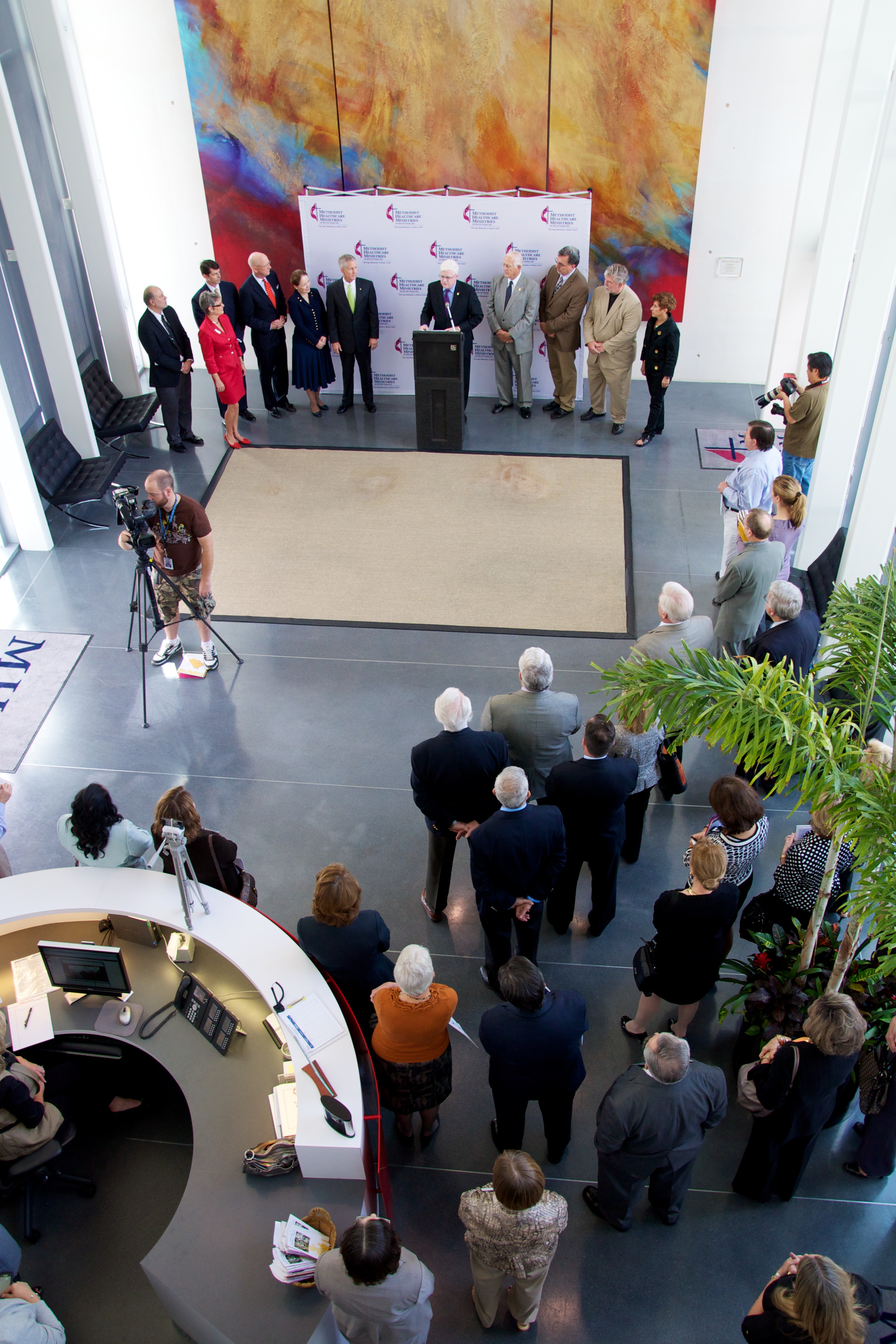
by Anne ConnorMHM press conference mental illness
aconnor@mhm.org

San Antonio, like many cities in the United States, faces key gaps in mental health care: A fragmented “system,” with little coordination or collaboration among providers; few resources where the uninsured can receive mental health care in a timely manner; and a serious shortage of mental health providers. The $9.4 million funding initiative announced by Methodist Healthcare Ministries on October 12 was a coordinated response to those needs. The grants made by MHM will change the landscape of care in San Antonio, addressing system issues in a way that will benefit thousands of underserved mental health consumers. 

Here’s why it matters:

  1. Hospital discharge is no longer abandonment. Previously, the fragmented mental health system of care in Bexar County did not have a way to care for mental health patients discharged from hospitals. This had gotten so bad that in 2009, bills were drafted trying to address “patient dumping.” In one high-profile case a woman, left at a bus station after being discharged from a mental hospital, died as a result. MHM’s grant to the University of Texas Health Science Center at San Antonio (UTHSCSA) includes funding for a Transitional Care Clinic. This clinic will link patients with care when referred from local ERs and inpatient programs. It will provide next day mental health appointments (almost unheard of in San Antonio) and 60-90 days of transitional care until the patient can be enrolled in existing community programs. The clinic will open in 2012 with a projected capacity of 550 psychiatric patient visits a month. An innovative feature is that care management and therapy will be delivered in the home or community, with patients coming to the clinic for medication management only. By providing 60-90 days of intensive coordinated care, the clinic will (a) decrease emergency visits and re-hospitalizations and (b) provide an inter-professional training venue.
  2. San Antonio will have more mental health providers. San Antonio has a lower mental health provider-to-population ratio than the national average, exacerbating other conditions to create a serious care shortage. Through MHM’s grant, UTHSCA will establish a multidisciplinary training and clinical care program, addressing the shortage of mental health professionals, with four new behavioral health training and practice programs. MHM’s total grant to UTHSCSA (for both the Transitional Care Clinic and the behavioral health training and practice programs) is $5.3 million.
  3. The mentally ill homeless will receive centrally located care. Prospects Courtyard, the “encampment” at Haven for Hope, is a temporary home for those homeless persons who are not ready to enter the Transformational Program at Haven, largely because of mental health issues. Haven for Hope is not currently equipped to deal with this situation. MHM’s million dollar grant to The Center for Health Care Services will fund a new Mental Health Clinic. This walk-in psychiatric outpatient clinic will serve homeless individuals: (a) living at the Courtyard, (b) living in a new dormitory residence (not funded by MHM), and/or (c) referred by community agencies. Services will include psychiatric assessments and follow-up, medication stabilization and monitoring, case management and rehabilitation, benefit procurement, and nursing assessments.
  4. Providers will work together to serve the whole client. Life is not simple, and mental illnesses do not occur in isolation. More often than not, they are accompanied by physical ailments and substance abuse issues. MHM’s $2.8 million grant to The Center for Health Care Services will fund the creation of two new integrated care clinics, in partnership with CentroMed. The program will launch at an existing location, the University Family Health Center Northwest, providing 24/7 access to care and wraparound services. The focus will be on those patients most in need of integrated care (especially high utilizers of emergency and hospitalization services). The second phase of the program will be a brand new clinic in the downtown corridor in Year two of the grant. 
  5. Mental health rehabilitation will be more available. Not all mentally ill persons need hospitalization or crisis services. Many are stabilized through medication, and need a place where they can move from the feeling of being disabled (as a patient) to being ableOur House San Antonio is an important part of the mental health continuum of care in Bexar County. At a very low cost per client, it provides outpatient rehabilitation and prevention services for those with severe and persistent mental illness.  The central model is prevention- rather than treatment-oriented, emphasizing healing and stabilization through a work-centered day and a return to a productive role in society. Services include “active reach out” to identify and address possible crisis situations when members do not show up to the Clubhouse. This program has been demonstrated to significantly reduce mental health hospitalizations.  MHM is providing a $300K grant to Our House for capital renovations to a new building that will triple their ultimate capacity to serve clients.

The mental health strategic initiative, mandated by the Methodist Healthcare Ministries Board, was implemented through a year-long effort by a mental health work group convened by MHM.  The work group identified key gaps in the system of mental health care and produced a report on the system of care in July 2011. The grants responded directly to that report.

The San Antonio Express-News also provided coverage on this announcement, to view the article click here.

About the Author:

Anne Connor has 14 years of experience in development and nonprofit management. She is a champion for collaborative work in philanthropy and among nonprofits, and for the use of outcome measurement to demonstrate how programs make a difference. She has been with Methodist Healthcare Ministries for nine years. Her team administers the grants made by MHM, and provides technical assistance to other organizations in seeking grants from foundations and government agencies. She coordinates the Texas Health Funders’ Consortium, organizing educational presentations on health topics (including mental health) and facilitating the co-funding of health grant projects.  

2011 United Way Campaign Comes to a Close

IMG_1888

Our 2011 United Way Campaign came to a close last Friday and it has been an AWESOME week!

MHM has exceeded its goal by over $4,700 and we are still counting! Thank you to each team member for your generousity and support.

A campaign meeting was hosted again on Friday, October 14 at the Wesley Health & Wellness Center. Thank you to everyone that was able to attend.

These meetings provided us with an opportunity to hear from several United Way agencies, including: Child Advocates of San Antonio (CASA), Crosspoint, Inc., United Way 2-1-1 and Children’s Association for Maximum Potential (CAMP). They are all doing great things in our community with the support of the United Way.

Remember that everyone who attended a meeting will be entered into a door prize drawing for United Way goodies, gift cards and lunch with our President & CEO! We’ll announce our winners next week.

We will also raffle prizes for donors in each MHM Leadership Giving Level – Steward ($26-249), Mission Partner ($250-499), Caring Servant ($500-999) and John Wesley Society ($1000 and above).

For more information, contact your Pledge Coordinator or Maggie Vasquez at mvasquez@mhm.org.


MHM Workshop Provides Innovative Program Tool

by Chivariak Khus
vkhus@mhm.org

On Friday September 30th, MHM presented another free Logic Model Workshop for partner agencies and other local area nonprofits.  A few years ago, the Technical Assistance & Grants Team noticed that nonprofits and funders were often not “on the same page” about how to describe programs.  The most common error was confusing program activities with client outcomes.  We launched an initiative to create a common language based on logic models, changing the paradigm for how nonprofits went about planning and describing their programs.  We stepped outside our usual box of only providing training to a narrow range of affiliated agencies, reasoning that we needed to build a “critical mass” in order for logic model usage and terminology to become commonplace in the community.

IMG_5828

IMG_5836

The three hour course reviewed ways to use logic models, as well as the four parts of a logic model:

  • inputs;
  • activities;
  • outputs; and
  • outcomes.

Participants closely reviewed the definition and examples of program outcomes and divided into groups to develop and present a working logic model.

MHM provided this workshop to help local area nonprofits better plan for future grant dollars as well as to maximize program impact. The reality is that nonprofits will always be expected to do a lot with limited resources, and the logic model will not only help to prepare a stronger grant proposal, but it will help create a more strategic and focused program.   

The logic model workshop will be periodically delivered throughout the year at MHM. If you are interested in attending a class, please feel free to contact Chivariak Khus at Vkhus@mhm.org

The workshop can also be seen online at mmlearn.org (you must register for free to view it).  It is available in four segments; Part 1 is located at: http://msm.mediasite.com/mediasite/Viewer/?peid=238f5fe152bc4e5fb4b2aa15593456031d.

About the Author:

Chivariak Khus has over 15 years of professional work experience in the public sector covering local, national and international initiatives. Upon graduating from the University of North Texas in 1995, he went with the United Nations into Cambodia, where he first started working with logic models. His use of logic models is integrated into organizational, program, and monitoring and evaluation planning. He holds a Master’s in Public Administration from UTSA, and he is currently a Grants and Research Specialist with Methodist Healthcare Ministries.  

3rd Annual United Way Pledge Campaign Underway

UnitedWaypic

As MHM sets forth on the 3rd Annual United Way Pledge Campaign, we have determined a team goal of raising $30,000 in donations.

With Day 4 coming to a close, we are happy to report that MHM is inching closer and closer to our goal with over $27,980 raised; 93% of our goal!!

GREAT TEAMWORK MHM!!!

We have one day left in the campaign so there is still time to submit your pledge to United Way. With a collaborative effort from our team, we are hopeful of reaching our goal of $30,000.

Since embarking upon the 2011 United Way Pledge Campaign, campaign meetings have been scheduled at the Bishop Ernest T. Dixon Jr. Clinic, Wesley Health & Wellness Center and MHM Corporate Office.

We are asking every team member to please consider making a donation of any amount, however it is NOT mandatory to give. All team members are asked to log onto the e-Way system and select an option (make a pledge, decline, etc.).

Thank you to every team member for your consideration and for your donations!

For more information, contact your Pledge Coordinator or Maggie Vasquez at mvasquez@mhm.org.

SBHC at Schertz Elementary Immunization Clinic a Success

It's that time of year again! As families geared up for Back-to-School, many set health needs as a top priority.

Health services are provided through MHM School Based Health Centers that provide primary medical and dental care to school-age children and their younger siblings who live in the Schertz-Cibolo Universal City Independent School District (SCUCISD). The School Based Health Center at Schertz Elementary recently held a two-day Immunization Clinic for students and parents in the SCUISD, which was designed to correspond with school registration being held that same week.

At the conclusion of the two-day Immunization Clinic, a total of 56 children were immunized. As dreadful as vaccine shots may sound to the ears of a child, the children walked away with smiles on their faces doting takeaway pencils, toothbrushes and colorful Band-Aids. Parents left with enthusiasm knowing they could confidently tend to their remaining Back-to-School list as their child's health needs had been addressed.

White close icon

Jaime Wesoloski

President & Chief Executive Officer

Jaime Wesolowski is the President and Chief Executive Officer at Methodist Healthcare Ministries. A healthcare executive with three decades of leadership experience, Jaime is responsible for the overall governance and direction of Methodist Healthcare Ministries. Jaime earned his Master’s Degree in Healthcare Administration from Xavier University, and his Bachelor’s of Science from Indiana University in Healthcare Administration. As a cancer survivor, Jaime is a staunch supporter of the American Cancer Society. He serves as Chair of the American Cancer Society’s South Texas Area board of directors and he was appointed as Chair to the recently created South Region Advisory Cabinet, covering eight states from Arizona through Alabama. Jaime believes his personal experience as a cancer survivor has given him more defined insight and compassion to the physical, emotional, and spiritual needs of patients and their families.