Legislative Update, December 14th

With less than a month to go before the start of the 86th Legislative Session, Methodist Healthcare Ministries is gearing up to review hundreds of bills impacting the health and well-being of all Texans, especially our most vulnerable citizens. In this newsletter, we will provide regular updates on filed bills, hearings, and votes taken on issues impacting the health of our families.

Interim Updates

Upcoming Meetings & Events

Health Care Policy News

Action Center

View our 2017 Legislative Agenda

Advocacy

Research


___________________________________________________________________________________________

Interim Updates

Bill Filing for 86th Legislative Session Begins

Texas’ 86th Legislative Session does not officially start until Tuesday, January 8, 2019, but lawmakers were able to get a head start on filing legislation as of November 12, 2018. Texas lawmakers filed more than 4,000 bills by the end of the first filing date and some of the filed legislation looks to affect access to healthcare for Texans. House Bill 80, by Linda Ortega (El Paso), would require a report relating to shortages in certain health professions. On the Senate side, Senator Jose Menendez (San Antonio) filed Senate Bill 105 to create a mental health jail diversion and crisis stabilization unit five year pilot program in Bexar County to evaluate, stabilize, and redirect individuals to the most appropriate and least restrictive setting. Methodist Healthcare Ministries is in the process of reviewing legislation impacting the healthcare of all Texans and will provide updates in its weekly newsletter throughout the 86th Legislative Session. Click here to sign up for Legislative Updates. 

State of Texas Children Report Reveals Poverty and Health Risk Among Texas Kids

Methodist Healthcare Ministries and the Center for Public Policy Priorities (CPPP) released the 2018 State of Texas Children report showing that Texas children lag behind their peers across the country in access to health care and educational opportunities. The report lays out the challenges Texas children and families face and offers key policy solutions for state leaders to consider. According to the report, Health insurance rates have improved since the passage of the Affordable Care Act, but 671,000 Texas kids remain uninsured, and significant barriers to health insurance coverage for Hispanic children persist. The report recommended that policymakers protect and expand comprehensive and affordable health insurance coverage for Texas families.


The 2018 State of Texas Children report was released at a briefing in San Antonio on November 15. Over 250 advocates, service providers, public officials and concerned Texans attended the event, which also featured a policy discussion with State Representative Diego Bernal, CPPP Legislative and Policy Director Luis Figueroa and journalist Bekah McNeel. At the briefing, several community members supported expanding access to health insurance and family planning services and protecting Medicaid and CHIP from cuts. Jaime Wesolowski, president and CEO at Methodist Healthcare Ministries, addressed the group and reminded the audience that Texas has consistently ranked in the bottom ten states for child well-being. Ensuring that lawmakers have the latest data and policy recommendations for the upcoming legislative session is an important role that s been spearheaded by the Ministries for many years to ensure that Texas kids are on a path to a bright future through policies that improve the conditions of all Texas kids and put them on the road to success.


House Select Committee Combats Opioid and Substance Use Epidemic

In 2016, more than 2,800 Texans died due to a drug overdose. The following year, 90 out of 172 child fatalities involved with the Texas Department of Protective Services were caused by abuse or neglect and involved a parent or caregiver actively using a substance and/or under the influence. This substance use crisis in Texas prompted the Texas House of Representatives’ Speaker Joe Straus to appoint the Select Committee on Opioids and Substance Abuse to provide recommendations to the upcoming 86th Legislative Session for combating the abuse of opioids and other drugs. Over the past 18 months, the Select Committee has reviewed the prevalence and impact of substance use disorders throughout different populations, studied policies and guidelines to monitor and prevent abuse of prescription drugs in state programs, identified the impact of opioids in the healthcare field and examined the impact of substance use disorders in Texas.

In their Interim Report to the 86th Texas Legislature, the Select Committee identified key recommendations to combat the opioid and substance use challenges through prevention, intervention and treatment and recovery efforts. One key finding is to continue the emphasis on integrated care, which provides care for the whole person and does not separate physical health from mental health. Advocates expressed the challenges of siloed care and the lack of ability to charge for varied services in a single visit to a facility on the same date, as opposed to integrated care. The committee also studied the prevalence of substance use disorders in specific populations and supported efforts to establish substance use treatment programs through other health programs for specific populations, such as Medicaid for Pregnant Women and Texas Veterans + Family Alliance Grant Program. They recommended looking into a funding mechanism to improve recovery housing initiatives for families, veterans, homeless and those with mental illnesses. More than 70 recommendations were included in the report to improve prevention practices and education, enhance prescription monitoring, increase supply management/medication disposal programs and expand treatment options for substance use disorders. Methodist Healthcare Ministries monitored the Select Committee hearings throughout the interim and supports the funding of additional substance use programs throughout the state, especially in rural areas.  

Texas Day Care Investigation Reveal Abuse and Neglect 

In a news report released by the Austin American Statesmen this week, investigative reporters found more than 450 children were sexually abused and 88 others died of abuse and neglect in Texas day care facilities in the last decade. The year-long investigation details the dangerous conditions that exist inside many Texas day care sites, leaving hundreds of children with serious injuries since 2007. The Statesman analyzed 40,000 inspection records and found that more than 450 children – almost one a week – suffered sexual abuse inside a day care facility during the past 10 years. Nearly half of the 88 children who died of abuse and neglect were in illegal centers. Reporters insist that state regulators have failed to take the necessary steps to ensure child safety, reduce surveillance of illegal centers or utilize data to identify preventable problems.

After reviewing the report, Texas Governor Greg Abbott and other state legislators pledged to address day care safety during the upcoming legislative session. Senator Judith Zaffirini (Laredo) is proposing a statewide study that would assess whether Texas’ staff-to-child ratios in day care centers lead to a more dangerous child care environment. Senator Kirk Watson (Austin) is looking at ways that the state can reestablish the Department of Family and Protective Services Investigative Unit, which was disbanded in 2017, to shut down illegal day care centers. Methodist Healthcare Ministries will continue to monitor this issue during the 86th Legislative Session and will support legislative recommendations that aim to protect and ensure the safety of Texas children.

HHSC Identifies New Strategies to Increase Quality Care for Family Planning

Texas has the fourth highest birth rate in the United States with more than 400,000 births in 2016. Of those, 52.5% of all state births were funded by the state’s Medicaid program. Data shows that 34.6% of women report their pregnancy was unintended, which can have significant consequences for individual women and their families. Research states that births resulting from unintended or closely spaced pregnancies link to adverse maternal and child health outcomes and numerous social and economic challenges. To address this problem, the Texas Health and Human Services Commission (HHSC) released a Long-Acting Reversible Contraception Strategic Plan that discusses the efficacy and benefits of long-acting reversible contraception (LARC) devices, billing and reimbursement challenges, accomplishments and measures to ensure quality care is provided.

In order to reduce unintended pregnancies and promote better birth outcomes, Texas is working to increase access to LARC devices, which are highly effective for preventing pregnancy and can last for several years. The report outlines several strategies to increase education and access to LARC devices, such as increasing efforts focused on educating women on available services in Texas and identifying best practices for reimbursing immediate postpartum LARC devices. Currently, state reimbursement does not always align with the acquisition cost since Medicaid rates and manufacturer rates are not updated at the same time. In their strategic plan, HHSC has identified improvements that can be made to ensure adequate statewide access. Methodist Healthcare Ministries supports HHSC’s efforts to reduce existing barriers to LARC devices while increasing education and access statewide.

Upcoming Meetings & Events

Dec 19: HHSC Proposed Amendments for Early Childhood Intervention Services Rules (San Antonio)

Jan 8: First Day of 86th Legislative Session (Austin)

Jan 19: State of D19 Senatorial Address with State Senator Pete Flores (San Antonio)

Jan 24: Children’s Health Coverage Coalition Legislative Briefing (Austin)

Health Care Policy News

Children's HealthTexans Care for Children: Report highlights strategies to prevent teen pregnancy in foster care

Access to Care

Kaiser Family Foundation: How Many of the Uninsured Can Purchase a Marketplace Plan for Free?

Houston Chronicle: Both men and women say state must spend more on health care, study says


Action Center


Source: Out2Enroll


Back to Top

Grief and the Holidays

Parties, food, Christmas movies, and music are some of the many ways people celebrate the holiday season. In addition, there is shopping and decorating going on everywhere. It is impossible to steer away from the festivities around us.

For many, the holidays are a joyful time of the year. For others, the season is a difficult one. Some people are in a season of grief. They have experienced the loss of a loved one, close friend, or an animal companion.​

Grief can be overwhelming for some, especially when many traditions were created with loved ones who are no longer here. Traditions like making tamales or baking cookies together, going light riding through town, attending Christmas musicals, and the list goes on. These reminders can trigger specific memories, causing deep sadness for grievers.

Celina Gonzalez, a behavioral health counselor at Methodist Healthcare Ministries’ Dixon Health & Wellness Center, said it’s important to try and honor the memory of a loved one who has passed away, as part of the grieving and healing process. You can also decide what traditions you’d like to keep or create new ones in honor of your loved one.

“When you honor a loved one, it helps bring comfort. You can do this in many ways. You can make an ornament that reflects their personality, plant a tree, visit the cemetery with flowers, or prepare their favorite dish,” said Gonzalez. “It’s about celebrating them in your own way.”

She also said it’s OK to skip the holidays, if you don’t feel up to it.

“You don’t have to go to the parties or get into the holiday spirit. It’s normal to feel sad, and often times depressed, for a season. Give yourself permission to grieve because what your feeling is real,” she said. “Also, there’s no timeframe for grieving. Everyone is different and should grieve for as long as needed.”

Gonzalez said there are also other types of losses causing people to feel blue during the holidays. They include the loss of a job, home, finances, relationship (divorce), dream, and health. These losses can make it extremely difficult for individuals to feel like celebrating.

If you or someone you know has recently experienced a loss, Gonzalez shares a few things you can do to help get through the season.

  • Draw from your inner strength to work through the healing.
  • Go for a walk, it will help clear your thoughts. And, don’t forget to breathe.
  • Talk with someone who understands your loss. Perhaps make an appointment to see a grief counselor.
  • Join a grief support group. It will help connect you with others experiencing similar losses.
  • Get plenty of rest and drink lots of water. This will help keep you healthy.

Gonzalez said it’s important to reach out to family, friends, or a professional counselor, if you are feeling overwhelmed with grief. But most of all, give yourself the gift of allowing yourself to work through the pain and grief, and construct a new connection with the deceased.

Methodist Healthcare Ministries is dedicated to creating access to healthcare for the uninsured through direct services, community partnerships, and strategic grant-making in 74 counties across South Texas. Guided by its mission of "Serving Humanity to Honor God," the organization’s vision is to be the leader for improving wellness of the least served. The mission also includes Methodist Healthcare Ministries' one-half ownership of the Methodist Healthcare System, the largest healthcare system in South Texas, which creates a unique avenue to ensure that it continues to be a benefit to the community by providing quality care to all and charitable care when needed. For more information, visit www.mhm.org. 

An Introduction to Health Equity – Part 1

The vision of Methodist Healthcare Ministries is “to be the leader for improving wellness of the least served." In that spirit, Methodist Healthcare Ministries strives to promote a sense of health equity across the 74 counties we serve and to reduce health disparities, while improving overall population health by focusing our efforts on the most vulnerable populations. We recognize that disease management and direct services alone cannot, and ultimately will not, transform individual or community health in our service area. They may improve wellness for a period of time, but they do not create lasting change, especially not on a community level.

To support transformational change in the communities we serve, we need continued learning about, implementation of, and shared commitment to health equity. Toward that end, this post kicks off a three-part series introducing health equity language, practical recommendations and tools for healthcare professionals, as well as strategic considerations for healthcare organizations.

For starters, equity is not the same as equality. Pursuing equality means focusing on a final goal of equal or equitable services for all people. As depicted in the image below, equality assumes that one size fits all, that we can all reach the same destination of living at the highest level of health if we simply receive an opportunity to do so (i.e., consistent access to clinical care). Equity, by contrast, is far more ambitious and much more specific to the differences between groups and reasons for those differences.

Visualizing Health Equity: One Size Does Not Fit All 

As defined by Healthy People 2020, health equity is the “attainment of the highest level of health for all people.” Beyond levelling the playing field to make it fair and equitable for all people, health equity requires righting historic and ongoing wrongs, and correcting the generational impact of biased policies and norms that have favored some groups over others. These policies and norms include slavery, forced migration, redlining, wage discrimination, and mass incarceration.

FOR FURTHER LEARNING: Watch this 76 second video about the difference between health equity and health equality

These and other social processes have created significant health disparities between different population groups. For example, in the United States, life expectancy from birth varies greatly in urban areas; residents in lower-income neighborhoods of color often live 10-20 years less than residents in higher-income, predominantly white neighborhoods of the same city.

FOR FURTHER LEARNING: Does where you live affect how long you live? Enter your zip code to compare life expectancy in your community to life expectancy in your county, state, and the United States

In Corpus Christi, Texas, when mapped by census tract, this disparity ranges from a life expectancy of 69.6 years in the Hilcrest area to 85.2 years on the south side. A similar gap exists for San Antonio, as demonstrated by the map below:

Alternatively, obesity rates offer another obvious example of health disparities. Latinx individuals are more likely than whites to develop obesity; furthermore, the prevalence of Latinx obesity is higher for women than men and decreases by increasing levels of educational attainment.

It is important to note that while disparities reflect historical and contemporary injustices in a society, they also offer a measurable means of demonstrating progress toward achieving health equity. From the American Medical Association to the Surgeon General of the United States, healthcare organizations are being exhorted to prioritize the elimination of disparities as a means to improve overall health outcomes and strive toward equity.

The next post in this series will dig deeper into specific disparities, offering a few practical recommendations for pursuing health equity in everyday healthcare practice.

Tim Barr is the Collective Impact Strategy Manager for Methodist Healthcare Ministries. He supports, develops, and facilitates collaborative efforts in South Texas. Tim is also a member of the Climate Equity workgroup for the City of San Antonio’s Climate Action and Adaptation Plan.

To see part 2 of this blog series, click here.

To see part 3 of this blog series, click here.

References

Braveman, P. A., Cubbin, C., Egerter, S., Williams, D. R., & Pamuk, E. (2010). Socioeconomic Disparities in Health in the United States: What the Patterns Tell Us. American Journal of Public Health, 100(S1), S186-S196. doi:10.2105/AJPH.2009.166082

Braveman, P. A., Kumanyika, S., Fielding, J., LaVeist, T., Borrell , L. N., Manderscheid, R., & Troutman, A. (2011). Health Disparities and Health Equity: The Issue is Justice. American Journal of Public Health, 101(S1), S149-S155. doi:https://doi.org/10.2105/AJPH.2010.300062

Healthy People 2020. (n.d.). Disparities. Retrieved from Healthy People 2020: https://www.healthypeople.gov/2020/about/foundation-health-measures/Disparities

Lopez, E. B., & Yamashita, T. (2018). The relationship of education and acculturation with vigorous intensity leisure time physical activity by gender in Latinos. Ethnicity & Health, 23(7), 797-812. doi:10.1080/13557858.2017.1294664

Murphy, S. L., Xu, J., Kochanek, K. D., Curtin, S. C., & Arias, E. (2017). National Vital Statistics Reports, Deaths: Final Data for 2015. US Department of Health and Human Services, Centers for Disease Control and Prevention. Retrieved from https://www.cdc.gov/nchs/data/nvsr/nvsr66/nvsr66_06.pdf

VCU. (2016, September 26). Mapping Life Expectancy. Retrieved from Center on Society and Health: https://societyhealth.vcu.edu/work/the-projects/mapping-life-expectancy.html

Coastal Bend Day of Giving is Nov. 13

Methodist Healthcare Ministries of South Texas, Inc. is proud to give a shout out to our funded partners in Texas’ Coastal Bend, as they participate in the 10th Annual Coastal Bend Day of Giving, a one-day charitable challenge, beginning at midnight on Nov. 13.

Partners like Rural Economic Assistance League (REAL, Inc.) benefit from the challenge. For 46 years, REAL has been on the forefront of providing critical health and quality of life assistance to communities in rural South Texas. 2018 is REAL’s first year participating in Coastal Bend Day of Giving. “We know that without the services we provide in rural areas, people would suffer from isolation and an inability to access services,” says REAL Director Martín Ornelas. “People call us because they need assistance. We’re the life link for them to continue having a fulfilling life.” From August 31, 2017 to September 1, 2018, REAL’s public transportation service provided 250,000 trips to senior citizens, people with disabilities and people who need a ride to appointments or other daily life needs.

For just 24 hours, area non-profits receive individual donations from the community, boosted by matching funds from the Coastal Bend Community Foundation. Those 24 hours go by fast, but the impact is long-lasting.

Other Methodist Healthcare Ministries of South Texas, Inc. partners who are participating in the 2018 Coastal Bend Day of Giving:

  • Amistad Community Health Center
  • Corpus Christi Metro Ministries
  • Family Counseling Service
  • Mission 911
  • Timon’s Ministries
  • Wesley Community Center

Schedule your donation and learn more about how Coastal Bend Day of Giving helps our funded partners continue to serve South Texas.

Welcome New President & CEO, Jaime Wesolowski

Monday, Oct. 1 was a truly momentous day in the life of Methodist Healthcare Ministries. We celebrated the grand opening of our Dixon Health & Wellness Center and dedicated the building in honor of its namesake, Bishop Ernest T. Dixon, Jr. We were joined by partners, community and civic leaders, stakeholders and members of the faith community to reflect on Bishop Dixon’s legacy and celebrate all the center will do in furthering his life’s work. The importance of the day was punctuated by the introduction of our new President & CEO, Jaime Wesolowski,

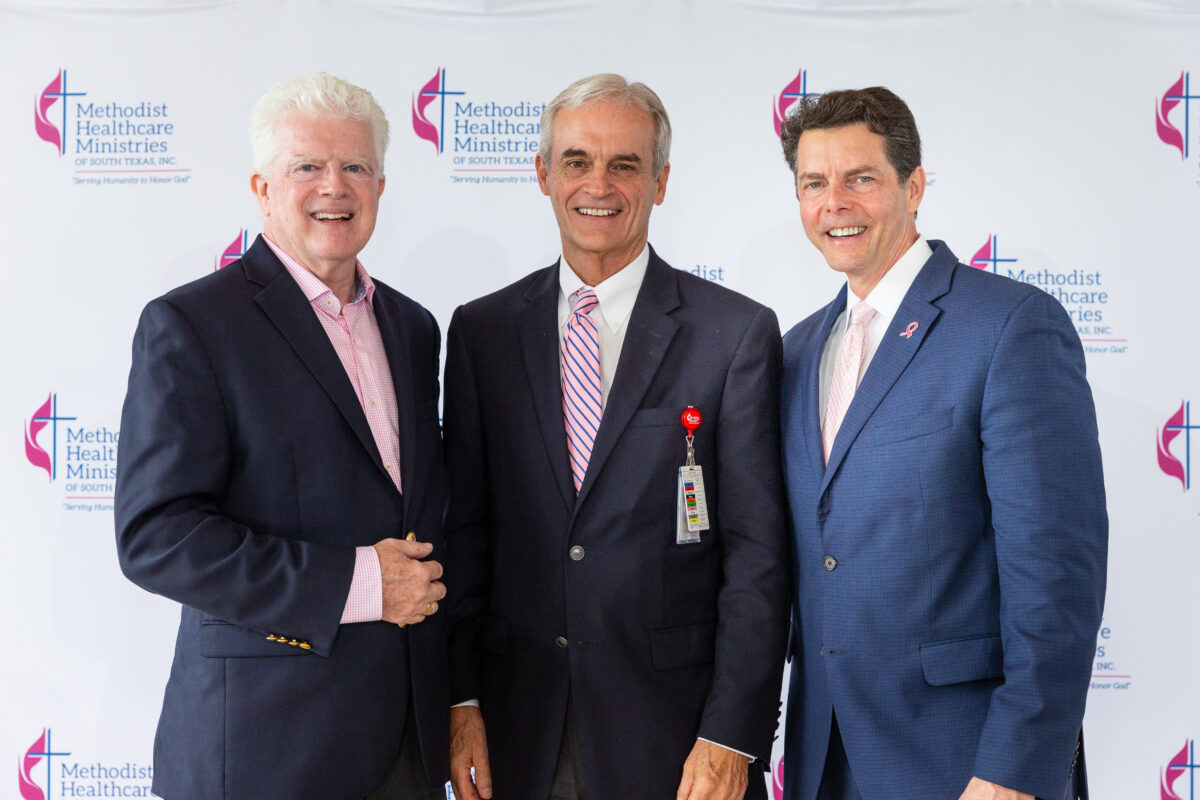
Pictured Left to Right: Kevin C. Moriarty, former president & CEO; Marc Raney, interim CEO; and Jaime Wesolowski, current president and chief executive officer of Methodist Healthcare Ministries.

whose first official act was to welcome the community into the center along with two very special guests: Kevin C. Moriarty, who served as Methodist Healthcare Ministries’ first president and CEO for more than 20 years, and Marc Raney, who most recently served as interim CEO since Kevin’s retirement last year. Methodist Healthcare Ministries is extraordinarily fortunate and blessed to have had such wonderful testaments to servant leadership guide the organization since our inception. I have no doubt Kevin and Marc will provide Jaime invaluable support and encouragement as he helps the organization continue to grow and thrive.

While the role of CEO at Methodist Healthcare Ministries is new to Jaime, he is certainly not new to the organization or the healthcare community in South Texas. For the last 11 years, Jaime served as the President and Chief Executive Officer at the Methodist Healthcare System, which Methodist Healthcare Ministries co-owns with HCA Healthcare. As President & CEO of Methodist Healthcare System, Jaime was responsible for a network of nine acute care facilities serving Bexar and 26 surrounding counties. Under his direction, the System earned state and national recognition for its quality improvement, patient safety and satisfaction efforts—including winning the Texas Award for Performance Excellence in 2014, demonstrating the highest level of quality in the state of Texas.

Jaime is also known in our community as a champion for cancer prevention and research and has been a passionate supporter the American Cancer Society and other cancer-related organizations. He is Chair of the American Cancer Society’s South Texas Area board of directors and was recently appointed as Chair to the newly created South Region Advisory Cabinet, covering eight states from Arizona through Alabama. We are proud of Jaime’s continued advocacy in the community and are glad to support him in those important efforts.

In addition to the usual routines of a chief executive officer and executing the board’s strategy for community health, Jaime’s role at Methodist Healthcare Ministries will include overseeing the local governance and the quality and charitable activities of the Methodist Healthcare System. Jaime brings a wealth of experience and expertise that uniquely positions him to advance this critical element of our mission. He will no doubt bring tremendous value to our partnership with HCA Healthcare as well as the 90+ partnerships Methodist Healthcare Ministries has enjoyed for over 20 years with Federally Qualified Health Centers, safety net clinics, and other providers and advocates that increase access to care for low-income, uninsured families across South Texas.

In scripture, Peter asks that “Each of you should use whatever gift you have received to serve others, as faithful stewards of God’s grace in its various forms,” (1 Peter 4:10); it is apropos for Jaime as he was a wonderful steward of Methodist Healthcare System. We on the board of directors have the greatest faith that Jaime will advance Methodist Healthcare Ministries’ mission and vision to become the leader for improving wellness of the least served to new heights.

It is my pleasure and great joy to welcome Jaime to the organization on behalf of the board of directors.

A Culture of Quality

As a not-for-profit, healthcare organization, Methodist Healthcare Ministries of South Texas, Inc. is committed to pursuing the highest level of quality in the care it provides to low-income, uninsured patients and clients. With a service area of 74 counties across South Texas, and multiple methods in which the organization accomplishes its mission of “Serving Humanity to Honor God,” ensuring that there is fingerprint of quality across the organization is a mission-critical responsibility. Below is a Q&A with Amanda Orahoske, quality assurance manager, that expounds upon Methodist Healthcare Ministries’ culture of quality.

What is Methodist Healthcare Ministries’ Commitment to Quality, and why does that commitment matter to a healthcare organization?

Methodist Healthcare Ministries’ Commitment to Quality is modeled after a very important publication by the Institute for Medicine, titled Crossing the Quality Chasm. Outlined within that publication are six key areas that healthcare organizations should focus on to close the gap in quality: Safety, Effectiveness, Patient-Centeredness, Timeliness, Efficiency and Equity. What we’ve done at Methodist Healthcare Ministries is develop a Commitment to Quality pledge that every employee signs upon joining the organization. We continuously reinforce that pledge through ongoing training, seminars, and by incorporating that commitment into our performance evaluation criteria.

As a not-for-profit healthcare organization, we focus on each of the key areas identified above as a way to help us provide better care for the patients and clients we serve. They direct us to realize our vision to be the leader for improving wellness of the least served. To that end, Methodist Healthcare Ministries became a Passport Member of the Institute of Healthcare Improvement (IHI) earlier this year, which provides our team members with access to a wealth of training opportunities and resources that reinforce the importance of the six key quality focus areas.

How does Methodist Healthcare Ministries pursue and achieve its Commitment to Quality?

By constantly striving to move forward. For the past four years, we have slowly implemented a quality-based culture change that our team members know as “PDSA,” which stands for Plan, Do, Study, Act. PDSA comes from an Institute of Healthcare Improvement model called the Model for Improvement. Each year, Methodist Healthcare Ministries’ team members use personal improvement worksheets that follow the PDSA framework with the goal of improving the quality of their processes, and thereby improving the quality of the service we provide to low-income, uninsured families throughout South Texas.

Throughout this quality journey, the Quality and Business Intelligence team has also recognized the importance of obtaining professional certification through the National Association of Healthcare Quality (NAHQ), as Certified Professionals in Healthcare Quality (CPHQ). To that end, three of the members of our quality team have obtained their CPHQ certification: Dawn Wilder, our director of quality, safety & compliance; Amanda Orahoske, quality assurance manager; and Rosanna Vallin, quality assurance specialist.

By receiving this certification, our team has joined about 10,000 other CPHQs and, in the words of NAHQ, are deemed “healthcare quality professionals” that work in a healthcare setting to enhance care delivery, optimize value, and improve outcomes by leading activities in one or more of the following core quality functions:

  • Patient Safety
  • Regulatory and Accreditation
  • Quality Review and Accountability
  • Performance and Process Improvement
  • Health Data Analytics
  • Population Health and Care Transitions

How do you see Methodist Healthcare Ministries’ culture of quality growing?

The Quality and Business Intelligence team is using a four-tiered approach to evaluate where our organization and team members currently stand in becoming more quality-centric in our activities by measuring Exposure, Education, Engagement, and Empowerment. We actively review each of those measures and adjust activities to help everyone in the organization reach Empowerment, where they are actively taking quality-focused actions and using data to help improve their actions every day. At the Empowerement level, our employees are naturally saying “Let’s improve this” and asking “How can we measure what we did and the impact we made?”

We are also expanding our data analytics reach with the implementation of Tableau, an advanced data visualization software tool. Tableau helps us make more informed decisions and guides us on improvement projects throughout the organization. This software tool allows our leadership, providers, and staff clearly visualize data in a new way. This is an exciting time for Methodist Healthcare Ministries because not only will we be looking at patient outcomes, but also the upstream factors (social determinants of health and population health trends) that impact patient wellness. By instilling a culture of quality that constantly looks to make evidence-based decisions that improve quality standards across the organization, we are continuing to ensure that our patients receive the highest level of compassionate care when they turn to Methodist Healthcare Ministries.

Methodist Healthcare Ministries of South Texas, Inc. Celebrates National Night Out at Wesley Health & Wellness Center

Methodist Healthcare Ministries of South Texas, Inc. celebrated National Night Out at its Wesley Health & Wellness Center on Tuesday, Oct. 2 . Over 150 community members gathered together with Methodist Healthcare Ministries’ staff and members of local law enforcement for a night of camaraderie, fun festivities, education and information on locally available resources that promote community awareness and crime prevention.

“We typically try to reach people directly where they live, work, play, and pray and this event helps us celebrate all that we can do for our Southside Community. We have proudly organized this event for many years as it provides our neighbors with another chance to get to know one another so that together as a community we can make our neighborhood a safer, better place to live,” said Oanh Maroney-Omitade, vice president of clinical operations for Methodist Healthcare Ministries. “It is free fun for the whole family, including games, fitness classes, informational booths, and more with performances by Los Mariachitos de Wesley, Folklorico dancers, Capoeira, and line dancers!“

The Wesley Health & Wellness Center offers a variety of health and wellness programs and services such as medical, dental, counseling, exercise, classes, parenting programs, and nutrition and health education to San Antonio’s Southside and the surrounding community.

Methodist Healthcare Ministries of South Texas, Inc. Dedicates New Dixon Health & Wellness Center

Methodist Healthcare Ministries of South Texas, Inc. – a not-for-profit dedicated to creating access to health care for low-income families and the uninsured, celebrated the grand opening and dedication of the Dixon Health & Wellness Center on San Antonio’s Southeast Side. The Ceremony began at 10 a.m. Monday, October 1, 2018, at the Center’s new location at 4212 E. Southcross St. and was attended by community and civic leaders, members of the faith and healthcare community, and the area’s city and county elected officials.

The Center is named after Bishop Ernest Thomas Dixon, Jr., who was born and raised in East San Antonio and was the first African-American elected Bishop by the South Central Jurisdiction of The United Methodist Church. “Bishop Dixon is remembered as a champion for social justice and envisioned a community where quality care was available to all, regardless of ability to pay. In recognition of his lifetime of service to the community and as a testament to his legacy, the Center has become a trusted source for quality, compassionate care for the underserved in San Antonio,” reflected Bishop Robert Schnase, Resident Bishop of Rio Texas, Conference of The United Methodist Church

The ceremony also marked the first public event for Methodist Healthcare Ministries’ new Chief Executive Officer, Jaime Wesolowski, who began his tenure at the organization on the same day. Wesolowski stated, “I can’t think of a better way to mark what this day means to me personally, as I transition into my new role as CEO of Methodist Healthcare Ministries than to celebrate the legacy of compassion and service Bishop Dixon left for us. Bishop Dixon left an indelible mark on the history of Methodist Healthcare Ministries.”

First opened in 1998 as the Bishop Ernest T. Dixon, Jr. Clinic, the center has provided quality primary care, health education programs, behavioral health and case management services for 20 years at its former location at 1954 E. Houston Street. Relocation and expansion plans were made in 2017 after an independent study identified Southeast San Antonio as an area of high need coupled with a lack of health care options for low-income, uninsured families. Over $3M was invested to purchase the former Southeast Baptist Hospital and construction efforts commenced with the purpose of transforming the 20-acre property into a health center serving low-income, uninsured patients. Renovations were completed in 2018 and the clinic was renamed the Dixon Health & Wellness Center to reflect the holistic care now available to the community.

The Center now includes: a state-of-the-art dental suite offering 24 dental chairs and oral surgery; physical therapy offered in partnership with The University of the Incarnate Word School of Physical Therapy; a beautiful courtyard with a walking trail and benches, providing community members and clinic staff alike a safe place to exercise and relax; and a chapel where people can find a quiet place to meditate and pray. Integral to the new Dixon Health & Wellness Center design is a floorplan that facilitates the delivery of services through an integrated care model — meaning patients will be assisted by a team of health care providers (doctors, counselors, dentists, etc.,) to ensure that patients receive holistic care – mind, body and spirit.

Alice Gannon, Board Chair at Methodist Healthcare Ministries added, “We are quite pleased that our neighbors have begun to enjoy the walking paths and the beautiful garden in front of this facility. We hope to add more amenities to the property going forward that the community can continue to enjoy for many years to come, making the new Dixon Health and Wellness Center a true reflection of the legacy Bishop Dixon left us and a place for compassionate care, healing, and wellness.”

The Dixon Health & Wellness Center is strategically located to meet the needs of a population that has been traditionally underserved. The majority of patients have complex medical needs as 49 percent of patients serviced in 2017 suffer from at least one chronic illness, such as diabetes and hypertension and 40 percent suffer from more than one. 82 percent of the patients identify as Hispanic or Latino, 65 percent are women, and 48 percent had income at or below the federal poverty level.

Wesolowski added, “Our mission is the promise that we make, and the standard we set for the care provided to our patients and clients here and across South Texas. The Dixon Health and Wellness Center represents the culmination of years’ work to deliver on that promise for a community on the Eastside that has been often underserved and overlooked by others. We look forward to building on our long-term commitment to this community.”

The Dixon Health & Wellness Center furthers Methodist Healthcare Ministries’ mission of “Serving Humanity to Honor God” by creating access to health care opportunities to the underserved.

An intern’s call to engage in the fight against opioid addiction

Three years ago, if anyone had used the word ‘epidemic,’ it would not have occurred to me to preface it with the word ‘opioid.’ It is a bit disturbing to hear and read news reports on the extent to which opioids have affected families across the United States. Just recently, the Centers for Disease Control and Prevention (CDC) reported that 42,000 people died in 2016 due to opioid overdose and nearly 40 percent of those deaths involved a prescription opioid. Although Texas is currently posting a lower overdose death rate than the national average, overdose deaths in our Lone Star State are on the increase, going from 1.5 to 4.2 deaths per 100,000 people in 2016. Bringing it closer to home, four of the country’s 25 worst cities for opioid use rates are in Texas: Texarkana (#10), Amarillo (#13), Odessa (#15) and Longview (#17). As a healthcare policy intern in the Policy & Advocacy Department at Methodist Healthcare Ministries, I am interested in learning more about what types of initiatives, both local and statewide, are being mobilized to get ahead of this epidemic.

To better understand the systems in place to support communities affected by opioids, I first looked at the ways Methodist Healthcare Ministries combats opioid use. Two strategic pillars became clear very quickly — the first being strategic grantmaking. Guided by its vision to be the leader for improving wellness of the least served, Methodist Healthcare Ministries provides grants to numerous community stakeholders across South Texas in five categories — one of which is Social Services & Behavioral Health. In 2018, Methodist Healthcare Ministries allocated nearly $7.7 million for Social Services & Behavioral Health programs which includes counseling and recovery services that are important in treating opioid addiction. The second approach Methodist Healthcare Ministries employs to combat opioid addition is through its Community Counselors, stationed throughout South Texas, who provide direct access to behavioral health services.

I then turned my attention to statewide initiatives. What I found made me feel hopeful that state policymakers have acknowledged the urgency of the crisis and are working diligently towards a solution. Within the last couple of years, Texas has developed targeted initiatives and partnered with various community stakeholders to tackle opioid addiction. In 2017, the Texas Health and Human Services Commission (HHSC) received $27.4 million in Federal State Targeted Opioid Response grants to create the Texas Targeted Opioid Response (TTOR) Grant. The two-year grant aims at increasing outreach and general education regarding opioid treatment and training, hoping to reduce opioid related deaths and overdoses in Texas. HHSC plans to expand opioid prevention and treatment services through its existing partners and the recruitment of new providers to expand networks, all with the assistance of Local Mental Health and Behavioral Health Authorities and university partners.

In 2015, the Texas Legislature created the Texas Maternal Mortality and Morbidity Task Force to investigate high maternal mortality trends in Texas and revealed new data showing that drug overdose was the leading cause of pregnancy-associated deaths between 2012-2015, with 37 out of the 64 drug overdose maternal deaths in that period being due to an opioid. Connecting an opioid overdose as the cause of death for a young pregnant mom is something that leaves you a bit unsettled and sad. Two young lives are lost to the world before they had a chance to start. The Task Force points to existing programs aimed at preventing and treating opioid use in pregnant women as a key intervention strategy. To prepare lawmakers for the 2019 legislative session, Texas House Speaker Joe Straus (San Antonio) took action in October 2017 to create the House Select Committee on Opioids and Substance Abuse, directing the committee to study both the impact of addiction and effectiveness of the programs and treatment options and develop concrete principles and action items. Two of the 13 members of the Select Committee represent districts within Methodist Healthcare Ministries’ service area. 

Closer to the place I’ve called home for the past five years, I’ve learned that Bexar County leads the state in Neonatal Abstinence Syndrome (NAS) and has the third-highest per-capita rate of overdose deaths in Texas, as reported by the Rivard Report. In the summer of 2017, Bexar County Judge Nelson Wolff and San Antonio Mayor Ron Nirenberg created the Bexar County Joint Opioid Task Force to decrease the overall deaths due to opioids. Members of this task force — including experts in public health, medical and pharmaceutical professionals, first responders, educators and policy makers — will develop strategies to address the opioid crisis in a comprehensive manner with an aim to decrease the number of opioid deaths in Bexar County. The proposed strategies will include: increasing the use of overdose reversal drugs by first responders; improving provider training on evidence-based practices; increasing access and awareness of treatment options; and increasing public knowledge regarding the increase use and disposal of opioids.

My review of recent national and state reports on the impact of opioid addiction on our Texas families leaves me concerned, but even more importantly, it’s made me informed and aware. This epidemic has no boundaries, and shows no sign of slowing down. A recent Vital Signs report from the CDC reported that there has been a 30 percent increase in emergency department visits due to opioid overdose between July 2016 and September 2017 – a reminder that we need to engage and we need to do it now.

For my part, I look to join my Policy & Advocacy team in learning how Methodist Healthcare Ministries can continue to assist state efforts and how we can increase awareness of the problem in our communities. Our department will be following state and local policy initiatives over the legislative interim in preparation for the state’s 86th Legislative Session, scheduled to convene on January 8, 2019. Together we can ensure that Texas families are empowered to overcome this epidemic and future generations will have the tools to battle similar struggles.

For those suffering from opioid use, it is important to identify community resources that are available to treat their addiction as soon as possible. The Center for Healthcare Services and the San Antonio Council on Alcohol and Drug Awareness provides services for opioid addiction in Bexar County. The Substance Abuse and Mental Health Services Administration (SAMHSA) and the National Alliance on Mental Illness (NAMI) also provide helplines for those seeking help for opioid addiction. SAMHSA provides a treament finder of Opioid Treatment Programs throughout Texas. These programs offer counseling and medication assisted treatments for opioid addiction.

Coffee with Cassandra: Opportunities for professional development

Before you start your workday, enjoy your morning coffee with brew from Methodist Healthcare Ministries. This is your daily dose of stories that speak to the heart of our organization, paired with your favorite cup of joe!

As a growing organization of 400 plus team members, we place a high priority on providing them with opportunities to develop themselves professionally. Guided by our organizational learning and development team, Methodist Healthcare Ministries has created an outstanding culture of learning because we believe in the value of our team members continuously developing new ways to serve their communities.

For this Coffee with Cassandra, I had the chance to sit down with our staff development specialist, Camille Mendoza. She supports our team members through various professional development initiatives. She describes how providing professional development for our team members can create a larger impact for our patients and clients.

Legislative Interim Update, July

During the 85th legislative session, Methodist Healthcare Ministries tracked roughly 1,400 bills, supported over 500 bills, and worked to assist the passage of 224 laws that affect access to health care for Texas families. Keep up to date on how those laws are being effectively implemented and funded as intended through our legislative updates.

Interim Updates

Upcoming Meetings & Events

Health Care Policy News


View our 2017 Legislative Agenda

Advocacy

Policy

Research

___________________________________________________________________________________________

State Updates

Methodist Healthcare Ministries of South Texas, Inc. Announces the Appointment of New President and CEO, Jaime Wesolowski
The Methodist Healthcare Ministries of South Texas, Inc. board of directors has selected Jaime Wesolowski as the organization’s next president and chief executive officer. Wesolowski, a healthcare executive with three decades of leadership experience, currently serves as president and CEO of the Methodist Healthcare System — the largest provider of health care in South and Central Texas. Read more.

Healthcare stakeholders advocate for improving state’s Medicaid managed care system
Seventeen Texas organizations, including Methodist Healthcare Ministries, signed on to a letter to state lawmakers this week, asking for their help in addressing serious concerns with access to quality healthcare under the state’s Medicaid managed care system. The current system relies on private and non-profit insurance companies to coordinate health care for children, people with disabilities, seniors, and others enrolled in the state’s Medicaid system.

The Dallas Morning News recent investigative reporting series – Pain & Profit – shed a critical light on the state’s Medicaid Managed Care System, and its failure to provide adequate care for the system’s most vulnerable patients. The powerful testimonies in the report shared stories of hardships faced by Texans when the system failed to deliver care. As a result of these news reports, members of the Texas House Human Services Committee came together in mid-June to take testimony from state health care agencies, contracted managed care organizations as well as those families impacted in the news report. Similar testimony continued at a separate Joint Hearing of the House Appropriations Subcommittee on Article II and Committee on General Investigation and Ethics. Lawmakers will focus on addressing these issues for the upcoming 86th Legislative Session.

Survey shows health care is a priority for Texans
The Henry J Kaiser Foundation (KFF) released a report this month, highlighting the health policy priorities of Texan residents. Texas is one of the 17 states that did not expand Medicaid under the Affordable Care Act, and it continues to have the largest uninsured population in the nation. KFF partnered with the Episcopal Health Foundation and obtained survey results from nearly 1,400 Texas.

Survey results showed that health care is a priority for Texans with over half reporting that the state legislature should increase spending on services and programs. The KFF report noted that roughly two thirds of survey respondents believe state government is not doing enough to ensure low-income adults can get health care. The same percentage of individuals believe the state should expand the Medicaid program. The survey stated 70% of Texans report some connection to the Medicaid program and a majority believe that the program is working well for low-income individuals. Future KFF surveys will focus on Texans’ experience with health care affordability and access.

Governor Abbott address mental health screenings after recent school shooting
Mental health screenings in schools have become a serious topic since the recent Santa Fe ISD shooting. Governor Greg Abbott recently released recommendations for addressing school safety and stated that the Telemedicine Wellness, Intervention, Triage, and Referral Project (TWITR) could be an ideal model for the whole state. TWITR, initially funded through a grant program in the Governors’ Criminal Justice Division, is organized by The Texas Tech University Health Sciences Center (TTUHSC) and has provided mental health screenings to ten West Texas school districts. They plan to expand the program to an addition five school districts in the near future.

A new report highlights that since its inception, the project has triaged nearly 215 students via Telemedicine with the TTUHSC psychiatry department. The program had 25 students removed from school, 44 students placed in alternative schools and 38 students sent to a hospital due to their mental health. All the students were screened for multiple behavioral health concerns such as depression, anxiety and violent thoughts. Billy Philips, Executive Vice President for rural and community health at TTUHSC, stated that the project has been able to fill gaps in the lack of access to care in West Texas. Methodist Healthcare Ministries will monitor the Legislature’s implementation of the recommendations and continue to work with partners to address school mental health issues.

Texas opens applications for First Responder Mental Health Grant Program.
Texas Governor Greg Abbott’s office has established the First Responder Mental Health Resiliency Program which provides direct services to peace officers and other first responder agencies across the state. The program focuses on providing mental health services in a confidential and specialized method supported by trusted research, Funded projects under this fund source are expected to implement services that reduce stress for officers and first responders, improve coping strategies, and increase overall morale. Proposals are due on July 3, 2018 by 5:00 p.m. CST.

___________________________________________________________________________________________

Federal Updates

Healthy Futures of Texas achieves victory in class action
The U.S. District Court in D.C ruled in favor of Healthy Futures of Texas and 61 other organizations in a class action lawsuit against the U.S. Department of Health and Human Services (HHS) to continue evidence-based teen pregnancy prevention programs.

In the summer of 2017, HHS defunded the Teen Pregnancy Prevention (TPP) Program, nearly two years earlier than expected. The program has seen numerous successes in creating medically accurate and age appropriate programs to prevent teen pregnancy across the nation and led to the creation of multiple studies that have been successful in both rural and urban communities.

The ruling this past June held that HHS’s early termination of the program was unlawful and ordered the federal agency to reinstate the grant program for all 62 class members. With this victory, Healthy Futures of Texas and other organizations can continue to provide services essential to prevent teen pregnancy.

Federal funding for opioid response programs available for rural communitiesThe Federal Health Resources and Services Administration (HRSA) has released a notice of funding now available for opioid response programs. The Rural Communities Opioid Response Planning (RCORP) initiative for Fiscal Year 2018, will award 75 grants to rural communities. Successful awardees will receive approximately $200,000 for one year to develop plans to implement opioid use disorder prevention, treatment, and recovery interventions designed to reduce opioid overdoses in rural communities. Interested organizations can find more information here. Applications are due by July 30, 2018.

Upcoming Meetings & Events

July 21: Mental Illness and the Criminal Justice System: Addressing the Challenges (San Antonio)
Aug 9: Hospital Payment Advisory Committee
Aug 17: Medical Care Advisory Committee
Aug 21: Bexar County Opioid Task Force (San Antonio)
Sep 15: UTRGV School of Medicine Research Symposium (McAllen)
Sep 27-29: The Texas Tribune Festival (Austin)

Health Care Policy News

Children's Health
Texans Care for Children: Report highlights strategies to prevent teen pregnancy in foster care and support pregnant and parenting teens in foster care. 

2018 KIDS COUNT Data Book Released: Report looks at child well-being using indicators across four domains – health, education, economic well-being and family and community

Back to Top

Methodist Healthcare Ministries of South Texas, Inc. Announces the Appointment of New President and CEO, Jaime Wesolowski

San Antonio, Texas, Thursday, July 12, 2018 – The Methodist Healthcare Ministries of South Texas, Inc. board of directors has selected Jaime Wesolowski as the organization’s next president and chief executive officer. Wesolowski, a healthcare executive with three decades of leadership experience, currently serves as president and CEO of the Methodist Healthcare System — the largest provider of health care in South and Central Texas.

The announcement comes after a year-long, nationwide search conducted by Korn Ferry, a preeminent global people and organizational advisory firm.

“Jaime was chosen through a competitive selection process, from among an incredibly strong field of candidates,” said George Ricks, chair of the Methodist Healthcare Ministries’ search committee and immediate past chair of the board of directors. “Jaime’s proven track record of success, drive for excellence, and embodiment of our vision and values are what made him the right choice for this organization.”

Wesolowski, who announced his retirement from the Methodist Healthcare System in January, will commence his new role following the appointment of his successor at Methodist Healthcare System. With that process underway, the Methodist Healthcare Ministries’ board appointed Marc Raney, who served as one of the organization’s first board chairs and more recently as senior vice president of resource development, as interim CEO. Raney retired as the vice president for university advancement at Trinity University in 2010 after serving the institution for 30 years.

“I am truly honored to have been selected as the next leader of Methodist Healthcare Ministries,” said Jaime Wesolowski. “I can’t think of a better progression for me in my life journey as I am now able to use my knowledge and experience in healthcare operations and leadership and be laser-focused on community health improvement. More than that, I believe my eleven years of experience at Methodist Healthcare and my 20 years with HCA, the Methodist Healthcare Ministries 50/50 partner in the co-ownership of the healthcare system, will be valuable in building on the incredible work the Ministries has accomplished over the last 23 years.”

As President & CEO of Methodist Healthcare System, Wesolowski is responsible for a network of nine acute care facilities serving Bexar and 26 surrounding counties. Methodist Healthcare System is also San Antonio’s second largest private employer with more than 10,000 team members, and 2,700 physicians in all specialties.

Under his direction, Wesolowski led the System to earn state and national recognition for its quality improvement, patient safety and satisfaction efforts—including winning the Texas Award for Performance Excellence in 2014, demonstrating the highest level of quality in the state of Texas.

Wesolowski has also been responsible for navigating the unique partnership between HCA Healthcare and Methodist Healthcare Ministries, the co-owners of the System. Methodist Healthcare Ministries’ role as co-owner is to provide local governance and oversight of the quality and charitable activities of the Methodist Healthcare System. The partnership with HCA Healthcare is what supports the services and programs Methodist Healthcare Ministries operates across 74 counties in South Texas.

Alice Gannon, who was elected as chair of the Methodist Healthcare Ministries board of directors in June, emphasized how critical the partnership with HCA Healthcare is to Methodist Healthcare Ministries’ business model. “Jaime brings with him a skill set and understanding of what will be required to maintain and bolster that partnership for the benefit of our community, patients and clients well into our future.” Mrs. Gannon emphasized however, that it is the shared mission of “Serving Humanity to Honor God,” between the System and Methodist Healthcare Ministries that has made the partnership truly successful.

Locally, Wesolowski has been an avid supporter of the American Cancer Society and other cancer-related organizations. He and his wife, Lori, co-chaired the 2010 American Cancer Society’s Cattle Baron’s Gala. He also chaired the Gala in 2016 with other executives of Methodist Healthcare, along with their spouses. He is Chair of the American Cancer Society’s South Texas Area board of directors and he most recently was appointed as Chair to the newly created South Region Advisory Cabinet, covering eight states from Arizona through Alabama. Jaime believes his personal experience as a cancer survivor has given him more defined insight and compassion to the physical, emotional, and spiritual needs of patients and their families.

“We were blessed to have a strong example of servant leadership in his predecessor, Kevin C. Moriarty, who faithfully served Methodist Healthcare Ministries for 22 years,” said George Ricks to the organization’s 400+ employees during a special gathering where the announcement was made. “We will continue to build upon our strong foundation as we grow and move towards the future, always striving to live up to our mission of “Serving Humanity to Honor God.”

White close icon

Jaime Wesoloski

President & Chief Executive Officer

Jaime Wesolowski is the President and Chief Executive Officer at Methodist Healthcare Ministries. A healthcare executive with three decades of leadership experience, Jaime is responsible for the overall governance and direction of Methodist Healthcare Ministries. Jaime earned his Master’s Degree in Healthcare Administration from Xavier University, and his Bachelor’s of Science from Indiana University in Healthcare Administration. As a cancer survivor, Jaime is a staunch supporter of the American Cancer Society. He serves as Chair of the American Cancer Society’s South Texas Area board of directors and he was appointed as Chair to the recently created South Region Advisory Cabinet, covering eight states from Arizona through Alabama. Jaime believes his personal experience as a cancer survivor has given him more defined insight and compassion to the physical, emotional, and spiritual needs of patients and their families.