

The Power of Prevention: Why Early Detection Matters
October is Breast Cancer Awareness Month, a time to raise awareness about the importance of prevention, early detection, treatment, and support for those affected by cancer. At Methodist Healthcare Ministries, we recognize that access to preventive care and screenings can play a critical role in improving cancer outcomes and reducing health disparities across the communities we serve.
While we are not a cancer treatment provider, we work alongside community partners throughout South Texas to help connect individuals and families with the resources, services, and support they need to live healthier lives.
The Importance of Early Detection
Early detection can dramatically improve treatment outcomes and survival rates. In many cases, screenings can identify cancer before symptoms are present or even detect precancerous conditions before cancer develops. The earlier cancer is found, the more treatment options people often have, and the better their chances for recovery. That’s why staying current on recommended screenings and having regular conversations with a healthcare provider are essential.
Screening recommendations can vary based on age, family history, and individual risk. Rather than waiting until something feels wrong, individuals should talk with their healthcare provider about which screenings are appropriate and when to start.
Resources For Cancer Patients and Families
A cancer diagnosis affects nearly every part of a person’s life. Beyond medical treatment, patients and their families may need help navigating the healthcare system, managing expenses, finding emotional support, or maintaining overall well-being.
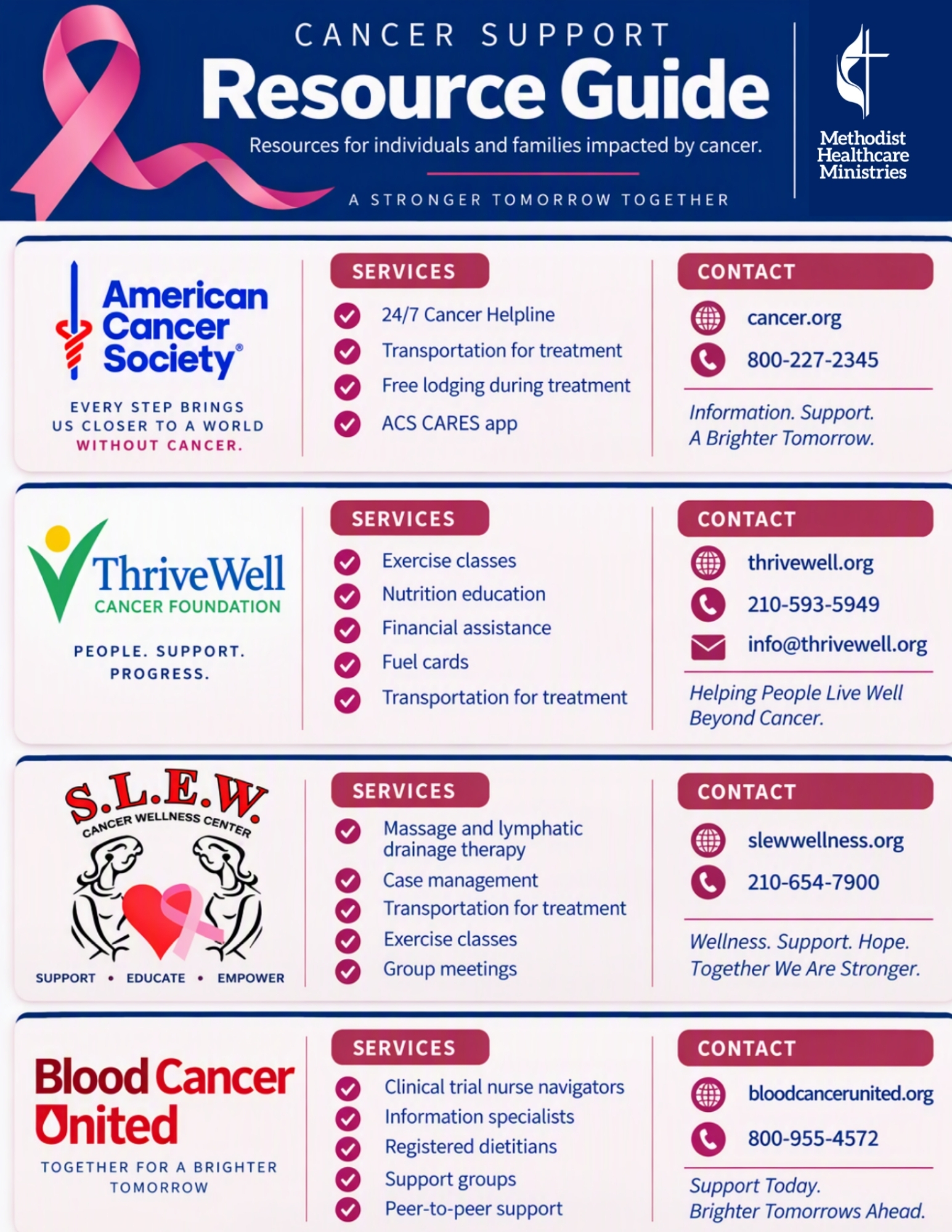
Across Central and South Texas, organizations are working to ensure individuals and families do not have to navigate those challenges alone. MHM is proud to support and collaborate with organizations including ThriveWell Cancer Foundation, SLEW Wellness Center, Blood Cancer United, and the American Cancer Society, among others.
Each organization fills a different need within the cancer support network. Depending on the organization and program, resources may include patient navigation, financial assistance, emotional support, wellness services, and connections to additional community resources.
Together, these efforts help build a stronger network of support for people affected by cancer. The most important message is that no one has to face cancer alone. A strong support network is available in our community. See below for more information on our partners, their services, and how to get in contact:
American Cancer Society Methodist Healthcare Ministries Hope Lodge
Access to cancer care can become especially challenging for patients who live far from specialized treatment. For families traveling to San Antonio, transportation and lodging costs and logistics can add another burden during an already difficult time. The American Cancer Society Methodist Healthcare Ministries Hope Lodge, which broke ground in March 2025, represents a major investment in cancer care access for South Texas.
Once it opens in January 2027, the Hope Lodge will provide free lodging in a supportive environment for patients and caregivers, helping reduce those burdens so they can focus on what matters most: treatment and healing. It’s a powerful example of how partnerships can remove barriers to care and improve health outcomes.
For Methodist Healthcare Ministries, the Hope Lodge reflects our commitment to addressing the barriers that affect health outcomes. By eliminating lodging costs for patients who must travel for treatment, the Hope Lodge will help ensure that geography and financial hardship are not obstacles to receiving lifesaving care.
Taking The Next Step
Breast Cancer Awareness Month is an opportunity to turn awareness into action. To learn more about cancer prevention, screenings, or support services, start with the American Cancer Society’s website, Cancer.org. It’s a trusted source for information about cancer prevention, screening guidelines, treatment options, and support resources for patients and caregivers. Whether you’re looking to understand your cancer risk, find answers after a diagnosis, or connect with local support services, Cancer.org has resources available every step of the way.
For information about Methodist Healthcare Ministries and the work we do, visit mhm.org.
This information is provided for educational and informational purposes only and is not intended to replace professional medical advice, diagnosis, or treatment. Consult with your healthcare provider about your personal health, cancer risk, and recommended screenings.
