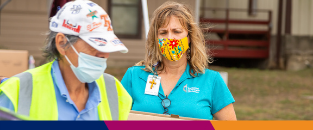
Methodist Healthcare Ministries Announces $75,000 Grant to City of Brownsville to Improve Local Broadband Access

Brownsville, Texas (January 25, 2021) – Last Friday, Methodist Healthcare Ministries of South Texas, Inc. – a private, faith-based not-for-profit dedicated to creating access to health care for low-income families and the uninsured – announced a $75,000 grant award to the City of Brownsville to help improve local broadband access. In a virtual press conference, President & CEO, Jaime Wesolowski joined City of Brownsville Mayor Trey Mendez to announce the award, which will support planning for infrastructure improvements of Brownsville’s digital economy.

The event featured a panel discussion on the issues that impact broadband access and discussed how the initiative is a testament to the positive direction Brownsville is taking. In addition to Wesolowski and Mayor Mendez, the panel also also included, Jordana Barton, Vice President of Community Investment, Methodist Healthcare Ministries; Ramiro Gonzalez, Director of Government & Community Affairs, City of Brownsville; Alex Meade, Senior VP of Economic Development and Public Finance for Texas Regional Bank; Susan Schwarz Shepard, Chair of the Valley Zoological Association; Rene Gonzalez of Lit Communities; and Josue Plaza with ConnectBTX.

“Closing the digital divide in communities will play a critical role in our efforts to support resilient families and build thriving communities across South Texas,” said Jaime Wesolowski, President & CEO of Methodist Healthcare Ministries of South Texas, Inc. “The long-term impact of having strong access to broadband technology on the health, education and other social determinants of health in Brownsville make this partnership a priority for our organization.”

The announcement comes in response to the City of Brownsville and its community partners' advocacy for reliable and affordable broadband internet service to help close the digital divide and homework gap impacting residents.

Brownsville currently ranks as the worst-connected city in the country with the least access to fixed broadband, according to the National Digital Inclusion Alliance (NDIA). The current COVID-19 pandemic has underscored the need for improved infrastructure to accommodate the increased need for virtual learning and telehealth opportunities. Additionally, as the Brownsville economy transitioned further into a digital economy, local leaders recognized the need to expand existing broadband infrastructure. Leaders have also realized that, in addition to adequate and strategically placed public fiber, they must create a plan to address and fill the other gaps in access that exist in the community: affordability of subscriptions, devices, and digital skills training and technical assistance.

Through this initiative, the City of Brownsville will receive the necessary support to increase broadband connectivity and thereby greater access to vital community resources that contribute to the health and wellbeing for Brownsville’s most vulnerable populations. Two key components include a telehealth plan to ensure access to quality care for Brownsville’s most disconnected constituents and a partnership with the Gladys Porter Zoo to support educational equity and demonstrate the importance of connectivity in helping Brownsville’s citizens and community thrive.

“In order to secure our future in the global economy we must close the digital divide. Over the past year we’ve been working diligently on understanding the issue and we are in the process of completing the broadband master plan,” said Mayor Mendez. “This could not have been done without the Alliance that we created made of up of BPUB, TSC, UTRGV, Port of Brownsville, BPUB, BCIC, and GBIC. Today we add two additional partners to that alliance in Methodist Health Ministries and Texas Regional Bank. I look forward to see how we can accelerate the adoption of telehealth through deployment of broadband solutions and also look forward to see the transformation of the Gladys Porter Zoo and the services they will be able to provide by having proper connectivity. These projects are two important milestones in our effort but only the beginning. We look forward to continued collaboration with our partners.”

###

About Methodist Healthcare Ministries of South Texas, Inc.

Methodist Healthcare Ministries of South Texas, Inc. is a private, faith-based not-for-profit organization dedicated to creating access to health care for the uninsured through direct services, community partnerships and strategic grant-making in 74 counties across South Texas. Guided by its mission of "Serving Humanity to Honor God," Methodist Healthcare Ministries’ vision is to be the leader for improving wellness of the least served. The mission also includes Methodist Healthcare Ministries' one-half ownership of the Methodist Healthcare System, the largest healthcare system in South Texas, which creates a unique avenue to ensure that it continues to be a benefit to the community by providing quality care to all and charitable care when needed. For more information, visit www.mhm.org.

Legislative Update, January 19

​​

In this issue:

State Updates

Federal Updates

COVID-19 News


Advocacy

In the news

COVID-19 Dashboard

___________________________________________________________________________________________

State Updates

State Urging Faster Distribution of COVID-19 Vaccines

Texas hospitals and healthcare providers are being urged by the state to administer ongoing shipments of the COVID-19 vaccines more promptly to eligible community residents. The vaccine distribution for Week 5 will provide vaccines to 234 healthcare providers across the state. 

Individuals who meet the criteria for vaccine eligibility can refer to the Vaccine Provider Location Map for access to the vaccine. The Pharmacy Partnership for Long-Term Care Program, a program that began to administer vaccines to staff and residents at 770 long-term care facilities, will be receiving 121,875 doses. Healthcare providers across Texas can also expect to receive 500,000 doses to be administered to individuals who are scheduled to receive their second vaccine dose. The Texas Hospital Association is currently in the process of producing digital messages for its hospital members to communicate vaccine procedures and availability to the public.

Vaccine allocations for Week 6 will be intended for healthcare providers who have not yet received vaccines or are located in rural communities. Current data show that there are 13,397 COVID-19 Texas hospitalizations, with only 8,687 hospitals beds and 614 intensive care unit beds available in Texas. Additional case counts and hospital data can be found here. Since vaccine supply is limited, DSHS encourages healthcare providers to administer the vaccines promptly to priority populations and report those doses to the state’s immunization registry, ImmTrac2.

Texas “Vaccination Hubs” Created to Distribute COVID-19 Vaccines

Roughly 158,825 COVID-19 vaccines will be received by large “vaccination hubs” this week across Texas. These “vaccination hubs” are known for their ability to vaccinate up to 100,000 individuals, which alleviates the strain from rising positive COVID-19 cases. A list of the identified 28 providers categorized as a hub can be found here

These hubs will also be responsible to continue vaccine administrations to group 1A, which includes healthcare workers, and members in nursing homes or long-term care facilities. As of late December, state officials encouraged hospitals to begin vaccine distribution to members in group 1B, which includes individuals who are 65 and older, and people with an increased risk of infection from existing medical conditions. 

The Texas Department of State Health Services has collaborated with the Centers for Disease Control and Prevention to deliver 38,300 doses to 104 providers statewide. This brings the total to 222 counties expected to continue vaccine distribution in Texas. As of Jan. 7th, at least 475,000 Texans have received their first vaccine dose and 6,500 Texans have received the required two doses. State officials encourage the practice of COVID-19 safety precautions as vaccine supply is yet to meet demand.

The Texas 87th Legislative Session Reconvenes on January 12th

At 12:00 noon on Tuesday, January 12th the Texas legislature officially gaveled in the 87th Legislative Session in Austin for the biennial, 140-day legislative session. Both the House and Senate have developed safety protocols in response to the COVID-19 pandemic and last week’s protest at the US Capitol.

Individuals planning to enter the Capitol were expected to receive a mandatory COVID-19 test as advised by the Department of Public Safety. Lawmakers were directed to invite fewer guests than in past sessions and House members were required to wear face masks on the House floor as forms of added safety measures. The legislative session kicked off with the confirmed election of Rep. Dade Phelan (R-Beaumont) as the new House Speaker. In the Senate, Senator Brian Birdwell (R-Granbury) was also unanimously elected president pro tempore of the Senate. This position is usually held by senators who have the longest tenure. Some items that can be expected to be on the state’s priority discussion list include redistricting, crafting a two-year state budget and measures to tackle the pandemic. To date, 1,423 bills have been filed by legislators. For access to the 87th legislative session livestream, click here.

Bills Filed Would Create State Health Literacy Plan  

Health literacy continues to be an important priority for Methodist Healthcare Ministries this legislative session. Ensuring that all individuals have the capacity to obtain, communicate, process and understand basic health information to make appropriate health decisions for themselves empowers patients to advocate for good health. 

In the Senate, Senate Bill 124 has been filed by Senator Nathan Johnson (D-Dallas). As drafted, SB 124 would add health literacy to the statewide health literacy plan and establish an advisory committee composed of representatives of relevant stakeholders, including physicians, hospitals, and nurses. The committee would develop a long-term plan focusing on identifying the primary factors contributing to low health literacy in the state, examine the methodologies of healthcare providers, the effectiveness of using quality measures in state health programs, and examine the impact that improved health literacy could have on patient safety. House Bill 578, a companion bill to SB 124, has been filed in the House by State Representative John Turner, (D-Dallas).

Trauma Informed Care Training and Education Bills Filed

This session, Methodist Healthcare Ministries will be supporting a number of bills that aim to establish Trauma Informed Care training and education requirements for public school curriculum, judges and attorneys that practice family law, and foster parents.

House Bill 564 by Rep. Ray Lopez (D-San Antonio) would require foster parents, adoptive parents, and kinship care-givers to complete a trauma informed care training course. Rep. Lopez has also filed House Bill 565 which would place training requirements on certain judges and attorneys that represent the state in a suit seeking the termination of a parent-child relationship or appointment of a conservator. Their training will be focused on the effects of trauma on children. Additionally, House Bill 566 by Rep. Lopez further outlines the requirements of trauma informed care training for certain attorneys. Any attorney who is acting as attorney ad litem for a child in a child protection case will only be qualified to represent the child after completing three hours of continuing legal education relating to the representation of a child each year.

In the Senate, Senate Bill 123 by Senator Nathan Johnson would require the development of public-school curriculum that is focused on the inclusion of social and emotional skills. This would include the development of student’s character traits, such as integrity, respect, reliability, and more. The bill would apply to students K-12 and aims to create a culture of respect and empathy for youth in their formative years.

Pandemic Draws Attention to Vaccines 

The focus on the COVID-19 pandemic and ensuing search for a life-saving vaccine has directed our attention to the importance of all vaccines and the historic role they have played in eliminating fatal diseases over our lifetime. 

Lawmakers have filed a number of immunization bills for the upcoming 87th Legislative Session, including the need to expand our current registry system as well as require all students to be immunized against meningococcal meningitis.

House Bill 325 by Rep. Donna Howard (D-Austin) would allow for the development of a state immunization registry for the purposes of public health research. By developing a robust data infrastructure, the state will be better equipped to manage public health emergencies in the future. Immunizing students against meningococcal meningitis is the goal of House Bills 516, 591, and Senate Bill 138, all relating to the requirement of Texas students to be fully immunized against meningococcal meningitis and provide these records to the school district.

State Comptroller Releases Biennial Revenue Estimate

On January 11th, State Comptroller Glenn Hegar gave the biennial revenue estimate for the 2022-23 state budget. Comptroller Hegar shared that Texas find itself in unprecedented circumstances this year in developing state budget estimates. Before the pandemic, the state was maintaining $4.8 billion in general funds and state tax revenue was running ahead as well, poising Texas for another surplus year.

The COVID-19 pandemic has taken an enormous economic toll on the state. Travel, hospitality, and dining services that make up a large portion of the state’s tax revenue have taken a major hit. Texas employment peaked in February and rebounded slightly in May, but the state is currently maintaining a loss of more than 500,000 jobs and claims for unemployment benefits remain high. Despite the current economic climate, Hagar is forecasting economic growth in the next biennium as the state continues to slowly moves toward recovery, fueled by the recent approval and distribution of the Pfizer and Moderna vaccines.

Comptroller Hegar estimated that the state will maintain a balance of $112.53 billion in total revenue for general purpose spending, after the $5.83 billion in revenue reserved for transfer to the Economic Stabilization and State Highway Fund, as well as the transfer of $270 million to the Texas Tomorrow Fund. To view the slides used during the press conference click here.

Federal Updates

Second Round of Stimulus Checks on Their Way

The Treasury Department and IRS are expected to distribute roughly eight million stimulus payments in the form of either an Economic Impact Payment via prepaid debit card, direct deposit or check by mail. Millions of Americans can expect to receive their second round of payments of up to $600 through January 15.

People who qualify for a second round of stimulus payments in the amount of $600 include adults who earn no more than $75,000 and each child under the age of 17 filed as dependents. Individuals can expect to receive prepaid debit cards or checks in the mail if the Treasury does not have their banking information on file. The Treasury also noted that individuals will be able to get replacement cards without fees, if needed.

Supplemental unemployment payments in the amount of $300 will also be distributed to qualifying individuals for up to 11 weeks. Payments will be sent in white envelopes displaying the Treasury Department’s seal in response to confusion experienced by taxpayers in the first round who thought the payments were a possible scam. 

Although the president and U.S. House encouraged the passage of a $2,000 stimulus package, the U.S. Senate recently voted against it. With the Senate runoff elections confirmed in Georgia, resulting in an even split among both parties in the Senate, the passage of another round of stimulus checks in the amount of $2,000 or $1,400 will likely revisited by the new incoming administration

COVID-19 NEWS

Scientists Debate Administering Half Doses of COVID-19 Vaccine

With allocations of both COVID-19 vaccines underway, healthcare workers and scientists believe the vaccines are not being made available fast enough. As vaccine distribution seems to have slowed down amid rising COVID-19 cases, scientists are beginning to consider other strategic tactics to fight the spread of the virus as fast as possible.

In December, federal health officials claimed that 20 million people would receive their first vaccine by the end of 2020. Yet within the first days of January 2021, only 4.2 million individuals have received their doses. In effort to make the most of the current vaccine supply, a scientific adviser from Operation Warp Speed has suggested that the Moderna vaccine be administered as half doses to Americans. Given that the COVID-19 vaccines provide protection against the virus after the first dose, by only administering half a dose, twice the number of Americans will be protected within a shorter period.

Scientists opposed to this position argue that the vaccines were created to provide maximum protection against the virus from two full doses, and there is no guarantee that the first half dose would provide adequate protection after the three to four week waiting period for a booster dose. As the spread of the new COVID-19 variant quickens, and the current vaccine rollout steadily slows, scientists are considering several options that will increase vaccine efforts.

For more information on health care research, policy or advocacy, please contact Chris Yanas at cyanas@mhm.org.

Back to Top

Pursuing Health Equity through Communities of Solutions

As Methodist Healthcare Ministries continues to focus on efforts that promote health equity in the communities we serve across South Texas, one of the critical components to support resilient families and thriving communities within its service area across South Texas – are Communities of Solutions. 

What exactly is a Community of Solution? It’s defined as a framework that supports communities in cultivating behaviors, processes and systems that, over time, result in a culture of health and sustainable improvements in health, well-being and equity, according to the Institute for Healthcare Improvement. Methodist Healthcare Ministries has adopted this valuable framework to help address the challenges faced by the communities it serves – challenges like health inequity, social and economic injustice and structural racism. 

Jennifer Knoulton, vice president of regional operations at Methodist Healthcare Ministries, said, “Social determinants of health contribute more to health and well-being than quality clinical care — it is believed that no more than 20% of our health is due to clinical care. Health and well-being are strongly impacted by the strength of the vital conditions in our communities, things such as humane housing, reliable transportation, meaningful work and wealth, a sense of belonging and civic muscle and basic needs such as safety and nutritious food.”

She said Methodist Healthcare Ministries will provide support in their Communities of Solutions journey through coaching, resources and a learning collaborative, as it recognizes that communities in South Texas are faced with an abundance of health inequities which, for some, can be barriers to achieving health and wellness. 

“In order to improve the balance, various sectors in area communities will need to unite for change. One of these valuable sectors will be Community-Faith Connections—bringing in valuable insight from local church congregations into a Communities of Solutions learning collaborative. The Communities of Solutions and Community-Faith Connections are a way of connecting our neighbors to pursue their health and wellness,” said Knoulton. “These communities will have the opportunity to learn from and with each other, as they engage partners across these sectors, including residents with living experience of inequity which will enable them to learn, plan, and act together.”

Mickey McCandless, director of church connections at Methodist Healthcare Ministries, said, “Faith communities are instrumental contributors to growing a thriving community and have demonstrated to be vital contributors to human and community development, as they shift from charity to equity to liberation in their approach.” 

The Prosperemos Juntos | Thriving Together Learning Collaborative is the initial means by which Methodist Healthcare Ministries will support participants of Communities of Solutions and Community-Faith Connections, as they engage in community transformation and develop strategies to address social determinants of health, as well as root causes of inequity in their communities. 

Knoulton said Phase 1 of the Prosperemos Juntos | Thriving Together Learning Collaborative will bring interested communities together for peer learning, coaching, and monthly webinars to expand on skills in leadership, implementation, change management, collaboration and other critical areas. 

“Both Communities of Solutions and Community-Faith Connections are closely aligned with our strategic priorities which are, "Resilient Families" and "Thriving Communities," as they work to address systemic issues,” she said. “Our Community Grants and Policy and Advocacy teams are also working collaboratively within thriving communities to address larger systemic issues.”

She said Methodist Healthcare Ministries’ hope is to walk alongside communities as they become healthier places to live, work, play, and pray. 

“The residents in these communities know what has been tried in the past and are the most knowledgeable about what will likely succeed going forward,” explained Knoulton. “A Communities of Solutions framework acknowledges that while Methodist Healthcare Ministries can accompany communities in their journey toward becoming healthier places for all, true leadership for that journey must come from the people who call those communities home.”

She added that the Communities of Solutions approach will have a lasting impact in our communities for decades to come, as we diligently work together to further our mission of “Serving Humanity to Honor God.”

The Communities of Solutions work is expected to begin in March of 2021 through the Prosperemos Juntos | Thriving Together Learning Collaborative in various counties across South Texas. For more information about the application process, please send an email to ThrivingCommunities@mhm.org.

Methodist Healthcare Ministries Awards $199,000 to Fight Food Insecurity as part of Ongoing COVID-19 Relief Efforts

San Antonio, TX (December 23, 2020) – Methodist Healthcare Ministries of South Texas, Inc. – a private, faith-based, not-for-profit organization dedicated to creating access to health care for low-income families and the uninsured—has awarded $199,000 in emergency grant funding support to eight nonprofit agencies in five targeted South Texas counties to support their COVID-19 response and recovery efforts focused on increasing access to food for hard hit communities.

This award brings the total amount Methodist Healthcare Ministries has invested in response to COVID-19 to nearly $4 million for the year 2020.  The funding has gone to more than 100 organizations across its 74-county service area to help respond to basic needs in urban and rural communities throughout South Texas, in support of their recovery efforts.

“Methodist Healthcare Ministries recognizes that these communities have been especially hard hit by the COVID-19 pandemic and we remain committed to helping support resilient families through these challenging times,” said Jaime Wesolowski, President & CEO of Methodist Healthcare Ministries. “This additional investment will help ensure that partner organizations can continue to support communities with the tools and resources needed to survive.”

The five counties receiving the assistance have the highest rates of unemployment as of September 2020. They include: Starr County (18.5% unemployment), Zavala County (17%), Maverick County (16.5%), Jim Wells County (14.7%) and Duval County (14.3%). These counties are home to a large number of families that are food insecure, making the additional support very timely. The funding will cover food costs, as well as additional support resources such as refrigeration and equipment.

Below is a summary of the funding allocations:

  • South Texas Food Bank $50,000
    • For Starr & Maverick Counties
  • San Antonio Food Bank $50,000
    • For Zavala County
  • Coastal Bend Food Bank $50,000
    • For Jim Wells & Duvall County
  • Casa de Esperanza $12,500
    • For Starr County
  • Home of Living Faith $20,000
    • For Zavala County
  • Mission Border Hope $16,500
    • For Maverick County

Eric Cooper, President & CEO of the San Antonio Food Bank commented, “Wow! Thank you all so very much! Truly humbled, blessed, exhausted, inspired! Thank you for helping us fight hunger and feed hope!”

This funding opportunity is in addition to the $32 million granted this year to over 90 agencies across South Texas which supports access to care, integrated delivery systems, patient-centered health models and other programs and services aimed at addressing the Social Determinants of Health that disproportionately impact the least served.”

Methodist Healthcare Ministries remains committed to provide safe, affordable health care to San Antonio’s low-income population through virtual medical and behavioral health care—including food and other emergency assistance during this pandemic. The organization also still offers services to its Parenting Program clients via Zoom classes, as well as virtual recreation & enrichment program offerings to patients and clients looking for ways to stay active and healthy in these times where social distancing prevents in person services. Additionally, regional staff, including Wesley Nurses and community-based counseling staff continues to provide services throughout the 74-county service area.

###

About Methodist Healthcare Ministries of South Texas, Inc.

Methodist Healthcare Ministries of South Texas, Inc. is a private, faith-based not-for-profit organization dedicated to creating access to health care for the uninsured through direct services, community partnerships and strategic grant-making in 74 counties across South Texas. Guided by its mission of "Serving Humanity to Honor God," Methodist Healthcare Ministries’ vision is to be the leader for improving wellness of the least served. The mission also includes Methodist Healthcare Ministries' one-half ownership of the Methodist Healthcare System, the largest healthcare system in South Texas, which creates a unique avenue to ensure that it continues to be a benefit to the community by providing quality care to all and charitable care when needed. For more information, visit www.mhm.org.

84 Deserving Local Families Will Receive Decorated Trees at Eighth Annual Christmas Tree Giveaway at Wesley Health & Wellness Center

San Antonio (Dec. 18, 2020) Methodist Healthcare Ministries of South Texas, Inc. – a private, faith-based not-for-profit dedicated to creating access to health care for low-income families and the uninsured – partnered with Methodist Healthcare System for the eighth consecutive year to donate 84 decorated Christmas trees to several underserved families in San Antonio. As part of their annual holiday celebrations, several departments of Methodist Hospital, Methodist Children’s Hospital and Methodist Metropolitan Hospital participate in a tree decorating contest. Following the competition, the trees, along with 50 wreaths decorated by Methodist Specialty & Transplant Hospital team members, were given to a families in need served by Methodist Healthcare Ministries. (View footage from the 2019 event.)

“This year’s Christmas Tree distribution is extra special to us. This is a tradition we know our patients and clients very much appreciate and for which we at Methodist Healthcare Ministries feel embodies our mission of ‘Serving Humanity to Honor God,’ so we took special care to ensure the trees could be transported and delivered in the safest way possible,” said Jaime Weslolowski, President & CEO at Methodist Healthcare Ministries. “We are incredibly grateful to the Methodist Healthcare System for putting so much of their time and energy into decorating these trees and sharing them with the families we serve, bringing hope and spreading holiday cheer at an especially challenging time for so many.”

The families receiving Christmas trees were selected from Methodist Healthcare Ministries’ existing patients and clients who receive care through its Parenting Programs, Recreation & Enrichemnt services, Behavioral Health and School Based Health Center in Schertz. Due to additional social distancing precautions put in place, the trees were delivered to the families in their vehicles through a dirve-thru distribution at the Wesley Health & Wellness Center.

###

About Methodist Healthcare Ministries of South Texas, Inc.

Methodist Healthcare Ministries of South Texas, Inc. is a private, faith-based not-for-profit organization dedicated to creating access to health care for the uninsured through direct services, community partnerships and strategic grant-making in 74 counties across South Texas. Guided by its mission of "Serving Humanity to Honor God," Methodist Healthcare Ministries’ vision is to be the leader for improving wellness of the least served. The mission also includes Methodist Healthcare Ministries' one-half ownership of the Methodist Healthcare System, the largest healthcare system in South Texas, which creates a unique avenue to ensure that it continues to be a benefit to the community by providing quality care to all and charitable care when needed. For more information, visit www.mhm.org.

Methodist Healthcare Ministries announces new vice president of organizational excellence

San Antonio (December 14, 2020) Methodist Healthcare Ministries of South Texas, Inc. is pleased to announce Oanh Maroney-Omitade has been selected to serve as the organization’s new vice president of organizational excellence. Maroney-Omitade has been with the organization since 2000, most recently serving as the vice president of clinical operations.

As the vice president of organizational excellence, Maroney-Omitade will report to the President & CEO and will support the development and deployment of an overall strategic roadmap for the organization. She will collaborate with leaders across the organization to prioritize and implement opportunities to improve, enhance and integrate organizational systems and also help to develop and implement its strategy for equity, diversity and inclusion work as a foundational element for organizational transformation.

“Oanh is a leader with a proven track record of excellence and profound institutional knowledge, which is critically needed to drive the type of changes that are necessary for reimagining how we operate within and across functions, to support the effective implementation of Methodist Healthcare Ministries’ strategic work,” said Jaime Wesolowski, president and CEO of Methodist Healthcare Ministries of South Texas, Inc. “Her stellar leadership style and tireless efforts in furthering our mission are greatly appreciated and I have every confidence she will pursue her new role with the same passion, dedication and drive that she’s contributed to our organization over the last 20 years.”

Maroney-Omitade first joined Methodist Healthcare Ministries in 2000 as the Parenting Programs Manager before becoming Director of Community Programs in 2006. In 2013, she was elevated to serving as the Vice President for Community Health Programs & Organizational Learning before her most recent role as Vice President of Clinical Operations, which she has held since 2015. Her mission-driving leadership is evidenced through her guidance of several critical organizational changes throughout her tenure. Initiatives such as acquiring and implementing the organization’s first electronic health record program, drafting HIPAA policies and developing the internal trainings needed to ensure compliance, as well as spearheading changes to new hire orientation processes that continue to support and improve the organization today.

Oanh earned a bachelor’s degree from Stanford University and a master’s degree from the University of Texas at San Antonio. Oanh was named “One of San Antonio’s Rising Stars” by the San Antonio Business Journal as part of their 40 Under 40 honorees in 2003 and has also appeared in the 2014 inaugural edition of "Who’s Who San Antonio Women." This summer, she was recognized as a 2020 “Health Care Hero” by the San Antonio Business Journal. She is an alumnae of Leadership Women Texas and a member of the Alpha Kappa Alpha Sorority Inc.

As Maroney-Omitade transitions into this new role, Leticia Ortiz-Johnson, who currently serves as Director of Medical Operations & Clinical Services, will serve as Interim Vice President of Clinical Operations.

###

About Methodist Healthcare Ministries of South Texas, Inc.

Methodist Healthcare Ministries of South Texas, Inc. is a private, faith-based not-for-profit organization dedicated to creating access to health care for the uninsured through direct services, community partnerships and strategic grant-making in 74 counties across South Texas. Guided by its mission of "Serving Humanity to Honor God," Methodist Healthcare Ministries’ vision is to be the leader for improving wellness of the least served. The mission also includes Methodist Healthcare Ministries' one-half ownership of the Methodist Healthcare System, the largest healthcare system in South Texas, which creates a unique avenue to ensure that it continues to be a benefit to the community by providing quality care to all and charitable care when needed. For more information, visit www.mhm.org.

A Story of Thanks

The year 2020 will be well remembered by the McCandless family — yet not in the shiniest of terms. It has been filled with a diagnosis of breast cancer for my spouse, followed by treatment over six months and now recovery and strengthening. The thankful part of that scenario is that by working from home, I was able to continue to engage and complete work virtually. I was also able to be present for my spouse during her treatment and provide physical and emotional support as she was at home. For that, I am very grateful. 
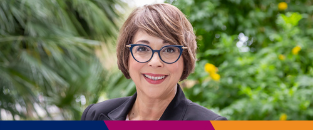
I am also grateful for the prayers so many of my team members and friends provided during our journey and their consistent support. The medical staff at The Start Center and Methodist Hospital gave us quality treatment and support along the way.

I am grateful for the sharing that many of you have done, as I have heard your stories of the challenges during COVID-19 of invasive diseases and the social changes that have shaken foundations within our nation and world. It is through our sharing that we come to know one another heart-to-heart, have compassion for one another, and become community that reflects God’s Kingdom. I am grateful for each of you allowing me to be part of your spiritual journey, as we face together the complexities of life.

I am grateful for my family, First United Methodist Church Kerrville, Peterson Hospice, and especially my siblings as my mom succumbed to pancreatic cancer at home where we could visit with her, comfort her, and celebrate life lived well. It is difficult to lose a parent, yet to see God’s presence and be sustained by God’s caring people was a blessing and another event for which I am grateful.

God has accompanied me during this year and reminded me of God’s sustaining power to face the future unafraid. Thanksgiving 2020 will be filled with less food and people in one place than in years past, yet it will be celebrated with a deeper sense of gratitude than many that have preceded it. May you remember this year and find those people and events for which you are thankful. Especially, I give thanks for God and God’s love always for all of God’s children.

Methodist Healthcare Ministries Announces New Vice President of Community Investments

San Antonio (November 9, 2020) Methodist Healthcare Ministries of South Texas, Inc. is pleased to announce the addition of Jordana Barton as its new vice president of community investment. Barton joins the organization after spending more than 20 years of her career successfully leading community development efforts across South Texas.

As the Vice President of Community Investment, Barton will oversee Methodist Healthcare Ministries’ strategic grant-making and seeking processes to provide strategic leadership, vision, and management in the initiation, execution, and successful completion of mission driven community investments across the 74 counties the organization serves. Also, as a thought leader to the organization, she’ll play an important role in supporting the organization’s mission and vision by aligning the philanthropic strategy with the organization’s overall strategic plan.

Jaime Wesolowski, president and CEO of Methodist Healthcare Ministries, stated “We are extremely blessed to have Jordana Barton join our team, bringing her wealth of knowledge and experience in community investment to further strengthen our efforts in supporting resilient families and thriving communities across South Texas.”

Before joining Methodist Healthcare Ministries, Barton served as Senior Advisor for the Federal Reserve Bank of Dallas – San Antonio Branch where she supported the Federal Reserve System’s economic growth objectives by promoting community and economic development. Her focus included digital inclusion, workforce development, healthy communities, financial education, affordable housing, small business development and the Community Reinvestment Act (CRA). Barton currently serves on the Steering Committee for the Digital Inclusion Alliance San Antonio and the collective impact project, Digital Opportunity for the Rio Grande Valley. She is also on the Board of Directors of SA2020 and the Advisory Board of the Texas Health Improvement Network of the University of Texas System.

In 2018, she received the “Federal Policy Champion Award” from the Coalition for Local Internet Choice and the “Community Broadband Hero Award” from the National Association of Telecommunications Officers and Advisors. In 2020, she was named “Salud Hero” (health hero) by Salud America, a program of UT Health and the Robert Wood Johnson Foundation and was inducted into the San Antonio Women’s Hall of Fame. Barton earned her Masters’ in Public Administration from Harvard University, John F. Kennedy School of Government. She is a native South Texan and grew up in the rural South Texas border community of Benavides.

###

About Methodist Healthcare Ministries of South Texas, Inc.

Methodist Healthcare Ministries of South Texas, Inc. is a private, faith-based not-for-profit organization dedicated to creating access to health care for the uninsured through direct services, community partnerships and strategic grant-making in 74 counties across South Texas. Guided by its mission of "Serving Humanity to Honor God," Methodist Healthcare Ministries’ vision is to be the leader for improving wellness of the least served. The mission also includes Methodist Healthcare Ministries' one-half ownership of the Methodist Healthcare System, the largest healthcare system in South Texas, which creates a unique avenue to ensure that it continues to be a benefit to the community by providing quality care to all and charitable care when needed. For more information, visit www.mhm.org.

Emergency Food Distribution provides 1,200 Boxes of Food for Families

Poteet, TX (October 30, 2020) – A drive-thru food distribution for Atascosa County residents was held at Hosanna Baptist Church in Poteet providing 1,248 pre-packaged boxes of food for families in need in Atascosa County and the surrounding communities. Each box contained 30 pounds of fresh produce, dried beans, meat and dairy.

The event was organized by Methodist Healthcare Ministries of South Texas, Inc., Methodist Hospital South, the Health Collaborative, Segovia Food Distributors, HCA HealthTrust and Hosanna Baptist Church, which came together to provide neighbors in need with a little extra support during these challenging times.

This food distribution event, and the one organized and led by the same group a week prior, was particularly impactful as COVID-19 has severely limited regular community food distributions since March. When the possibility of cancellation appeared due to food delivery challenges caused by inclement weather, each organization responded quickly to reorganize volunteers and advertising from the original date of Oct. 28 so that hungry families didn’t go without.

In 2019, the Health Collaborative released the Bexar County and Atascosa County Community Health Needs Assessment Report. The report stated an estimated 9 percent of the total Atascosa County population and 21% of children are food insecure.

  • The Atascosa County areas with the highest food security are in the Poteet area and in the Southwest area of the County.
  • http://healthcollaborative.net/wp-content/uploads/2019/10/Community2019_CHNAReport_compressed.pdf

### 

Methodist Healthcare Ministries of South Texas, Inc. is a private, faith-based not-for-profit organization dedicated to creating access to health care for the uninsured through direct services, community partnerships and strategic grant-making in 74 counties across South Texas. Guided by its mission of "Serving Humanity to Honor God," Methodist Healthcare Ministries’ vision is to be the leader for improving wellness of the least served. The mission also includes Methodist Healthcare Ministries' one-half ownership of the Methodist Healthcare System, the largest healthcare system in South Texas, which creates a unique avenue to ensure that it continues to be a benefit to the community by providing quality care to all and charitable care when needed. For more information, visit www.mhm.org. 

Commentary: Pre-K 4 SA about health equity too

The health of a person or a community is determined by a whole lot more than you might think. It’s more than diet and exercise and checking in with your doctor once a year. A person's health is determined, in part, by a whole number of factors such as the type of housing you live in to the number of grocery stores near you, to the number of parks in your neighborhood or the condition of the roads and sidewalks where you live. One factor that plays an outsized role in helping determine your health is the educational opportunities available to you. 

Education can be the silver bullet to helping improve the health of a community. That is why it is critically important for our community to continue investing and expanding the Pre-K 4 SA program our community voted on and initiated eight years ago.

By most measures, Pre-K 4 SA has been a tremendous success and it has become a national model for other communities to follow. Since the program began, Pre-K 4 SA has directly served 25,000 students, and will have collectively impacted 452,161 four-year-olds within the San Antonio community through all of the programming, grants and centers it supports. 

Pre-K 4 SA has been proven to increase kindergarten readiness, increase third grade test scores, decrease the need for special education placement and additional readiness support. This readiness is a vitally important factor in whether someone graduates from high school. In fact, a 2012 study shows that about 16 percent of children who are not reading proficiently by the end of third grade do not graduate from high school on time. For children who were poor, lived in neighborhoods of concentrated poverty and not reading proficiently, the proportion jumped to 35 percent.

We know that high school graduation is the most important long-term, modifiable predictor of health outcomes and it determines one's likelihood of getting a job—one that is likely to offer health insurance, improving their access to care—having financial security, and improving their access to healthy food. 

Pre-K for SA also increased employment and wage earnings for the 21,000 teachers who have been trained throughout San Antonio and received 218,000 hours of professional development and training. 

A vote for Pre-K 4 SA is a vote for health equity, which we believe is both the process and the goal by which we can recognize and address the inequities inherent in our communities that contribute to poor health outcomes. Health Equity is a framework of thought and action that strives to reduce racial and socio-economic disparities and creates fair and just opportunities for people to reach their full potential for health and life and contribute to that of others.

This program has been proven to be successful at helping improve educational outcomes in its first eight years—imagine what the next eight will bring as the four-year olds that first started in the program advance through elementary, middile school and into high school. Imagine the boost, financial and emotional, that parents receive by knowing their kids are getting a shot to succeed and do better than they might have. That's the American dream, isn't it?

As you go to the polls in San Antonio during this important election, I urge you to cast your ballot in favor of Proposition A. We have more work to do for our children and Pre-K 4 SA is part of the key to a brighter future, full of opportunity and success for our community.

Jaime Wesolowski is the President & CEO of Methodist Healthcare Ministries of South Texas, Inc., a faith-based, not-for-profit organization working to create access to care for low-income, uninsured families through services, strategic grant-making and community partnerships in 74 counties across South Texas.

A version of this OpEd ran in the San Antonio Express-News.

NEW Bexar County Area COVID-19 Report

San Antonio, TX (October 20, 2020) – A majority of people who live in Bexar, Guadalupe, and Medina counties say they are “very concerned” about another wave of COVID-19 hitting the state and have skipped or postponed medical care since the pandemic began. That’s according to a new Episcopal Health Foundation survey focused on the pandemic’s impact in the Bexar County area sponsored by Methodist Healthcare Ministries.

The comprehensive survey asked residents about many different issues related to the pandemic including their mental health, access to telemedicine, health insurance and employment concerns, the importance of non-profit and government support, and more.  

 The survey finds that almost 4 in 10 people living in the Bexar County area (39 percent) say they or someone in their household skipped or postponed some type of medical care due to COVID-19. Of those who went without care, researchers found that 88 percent said they skipped preventive care like checkups, mammograms, colonoscopies, and child immunizations. 

Chart, pie chartDescription automatically generated 

“The data in this report clarifies the breadth and depth of the impact COVID-19 has had on people in and around Bexar County,” said Jaime Wesolowski, President & CEO of Methodist Healthcare Ministries of South Texas, Inc. “This study helps us better understand the different ways people’s well-being has been affected by the pandemic and shines a light on the health inequities that exist in the communities we serve. There is still much work to be done to address the needs of resilient families across South Texas so that their communities can thrive.”

The survey finds that most area residents say their mental health is good, but nearly half (45 percent) say that worry or stress related to COVID-19 had a negative impact on their mental health. 

When it comes to receiving health treatment using telemedicine or virtual visits during COVID-19, the survey finds that 27 percent of Bexar County area residents say they either don’t have a device with internet access or don’t know how to talk with a doctor online.  

Chart, pie chartDescription automatically generated 

The survey also confirmed that Bexar, Guadalupe and Medina counties continue to have a high rate of people without health insurance, and that the pandemic has made the situation worse. Researchers found that more than one quarter (26 percent) of area residents age 18-64 are uninsured and 5 percent said they lost their health insurance at some point during the pandemic.  

Researchers found that people in the Bexar County area are more likely to be worried about another outbreak of COVID-19 than those living in other areas of Texas. The survey finds that 58 percent of area residents say they’re “very concerned” about another wave of the virus in Texas, compared to statewide survey results that show less than half (45 percent) of all Texans had the same worry.  

In the Bexar County area, the survey also finds that more than half of residents (52 percent) say they feel the worst is yet to come in terms of the pandemic. Again, researchers found people in Bexar, Guadalupe and Medina counties are more likely to feel this way than those in the rest of Texas (43 percent).  

ChartDescription automatically generated

COVID-19 hits Bexar County area financially  Compounding these health care issues, the survey finds that a majority of those living in the Bexar County area (57 percent) say the pandemic has caused financial hardship for them and their household, including 22 percent who say it’s caused severe financial suffering. In addition, researchers found more than one-third (37 percent) of area residents say someone in their household has lost their job, their business, or had work hours reduced. 

Reported likelihood of getting a COVID-19 vaccine in Bexar County area  In looking to the future, researchers found that more Bexar County area residents say they’re “very likely” to get a COVID-19 vaccine than those in the rest of the state. Almost half (46 percent) of those living in Bexar, Guadalupe and Medina counties say they are “very likely” to get a COVID-19 vaccine when it becomes available, compared to statewide results showing that 36 percent of Texans overall say the same thing. The survey finds that another 17 percent of area residents say they are “somewhat likely” to get a COVID-19 vaccine.   

10 additional highlights from the COVID-19 in Bexar County area survey report: 

  • 36 percent of respondents wereessential workers—of which 70 percent identified themselves as Black, Hispanic, or other racial and ethnic minorities and only 30 percent identified as White.
  • 21 percent of parents say their child would not have the support or supervision needed to successfully participate in online virtual classes for school. 
  • 64 percent say they’re very worried that local businesses will close permanently during the outbreak. 
  • 51 percent say they’re very worried that Texas’ local economy will suffer even more because of the pandemic. 
  • 43 percent say they think it will be 6 months to a year before life returns to normal.  
  • 32 percent say they’ve received any form of government assistance during the pandemic. 
  • 76 percent say they or someone in their household received financial assistance from the federal government. 
  • 49 percent say it’s very important for federal or state government to provide assistance with health care costs in response to COVID-19. 
  • 20 percent say they received food from a nonprofit organization or food bank. 
  • 8 say they’ve received help with rent payments. 

 METHODOLOGY The Episcopal Health Foundation (EHF) Texas COVID-19 Survey was conducted by telephone August 5 – September 18, 2020 among a random representative sample of 1,889 adults age 18 and older living in the state of Texas including 265 residents in Bexar, Guadalupe, and Medina counties (note: persons without a telephone could not be included in the random selection process). Interviews in the Bexar County area were administered in English and Spanish, combining random samples of both landline (30) and cellular telephones (236, including 184 who had no landline telephone). Sampling, data collection, weighting and tabulation were managed by SSRS in close collaboration with Episcopal Health Foundation researchers. 

 Weighting is generally used in survey analysis to compensate for sample designs and patterns of non-response that might bias results. The survey data are weighted to balance the sample demographics to match estimates for the Bexar County area adult population. A multi-stage weighting design was applied to ensure an accurate representation of the Bexar County area adult population. The margin of sampling error for this study is plus or minus 7 percentage points for results based on the total sample. For results based on subgroups, the margin of sampling error may be higher. 

### 

To schedule an interview, contact Teno Villarreal, Communications Specialist, Methodist Healthcare Ministries of South Texas, Inc. 

Related materials:  

Click to view the complete COVID-19 in Bexar County Area research report.

Methodist Healthcare Ministries of South Texas, Inc. is a private, faith-based not-for-profit organization dedicated to creating access to health care for the uninsured through direct services, community partnerships and strategic grant-making in 74 counties across South Texas. Guided by its mission of "Serving Humanity to Honor God," Methodist Healthcare Ministries’ vision is to be the leader for improving wellness of the least served. The mission also includes Methodist Healthcare Ministries' one-half ownership of the Methodist Healthcare System, the largest healthcare system in South Texas, which creates a unique avenue to ensure that it continues to be a benefit to the community by providing quality care to all and charitable care when needed. For more information, visit www.mhm.org. 

Episcopal Health Foundation: www.episcopalhealth.org By providing millions of dollars in grants, working with congregations and community partners, and providing important research, the Episcopal Health Foundation supports solutions that address the underlying causes of poor health in Texas. EHF was established in 2013, is based in Houston, and has more than $1.2 billion in estimated assets. #HealthNotJustHealthcare 

SSRS is a full-service market and survey research firm managed by a core of dedicated professionals with advanced degrees in the social sciences. Service offerings include the Omnibus Survey, the SSRS Opinion Panel and other Online Solutions, as well as custom research programs – all driven by a central commitment to methodological rigor. The SSRS team is renowned for its multimodal approach, as well as its sophisticated and proprietary sample designs. Typical projects for the company include complex strategic, tactical and public opinion initiatives in the U.S. and in more than 40 countries worldwide. SSRS is research, refined.  

Methodist Healthcare Ministries Announces $100,000 in matching funds to kickstart local 2020 “Real Men Wear Pink” Campaign

San Antonio, Texas, October 6, 2020 – Methodist Healthcare Ministries of South Texas, Inc. announced a match campaign up to $100,000 in contributions to the American Cancer Society’s 2020 “Real Men Wear Pink” initiative at a press conference this morning. Real Men Wear Pink is an annual campaign that raises awareness and monies to support programming critical to fighting cancer.

According to the American Cancer Society (ACS), this year, an estimated 19,500 Texans (including 1,200 in Bexar County) will hear the words, ‘You have breast cancer’ and more than 3,000 people will die from the disease. Due to the COVID-19 pandemic there has been a significant decrease in the number of people getting screened for breast cancer and one analysis shows there was an 87% decline in Mammograms from February to April 2020. It is estimated that more than seven million women delayed or declined mammograms during the first half of 2020 in the United States. That translates to 36,000 patients delayed in a potential breast cancer diagnosis.

"We know that cancer does not discriminate who it impacts as it hits regardless of a person’s gender, race, location, income level or whether one has insurance or not” said Jaime Wesolowski, President & CEO of Methodist Healthcare Ministries of South Texas, Inc. “The American Cancer Society offers a number of incredible programs to assist those most in need when cancer strikes and we are proud to be able to support them during these challenging times.”

 Every dollar raised through the “Real Men Wear Pink” campaign helps the American Cancer Society (ACS) save lives from breast cancer through early detection and prevention, innovative breast cancer research, and patient support. Despite the additional challenges presented by COVID-19, patients and families still need critical resources such as transportation vouchers to treatment appointments, lodging assistance for financially challenged families and other vital support programs that lighten the load for families fighting cancer. ACS provides more than $64 million in breast cancer research grants nationwide. It also provides free resources aimed at helping offset feelings of isolation and provide vital support for families facing cancer in San Antonio.

“The American Cancer Society has partnered with Methodist Healthcare Ministries for many years to reduce the cancer burden in our communities and we can’t thank them enough for this astounding gift,” said Lindsay Maggio McElwee, Executive Director of the American Cancer Society. “One in eight women will be diagnosed with breast cancer in their lifetime and COVID-19 has made cancer patients more vulnerable than ever. We help women year-round get tested to find breast cancer earlier and cope with the physical and emotional side effects of the disease. We also fund research to help prevent, find, and treat breast cancer. This generous commitment of $100,000 in matching funds from Methodist Healthcare Ministries will be crucial in helping fuel our continued fight for a world without cancer.”

“With this commitment we are making today to the American Cancer Society, we are pledging our support to help reduce and ease those barriers so that families fighting cancer have the resources they need" added Wesolowski. "We know cancer did not stop impacting people during the pandemic and neither can we. The need for help is too great."

###

About Methodist Healthcare Ministries of South Texas, Inc.

Methodist Healthcare Ministries of South Texas, Inc. is a private, faith-based not-for-profit organization dedicated to creating access to health care for the uninsured through direct services, community partnerships and strategic grant-making in 74 counties across South Texas. Guided by its mission of "Serving Humanity to Honor God," Methodist Healthcare Ministries’ vision is to be the leader for improving wellness of the least served. The mission also includes Methodist Healthcare Ministries' one-half ownership of the Methodist Healthcare System, the largest healthcare system in South Texas, which creates a unique avenue to ensure that it continues to be a benefit to the community by providing quality care to all and charitable care when needed. For more information, visit www.mhm.org.

About American Cancer Society

The American Cancer Society is a global grassroots force of nearly 2 million volunteers dedicated to saving lives, celebrating lives, and leading the fight for a world without cancer. From breakthrough research, free lodging near treatment, a 24/7 live cancer helpline, to free rides for patients, and convening powerful activists to create awareness and impact, the American Cancer Society is the only organization attacking cancer from every angle. For more information about cancer and/or other ways you may become involved, call the American Cancer Society’s 24-hour helpline at (800) 227-2345 or visitwww.cancer.org.

White close icon

Jaime Wesoloski

President & Chief Executive Officer

Jaime Wesolowski is the President and Chief Executive Officer at Methodist Healthcare Ministries. A healthcare executive with three decades of leadership experience, Jaime is responsible for the overall governance and direction of Methodist Healthcare Ministries. Jaime earned his Master’s Degree in Healthcare Administration from Xavier University, and his Bachelor’s of Science from Indiana University in Healthcare Administration. As a cancer survivor, Jaime is a staunch supporter of the American Cancer Society. He serves as Chair of the American Cancer Society’s South Texas Area board of directors and he was appointed as Chair to the recently created South Region Advisory Cabinet, covering eight states from Arizona through Alabama. Jaime believes his personal experience as a cancer survivor has given him more defined insight and compassion to the physical, emotional, and spiritual needs of patients and their families.